Garage Openers
 Garage Springs
Steel vs wood garage doors: choose by your priorities
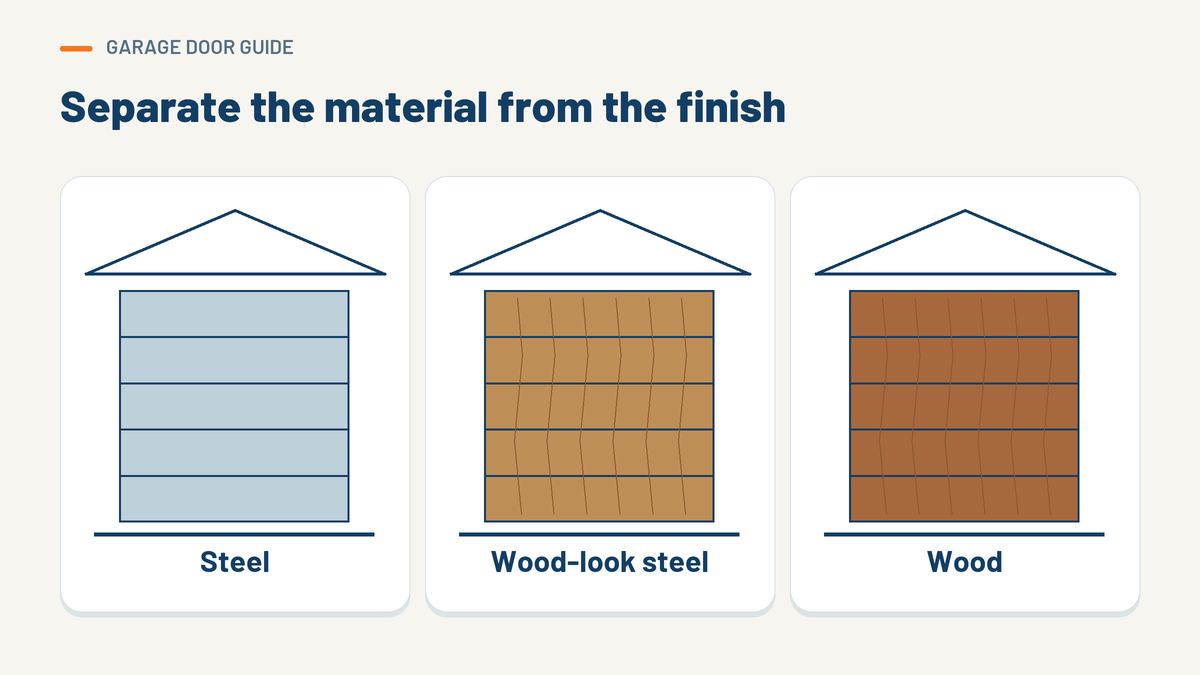
Choosing between steel and wood garage doors means weighing the appearance you want, the finish care you will maintain and the complete door construction. Steel offers a wide range of factory finishes, including wood-look options. Natural wood offers species, grain and custom design possibilities, with a finish that needs ongoing attention.
Do not choose from material names alone. Compare actual models with the same opening size, window layout and installation scope. Insulation, weight, surface durability and price can change substantially within either category. If your existing door may still be repairable, start with the repair versus replacement guide before selecting a new material.
Natural wood and wood-look steel are different choices
A wood look steel garage door can create a wood-grain appearance through a factory-applied finish. It is still a steel door; its cleaning and touch-up requirements come from that finish system. It should not be stained as though it were an unfinished timber surface unless the manufacturer specifically permits the proposed process.
Natural wood allows the wood species, grain and finishing choices to contribute to the result. Ask to see a physical sample, because a small screen image cannot show all the variation or surface detail. Some collections also offer custom panel and overlay arrangements.
Evaluate samples outside at the property. Compare the finish with the entry door, trim and nearby woodwork in both sun and shade. If exact matching matters, get agreement on the sample and finishing scope before ordering.
Compare the practical ownership differences
A garage door material comparison is most useful when it connects a product feature to something you will actually maintain or use. A steel vs wood garage door comparison should include the finish on both faces, panel availability and day-to-day care. For faux-wood steel, ask how the finish is applied and what a matching section would look like several years from now. Garage door installation can account for the final door weight and existing opener.
| Decision | Steel option | Natural wood option |
|---|---|---|
| Appearance | Painted colors and wood-look finishes vary by collection. | Species, grain, paint and stain choices vary by design. |
| Finish care | Follow factory coating guidance; inspect scratches and damaged areas. | Plan for inspection and renewal of the specified protective finish. |
| Insulation | Both insulated and non-insulated constructions are available. | Construction varies; some collections include insulation and others do not. |
| Operating weight | Use the actual ordered door specification. | Use the actual ordered door specification. |
| Repair planning | Check availability and compatibility of matching sections and finishes. | Check section design, finish matching and repair feasibility. |
Neither column is a universal winner. Rank appearance, upkeep and garage use first, then ask for products that satisfy those priorities.
Wood garage door maintenance and coastal exposure
Wood garage door maintenance includes attention to the protective finish, especially where weathering or moisture affects its condition. Look for fading, peeling and deteriorating areas, and use products compatible with the original finish. The appropriate renewal interval depends on the coating, exposure and manufacturer's directions.
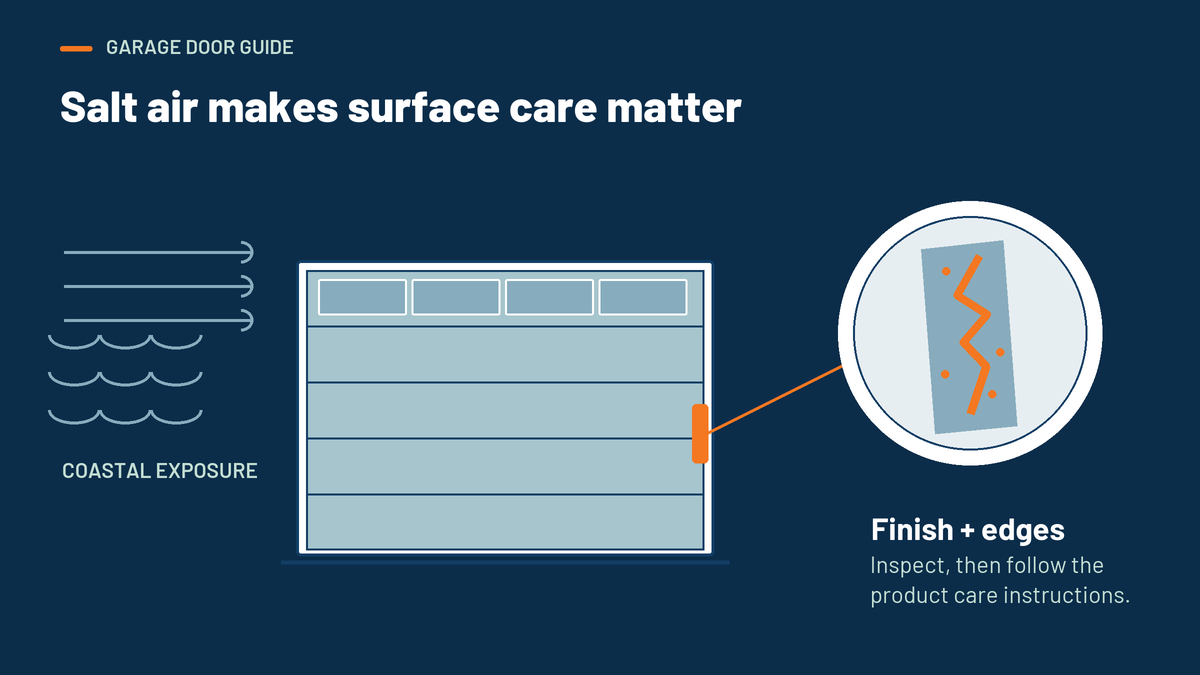
Steel also needs finish care. A factory coating reduces maintenance demands but does not make damaged surfaces or exposed hardware irrelevant. For homes near the coast, compare the actual care documents and any exposure-related limitations before ordering. Our coastal garage door care guide explains the difference between finish cleaning and operating-hardware concerns.
Ask who will provide any required finishing and which surfaces the work includes. Keep the finish name, color and maintenance instructions with your purchase documents so later touch-ups do not begin with guesswork.
Check insulation and the complete operating system
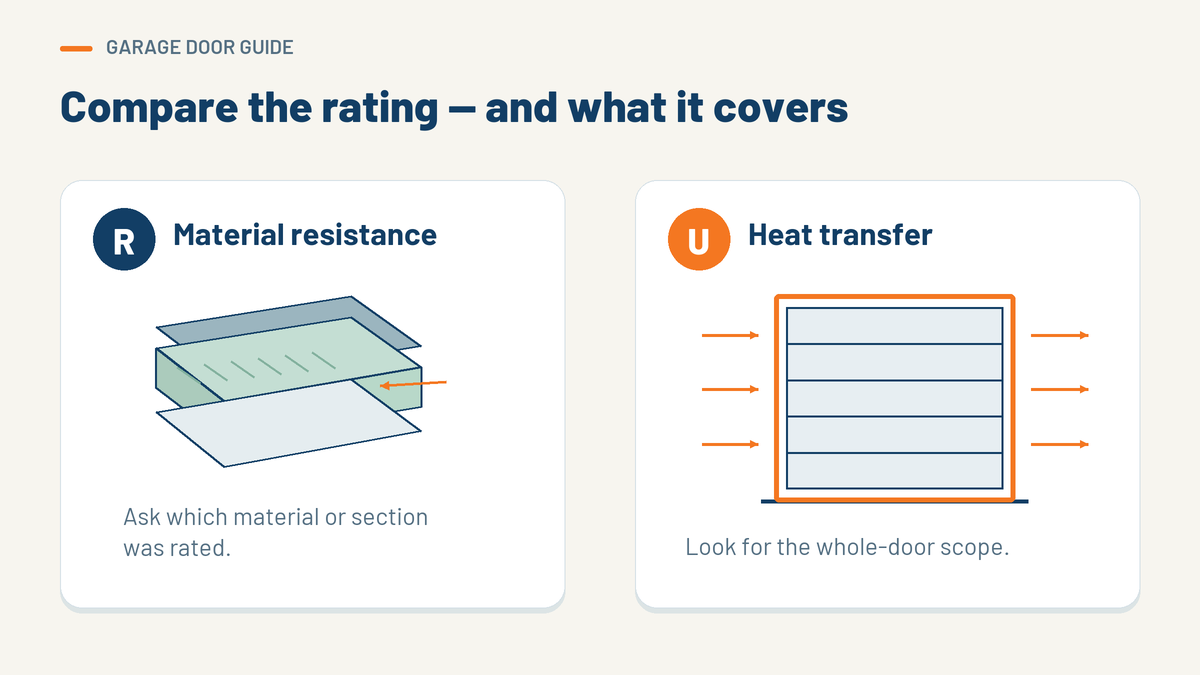
Insulation and system fit need their own comparison. A wood door is not automatically an insulated assembly, and a steel door's performance cannot be inferred from its outer skin. Request ratings for the exact construction and window configuration. Our R-value versus U-factor guide explains why the scope of the rating matters.
The installed weight must also match the counterbalance and supporting hardware. Changing materials does not justify reusing the existing springs, tracks or opener without checking compatibility. A technician should assess the specified door as a complete assembly and identify any required changes.
Do not attach wood cladding or decorative weight to an existing steel door to imitate another product. Added material can change balance and loading. Select a design intended for that appearance or obtain explicit manufacturer guidance.
Request a comparable installation proposal
A clear installation proposal lets you compare the finished result instead of a headline door price. Ask each supplier to identify:
- The manufacturer, model, dimensions and section construction.
- The exact finish, glass and decorative hardware included.
- The insulation rating and what assembly it describes.
- The required track, counterbalance and opener work.
- Removal, finishing and site work included in the scope.
- The product-specific maintenance documents and warranty terms.
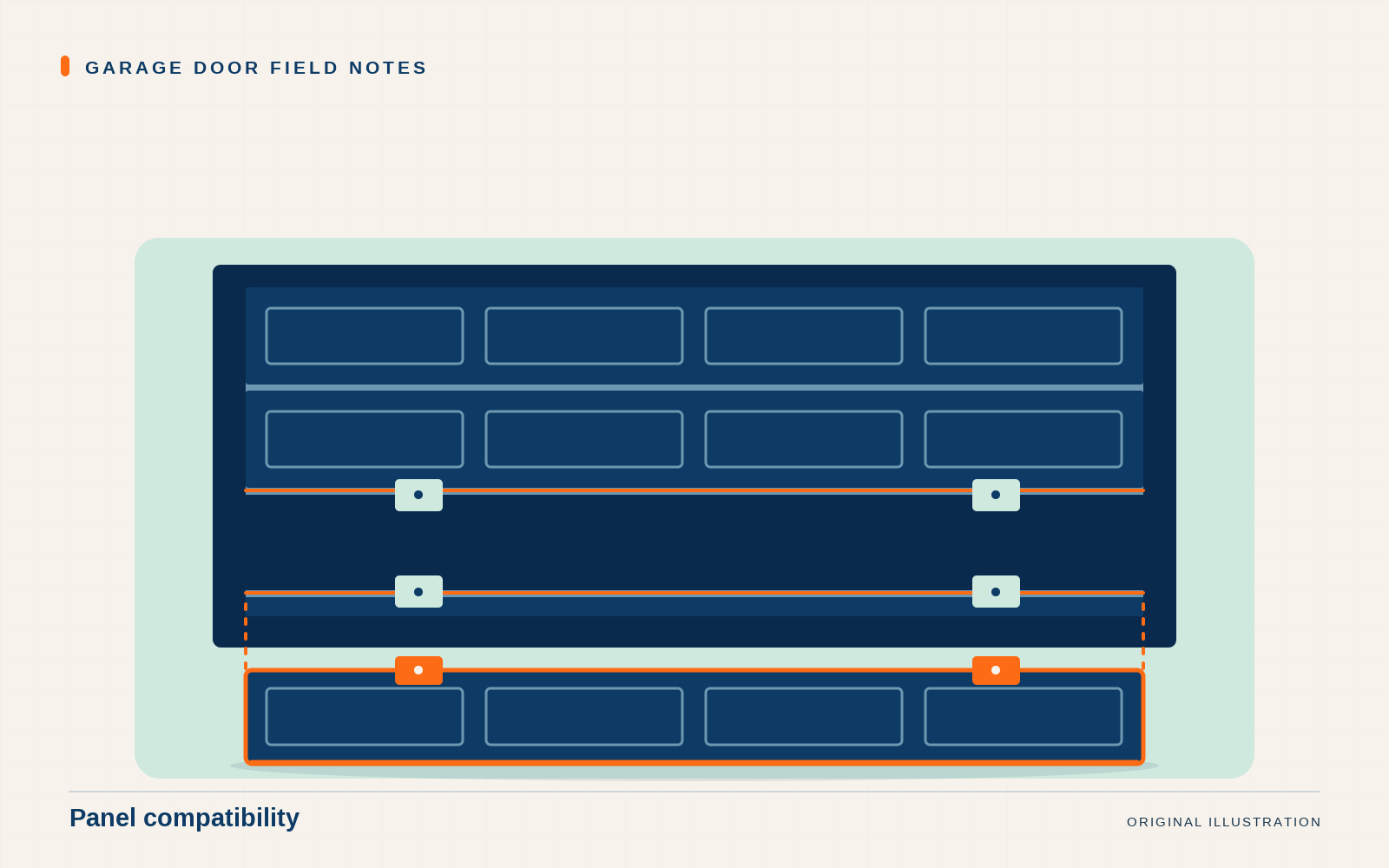
If replacing only part of an existing door is proposed, review garage door panel compatibility before assuming a similar-looking section will fit.
Our garage door installation service can help compare suitable steel, wood-look and wood options for your opening. Bring exterior photos and your priorities so the discussion covers both curb appeal and the system needed to operate the selected door.