Garage Openers
 Garage Springs
Separate the door from the opener
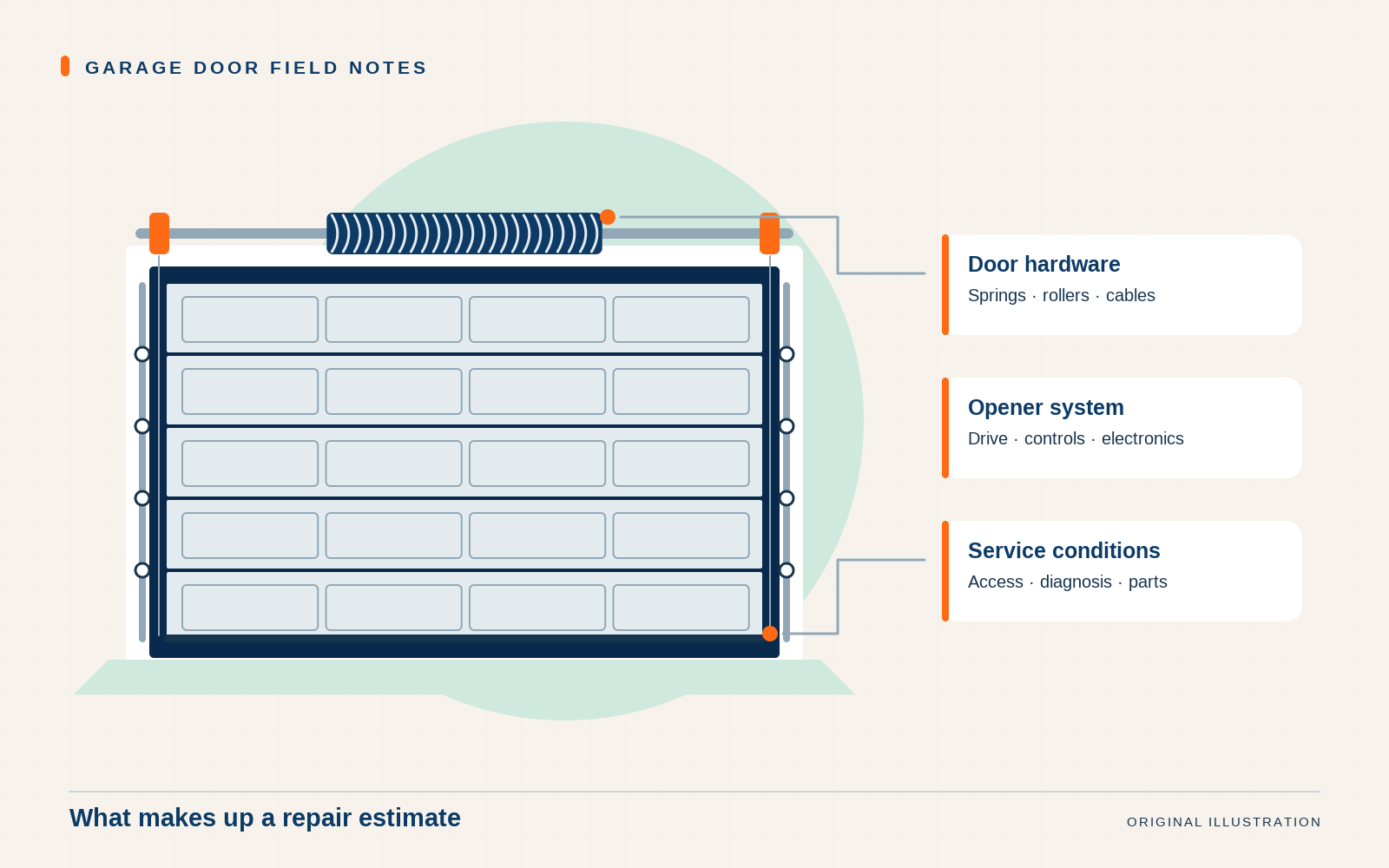
The door includes its sections, tracks, rollers, hinges and counterbalance system. The electric opener is a separate assembly that operates a suitable, properly functioning door. A remote-control fault can require opener service without replacing the door; impact damage to sections can require door work even when the opener still runs.
Begin by asking which assembly has failed and what evidence supports the diagnosis. If the recommendation changes from a small repair to a complete replacement, ask what the inspection revealed. The goal is a clear explanation, not a decision based only on the age of a component.
When a targeted repair is worth evaluating
A repair deserves consideration when the damage is limited, compatible parts are available and the rest of the system can be restored to safe operation. Examples include a defined opener fault, worn weathersealing or a replaceable component on an otherwise serviceable door. These examples are categories, not a promise that every door in that condition is repairable.
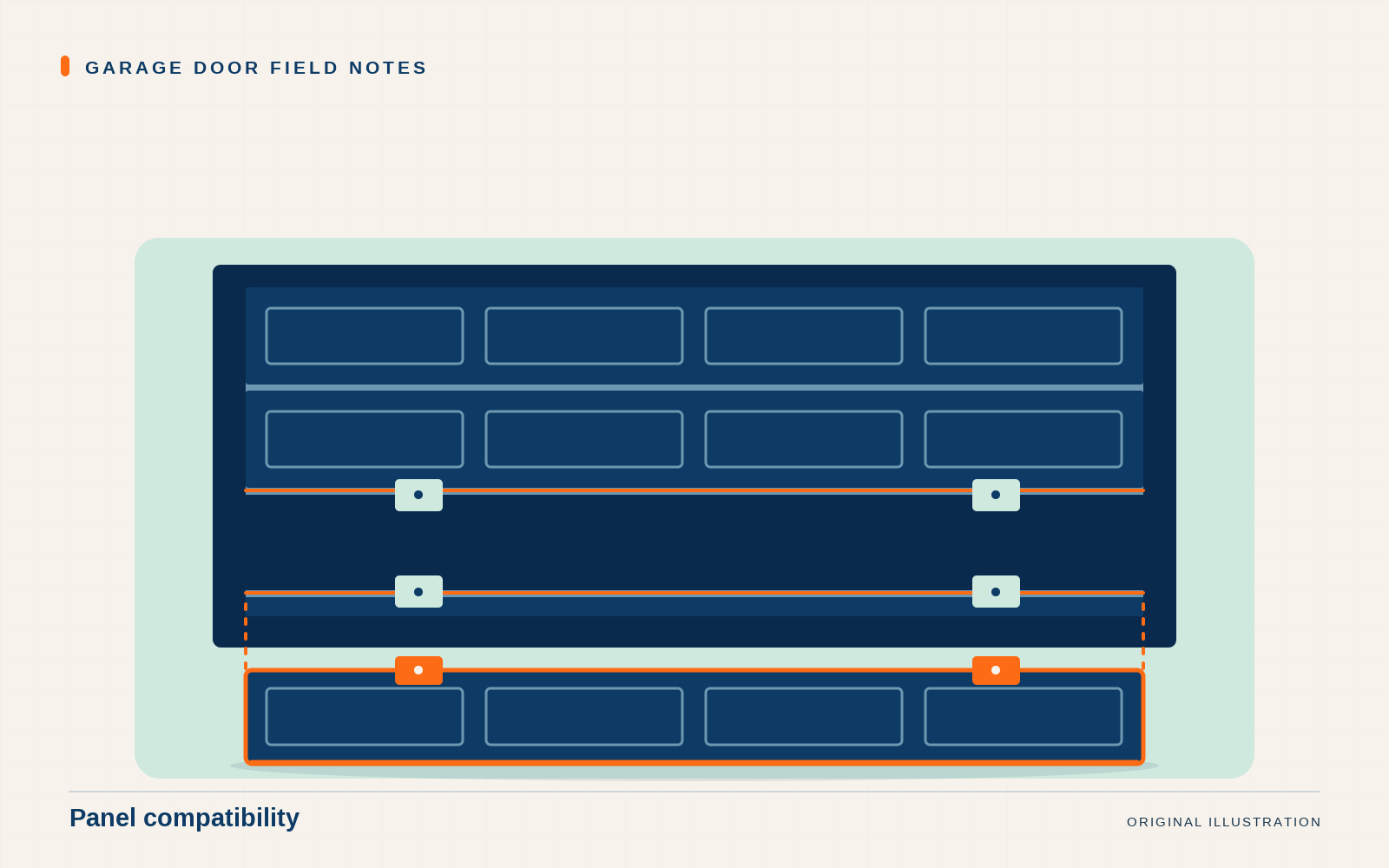
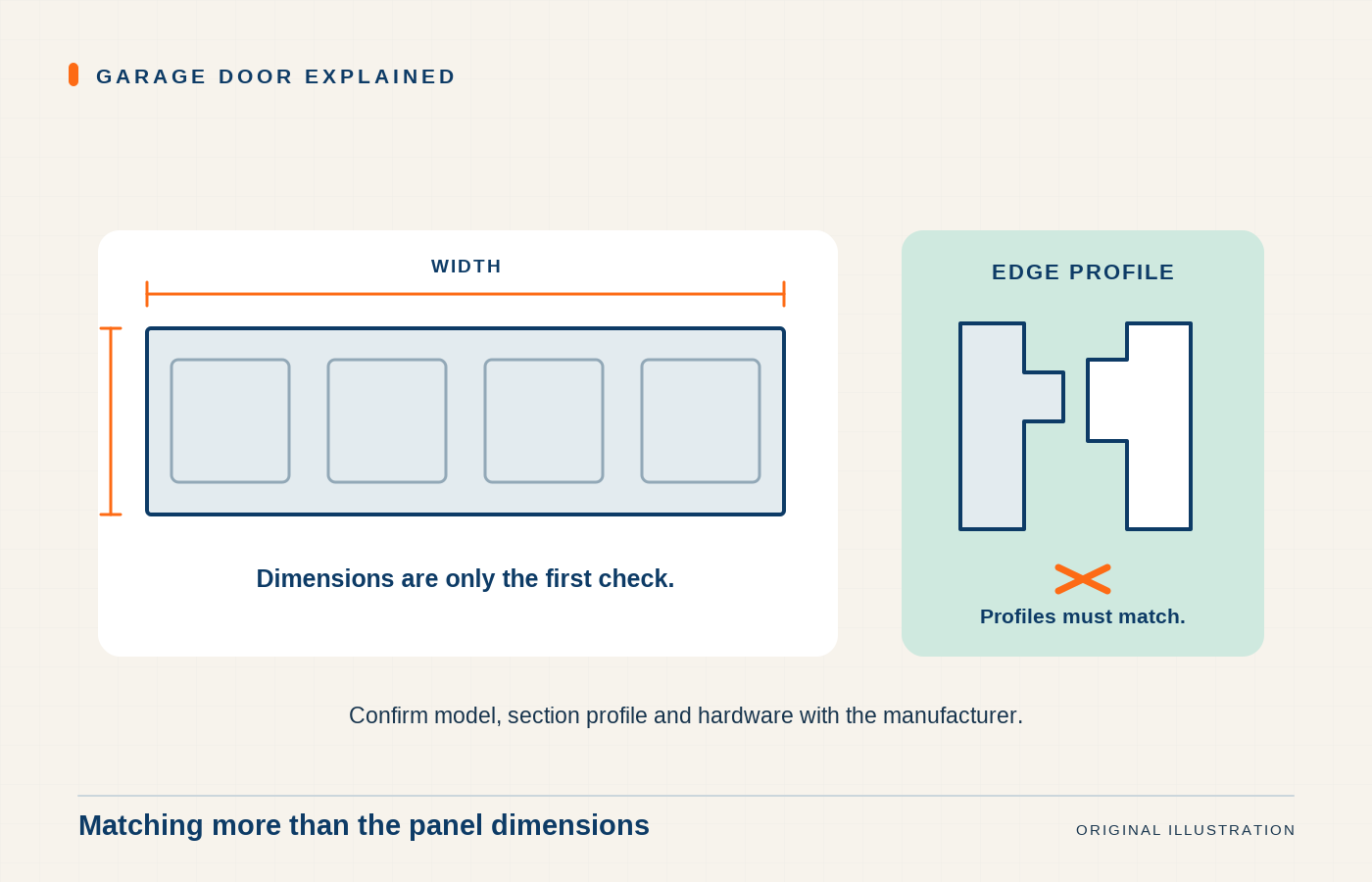
For section damage, the replacement must match the door system. Width and color alone do not establish compatibility; the section profile, joints, hardware and weight can matter. The single-panel replacement guide covers the information to gather.
Ask what the repair will resolve and what it will leave unchanged. A cosmetic repair, for example, is not the same scope as restoring damaged structural support.
When to compare a complete replacement
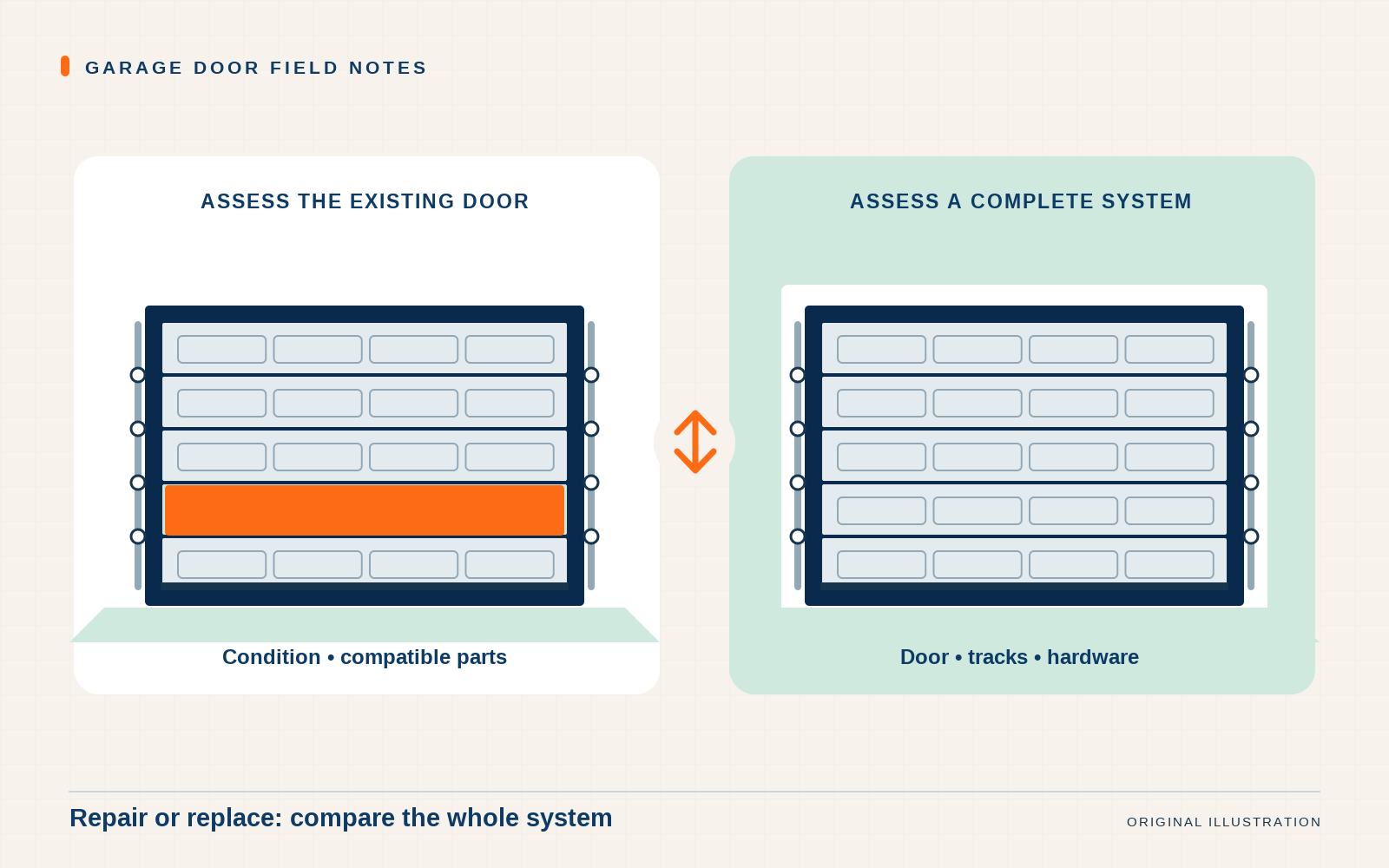
A replacement comparison becomes useful when damage extends through the door system, compatible sections are unavailable, or the repair would leave important performance problems unresolved. It can also be relevant when you want a different door configuration or features that the existing door cannot reasonably provide.
There is no reliable rule that a certain number of damaged panels always makes replacement cheaper. The answer depends on the exact product, available parts and complete installed scope. Likewise, age alone does not show whether a door is unsafe or economical to repair.
A replacement estimate should identify the selected door, supporting hardware, disposal and installation work. Clarify whether the opener remains, changes or requires additional equipment. For residential projects in California, have the installer check applicable backup-power requirements when deciding whether an existing opener can be retained.
Compare both options on the same worksheet
| Question | Repair proposal | Replacement proposal |
|---|---|---|
| What problem is resolved? | List the specific failed components. | List the new system and any remaining components. |
| What remains in service? | Identify existing sections and hardware. | Identify retained opener or accessories. |
| What is included? | Parts, labor, adjustment and testing. | Door, hardware, installation, disposal and testing. |
| What are the limitations? | Appearance match, remaining wear and parts availability. | Clearance, lead time and any extra work. |
| What is covered afterward? | Written parts and labor terms. | Written product and installation terms. |
Use the repair-estimate checklist to clarify fees and optional items. Avoid comparing a repair total with a replacement starting price that excludes installation or necessary hardware. Compare a garage door repair quote and a replacement quote against the same problem. A replacement estimate should list removal, disposal, door sections, tracks, springs, weather seals and opener compatibility as applicable. For localized damage, ask what the repair restores and what remains worn. See the complete door replacement service.
Make the decision after the condition is clear
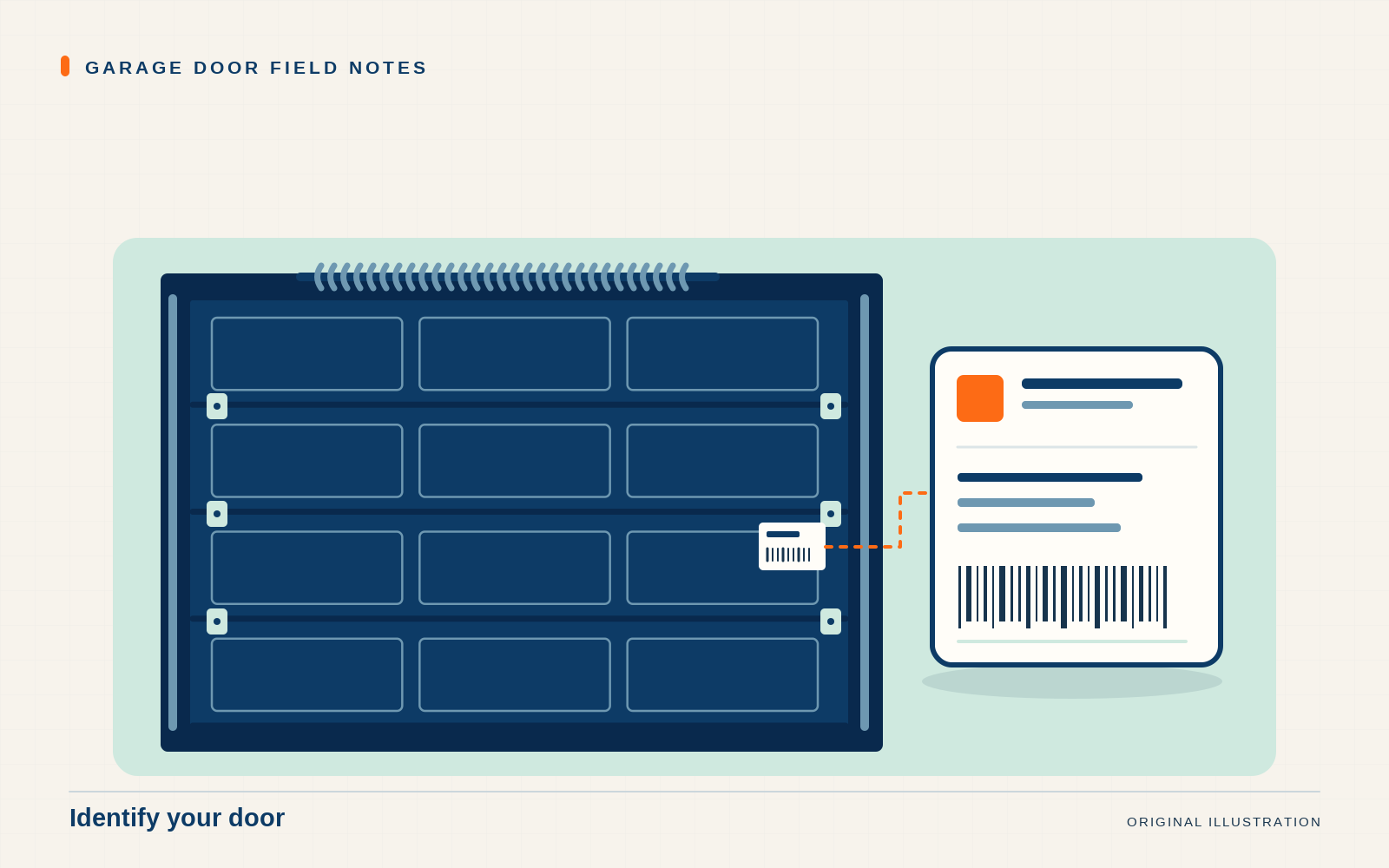
Photographs, model information and an itemized scope make a second opinion more useful if the recommendation is uncertain. Ask for the reason behind each major replacement rather than relying on a broad claim that every old door should be replaced.
Until the condition is assessed, stop operating a door that is crooked, has loose cables or shows major impact damage. For a garage door replacement assessment, explain the existing damage and the outcome you want so repair and replacement can be compared meaningfully.
Frequently asked questions
Does a failed opener mean I need a new door?
Usually these are separate decisions. The door’s condition and the opener’s fault should each be assessed; one failed assembly does not automatically condemn the other.
Can a replacement panel be chosen by size alone?
No. Exact series, section design, hardware compatibility and availability matter. A similar-looking section is not enough to confirm a safe fit.