Garage Openers
 Garage Springs
Assess the whole door before ordering a section
Start with what happened and how the door now sits. A shallow surface mark and a bent section that pulls on hinges are different repair questions. If the door is crooked, has left its track or has exposed damaged cables, stop using it. Do not operate it repeatedly to judge whether the dent is serious.
Clopay's panel-replacement guidance calls for considering overall condition and the extent of damage. Ask the inspection to include adjacent sections, hinges, rollers, tracks and the opener attachment where applicable. A single visible impact point does not tell you which components were loaded by the impact.
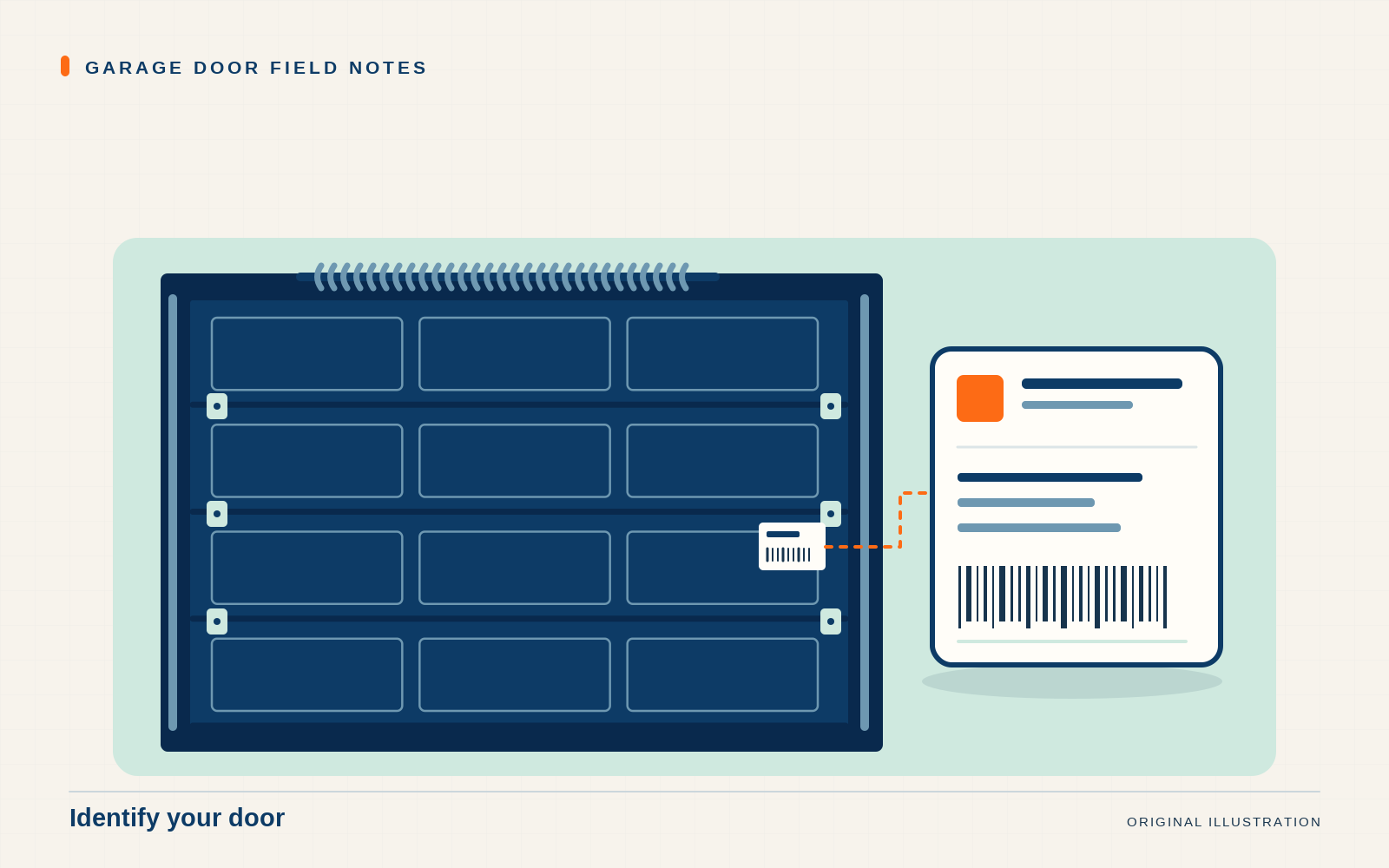
Collect the model and serial information
Find the door manufacturer's label, model and serial number, plus any original invoice. The opener label identifies a different product and cannot establish which replacement section fits. Use the door identification guide to assemble useful records without removing hardware.
Describe the affected section's position from the bottom and whether it includes windows or the opener attachment. Supply whole-door and interior photographs taken from safe positions. Ask the dealer to confirm the proposed section part number against the model record. Treat “same size” or “looks identical” as an incomplete answer, especially when the original label is missing.
Compare more than width and height
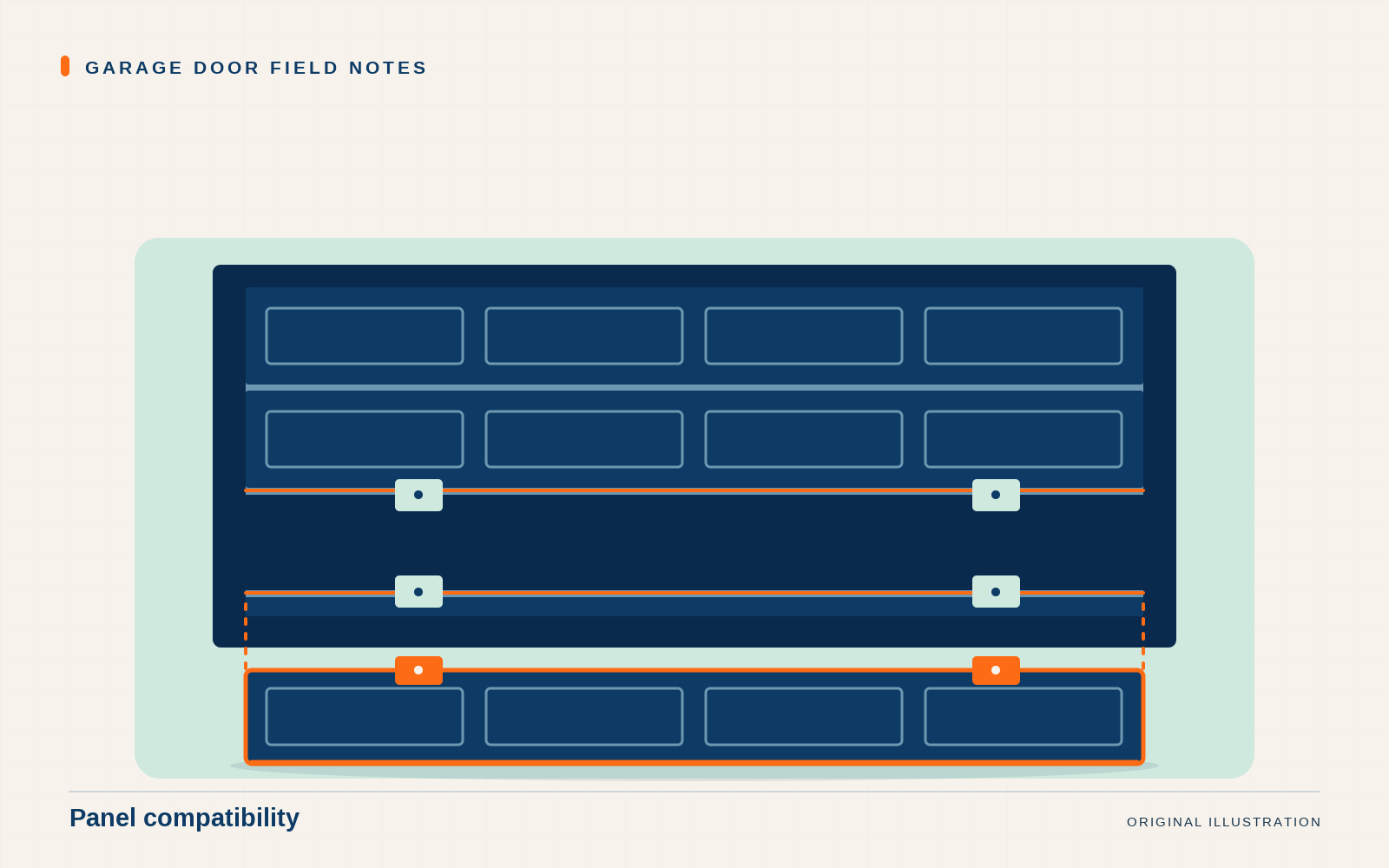
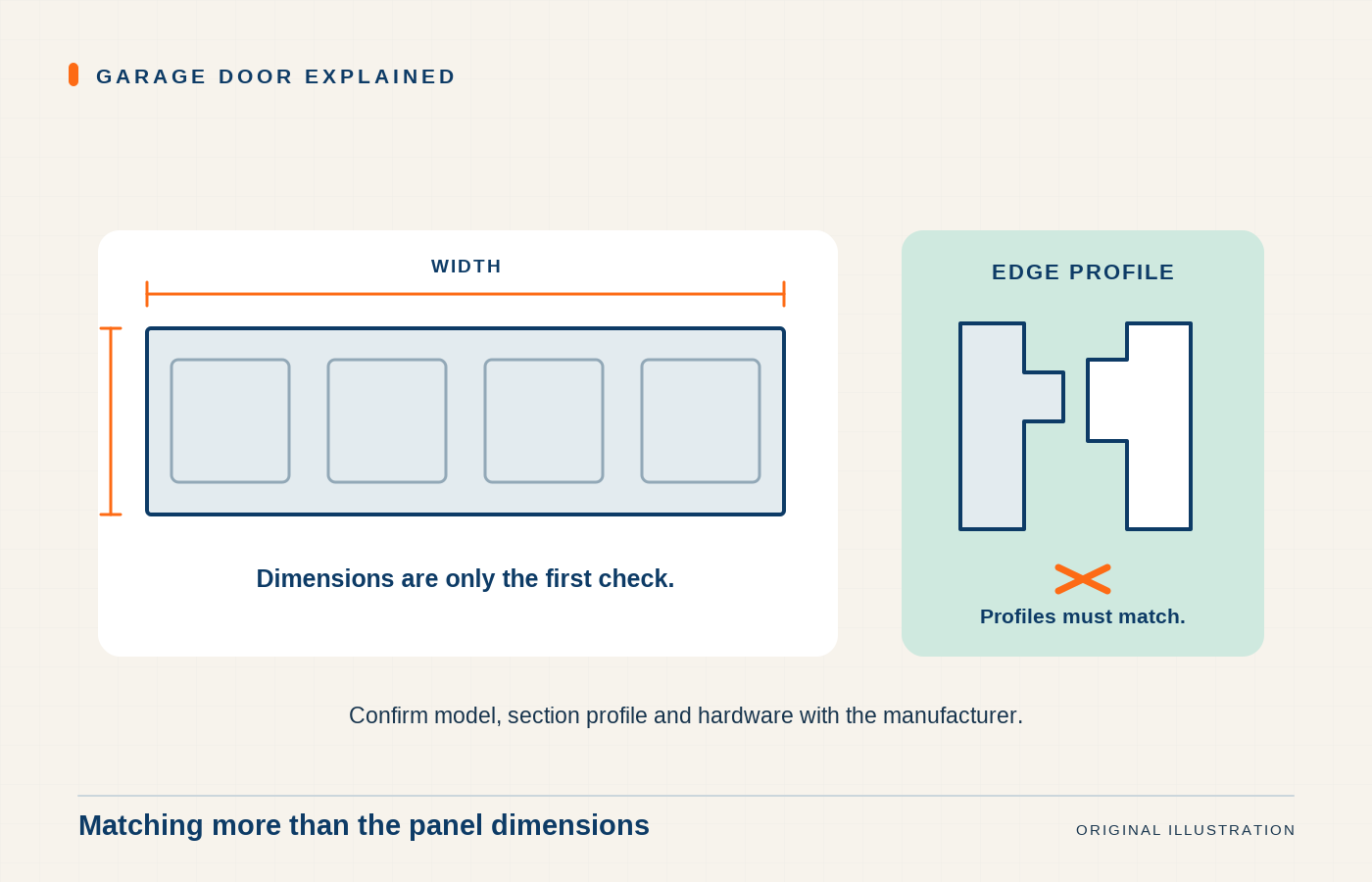
Ask the supplier to check width, section height, thickness, edge profile and hinge or roller connections. The upper and lower edges must work with adjoining sections as the door bends through its travel. Construction and weight also matter to the complete system, so changing to a different panel build needs more than a color match. Matching a garage door replacement panel can also require the original section profile, thickness, hinge layout and manufacturer series. Note where the damage sits and whether nearby hinges or tracks bent on impact. If compatible sections are unavailable, request a complete garage door replacement estimate with the hardware scope spelled out.
Clopay's parts guidance emphasizes model-specific components. The practical question is whether the manufacturer or qualified supplier can confirm this section for this door, including any required accompanying hardware and balance assessment. Do not drill new holes or adapt loaded brackets to make an uncertain section fit.
Account for color and product availability
Separate mechanical compatibility from appearance. A current replacement can match the original factory color while looking different beside older sections exposed to weather. Clopay's replacement-section FAQ notes both continuing model availability and the possibility of a color mismatch.
Before ordering, ask whether the section is still manufactured, what finish is available and whether the order is returnable if identification is uncertain. Review any proposed refinishing against the door manufacturer's care instructions. A long lead time or an unavailable profile is useful decision information; it is not a reason to mix unsupported sections into the door.
Compare panel-only and whole-door scope
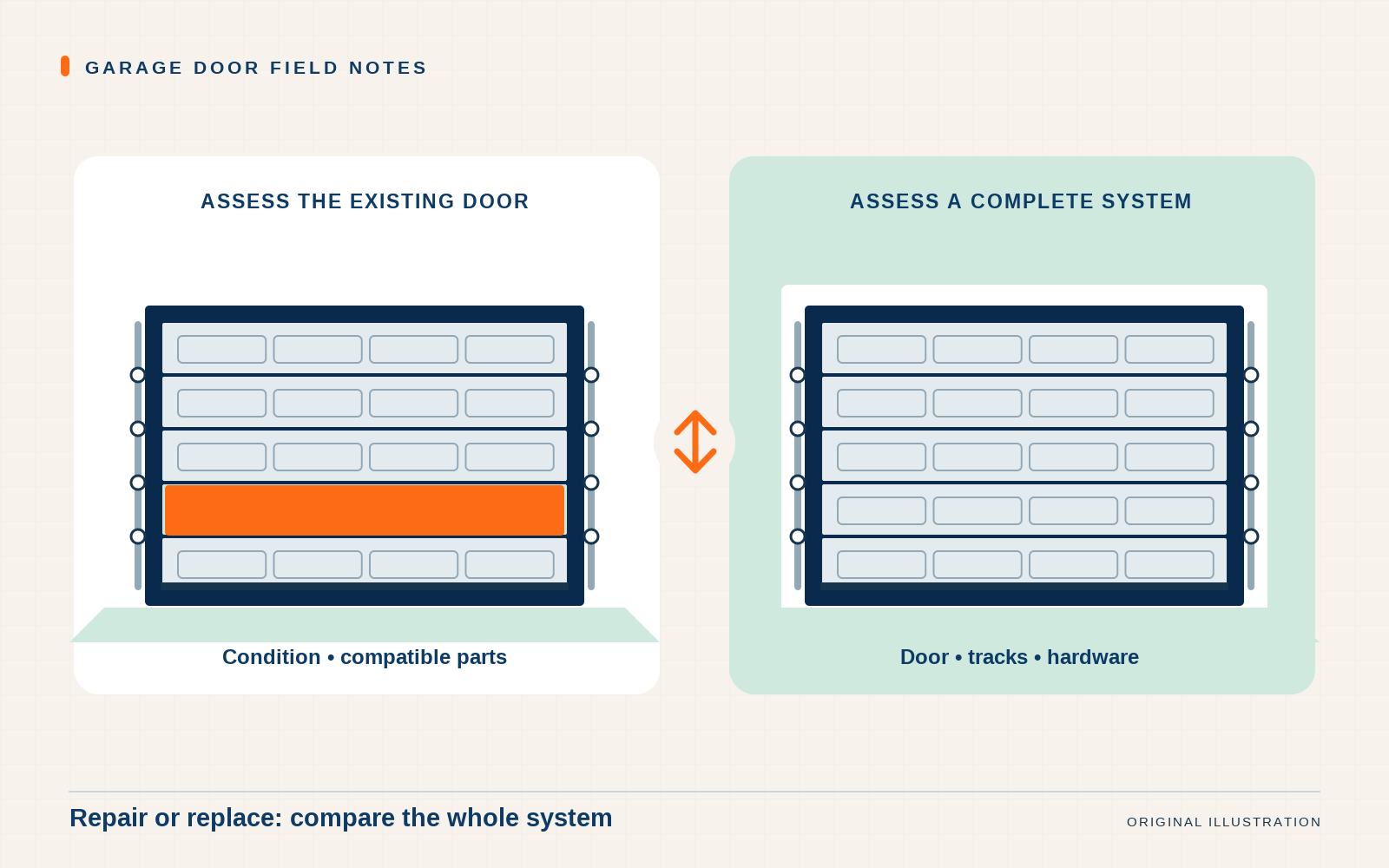
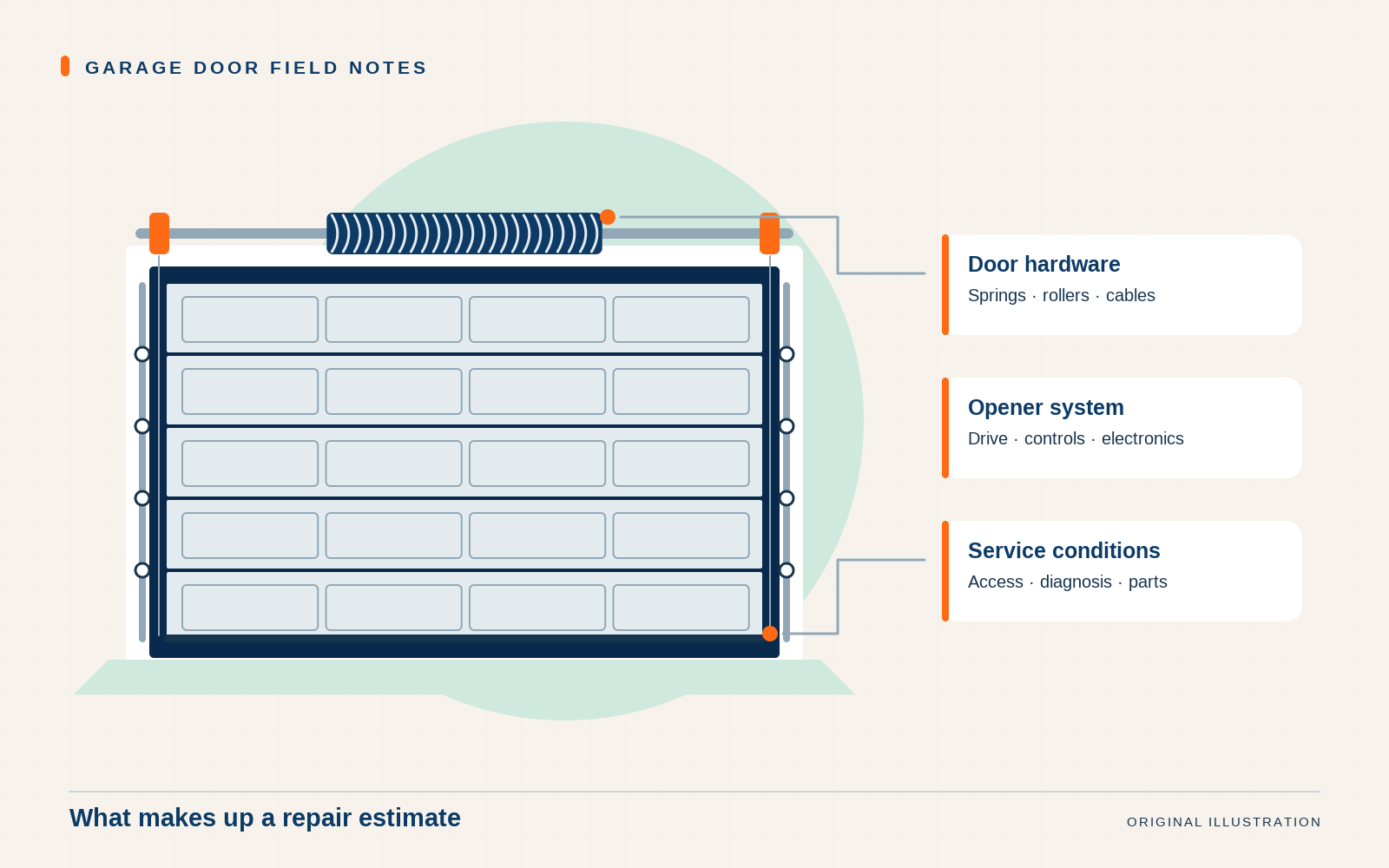
Compare written scopes. A panel-only proposal should identify the section, related parts, labor, disposal and the checks needed before returning the door to use. A whole-door proposal should say what happens to existing tracks, springs and the opener. Ask how the repair warranty differs from the replacement warranty.
Use the repair-versus-replacement guide if several sections are damaged or compatible parts cannot be sourced. A garage door replacement assessment can provide a second scope to compare. The decision should follow confirmed fit, total condition and complete work requirements, rather than the price of an uninstalled panel alone.
Frequently asked questions
Can I use a same-width panel from another brand?
Only if compatibility is specifically confirmed for the complete system. Width does not establish edge, hardware or weight compatibility, so do not assume panels are interchangeable.
Is the bottom section a simple cosmetic swap?
No. Bottom sections are associated with hardware connected to the counterbalance system. Do not loosen bottom brackets or cables; leave section replacement to a trained door technician.