Garage Openers
 Garage Springs
Separate the door from its opener
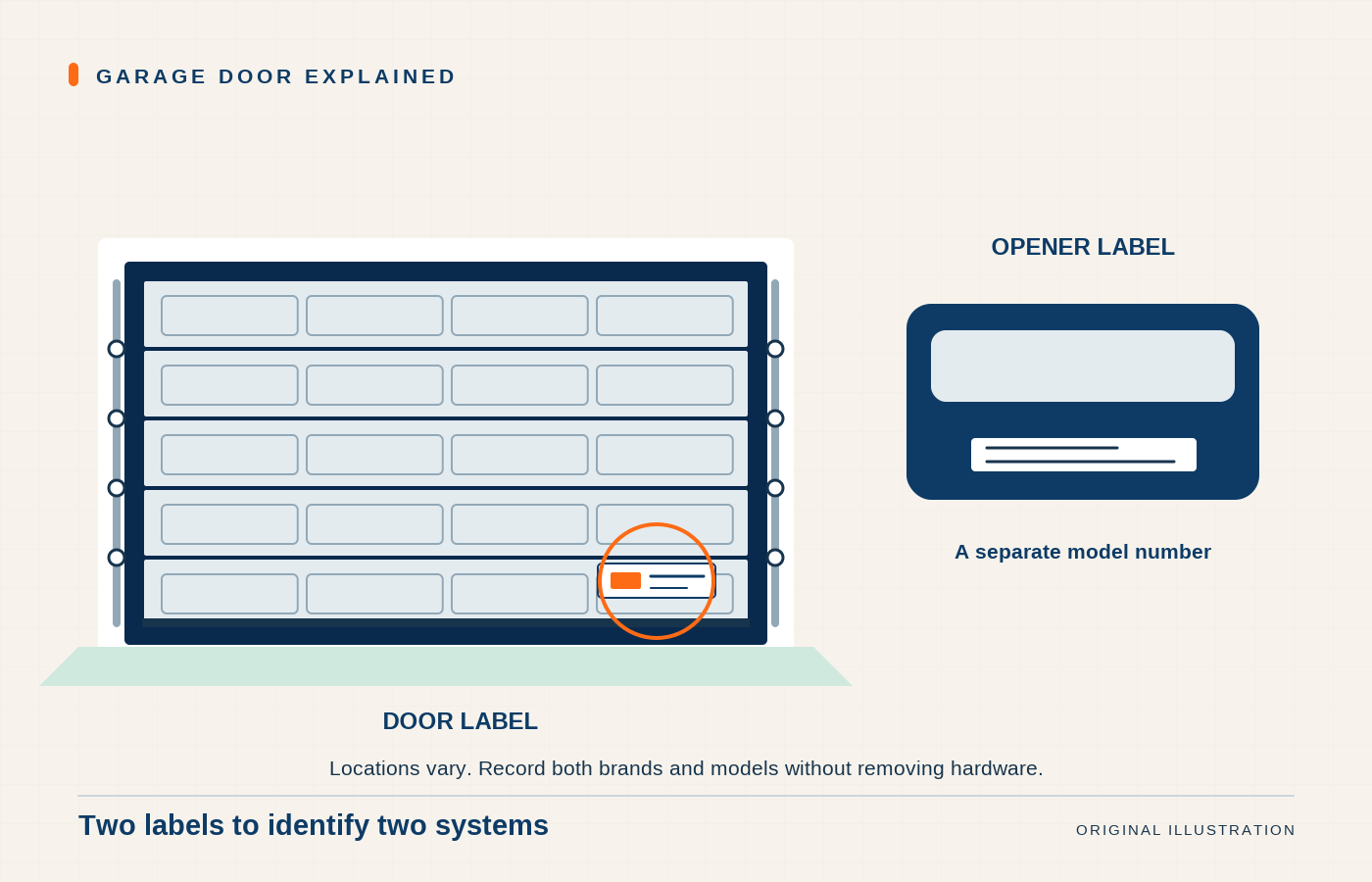
The garage door is the moving assembly of sections, rollers, tracks and counterbalance hardware. The opener is the motorized unit that operates it. A brand name on the ceiling-mounted opener does not establish the door manufacturer, and a replacement remote may carry yet another brand.
Make a short record with separate entries for door, opener and controls. Add each model or serial number only to the product it identifies. This distinction matters when ordering a section or weather seal, finding a keypad manual, or explaining a fault. It also prevents an old installer sticker from being mistaken for the door's original product label.
Look for door labels without disturbing hardware
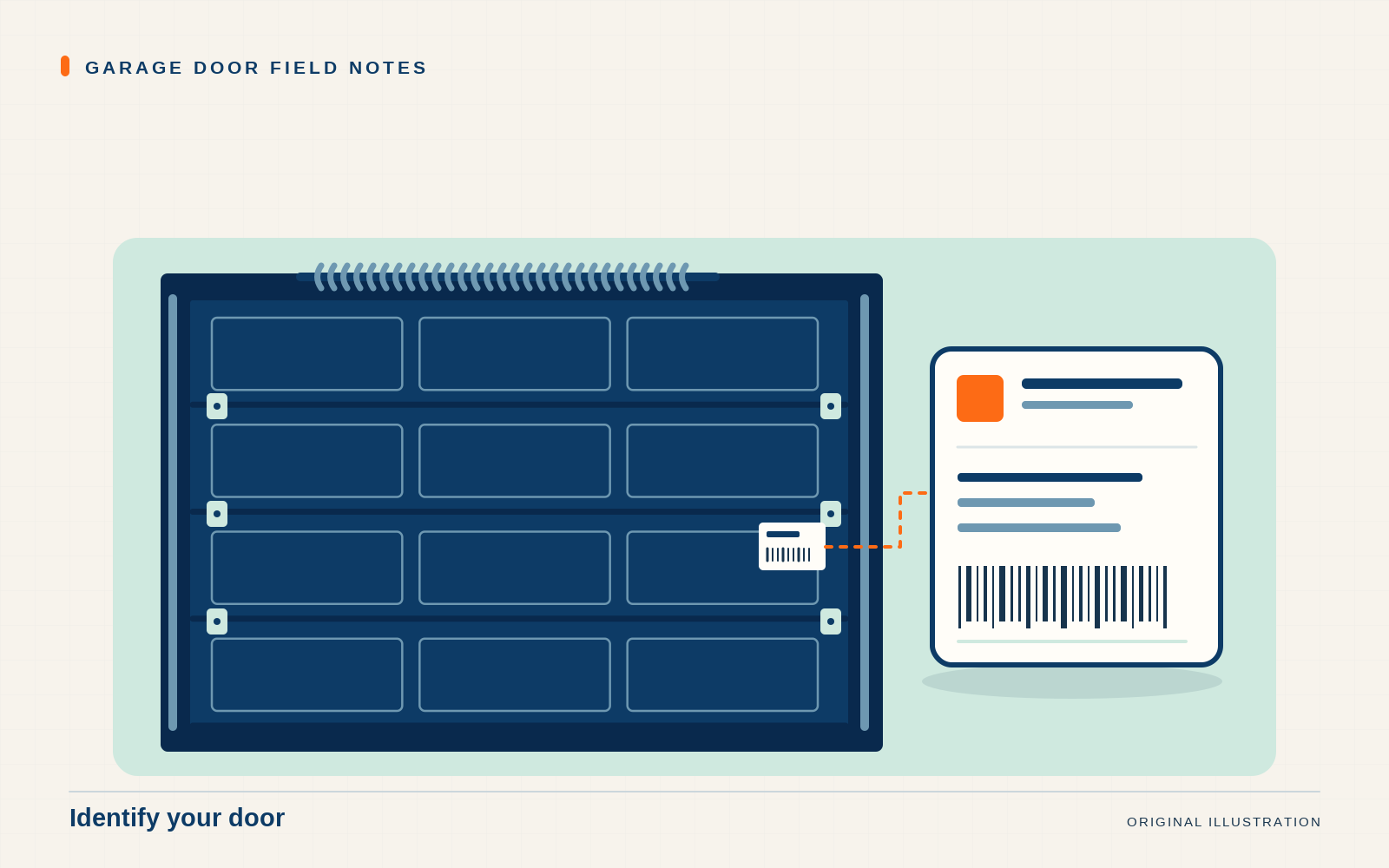
With a normally operating door fully closed and stationary, look at its interior face from a safe position. Label locations vary. For example, Clopay's identification guidance describes labels on the inside, often near a section edge or bottom panel. Treat that as a brand-specific starting point, not a universal location.
Photograph the entire label and then a readable close-up. Do not remove brackets, peel labels, reach between sections or move an unsafe door to expose a number. If the label is out of safe view, leave that part of the record blank for a technician to check.
Record the opener identification separately
Record the opener's model and manufacturing date separately from the door information. Chamberlain Group's model-location page shows several possible positions, including near or under a light lens on supported products. A part number on a circuit board or accessory is not automatically the opener model. When you look up a garage door manufacturer and model number, label each photo by equipment: door section, motor housing, remote or keypad. A rail part number may help with hardware, but the opener model label is usually the starting point when you request opener parts or controls service.
Use an existing manual or a photograph from floor level when the label is visible. Do not remove the motor housing or climb around a damaged door. If a light cover must be opened, use the exact product instructions and safe access arrangements; ask a technician when that cannot be done comfortably.
Make a useful photo set
A useful photo set gives both identity and context. Start with a full view of the closed door, an interior view showing its sections and a label close-up. Add a photograph of the specific visible part or damaged area only if it can be taken safely. For an opener problem, include its label and the relevant control model.
Keep the original image resolution so small lettering remains readable. Record unclear characters as uncertain instead of guessing whether a mark is a zero or letter O. Crop out people, vehicle plates and unrelated household details before sharing. Do not photograph or send access PINs, Wi-Fi passwords or account recovery codes.
What to do when a label is missing
Search purchase invoices, installation paperwork and manufacturer registration records. Older manuals may list a family of models, so a manual alone is not always conclusive. Give a supplier the available evidence and ask what remains unverified before approving a part order.
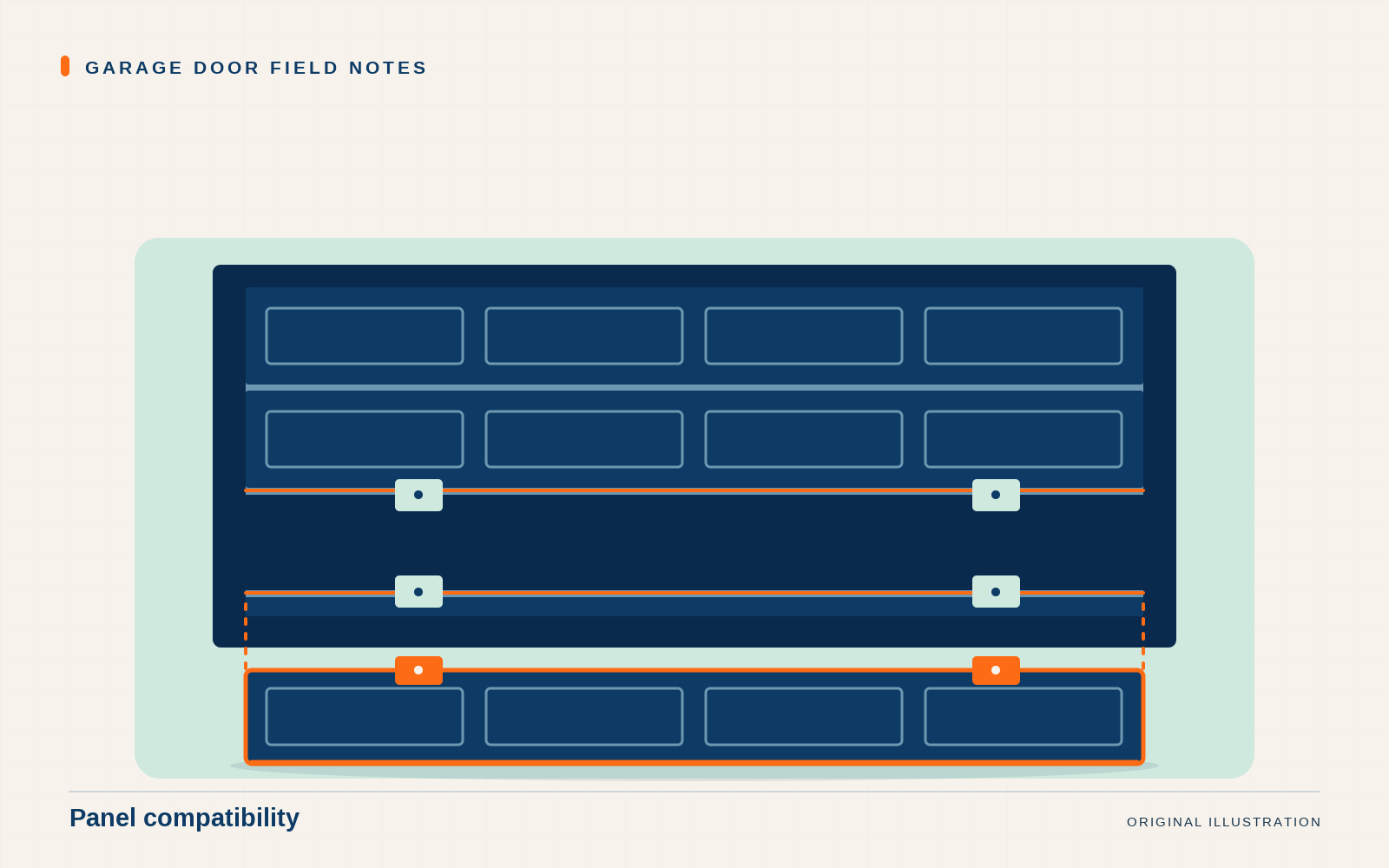
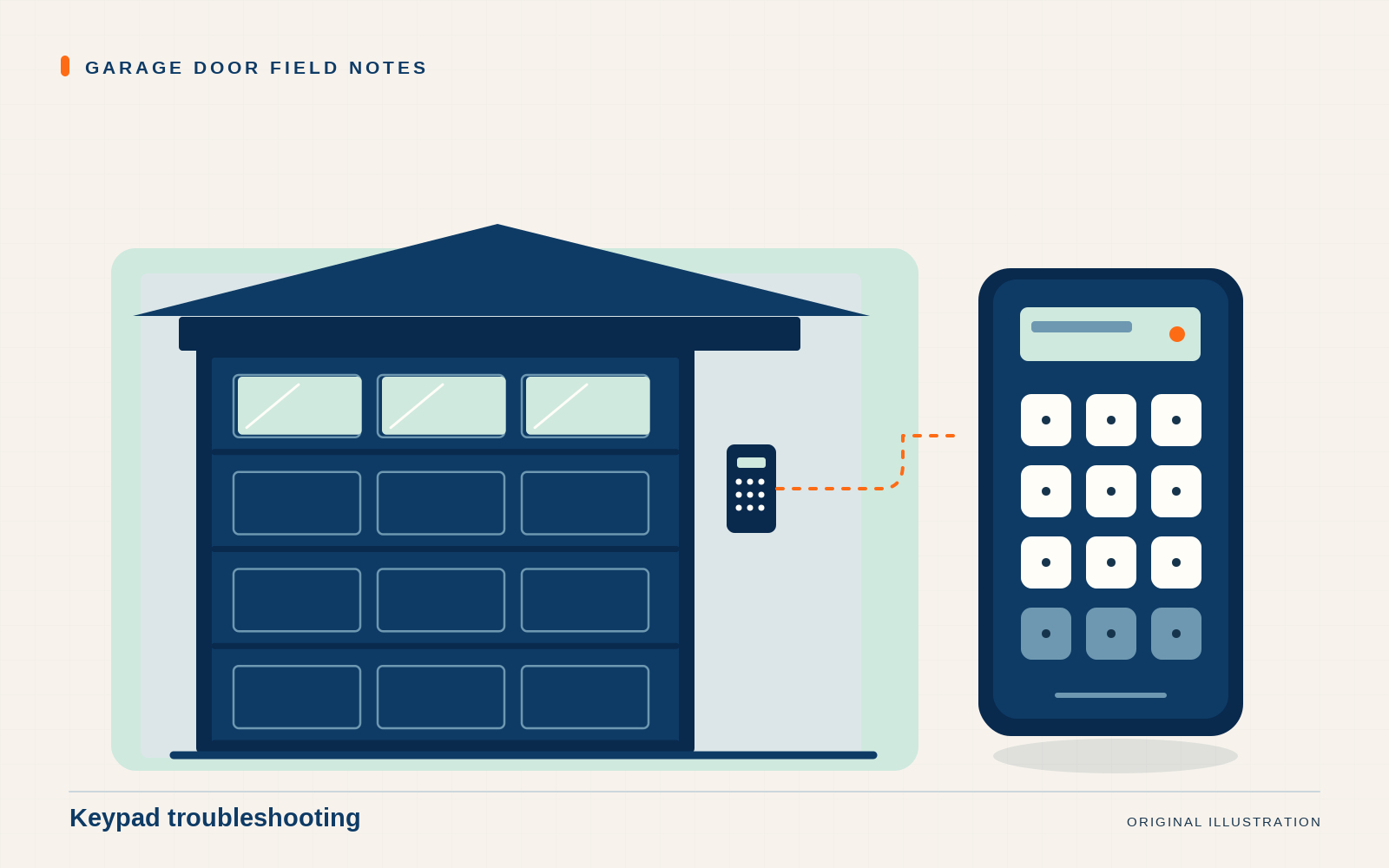
For a section, use the panel compatibility checklist; for an external control, see keypad diagnosis. The required identification differs. If records cannot establish the system, arrange a garage door service assessment rather than buying by color or shape. Keep the confirmed identification with the eventual repair invoice for the next maintenance visit.
Frequently asked questions
Is a serial number the same as a model number?
No. A model identifies a product design or family, while a serial number identifies an individual unit or production record. Supply both when available, without changing spacing or leading zeros.
Can a photo guarantee that a replacement part will fit?
No. Photos help identification, but a supplier may still need product records, measurements or an inspection. Ask for compatibility confirmation before committing to a nonreturnable order.