Garage Openers
 Garage Springs
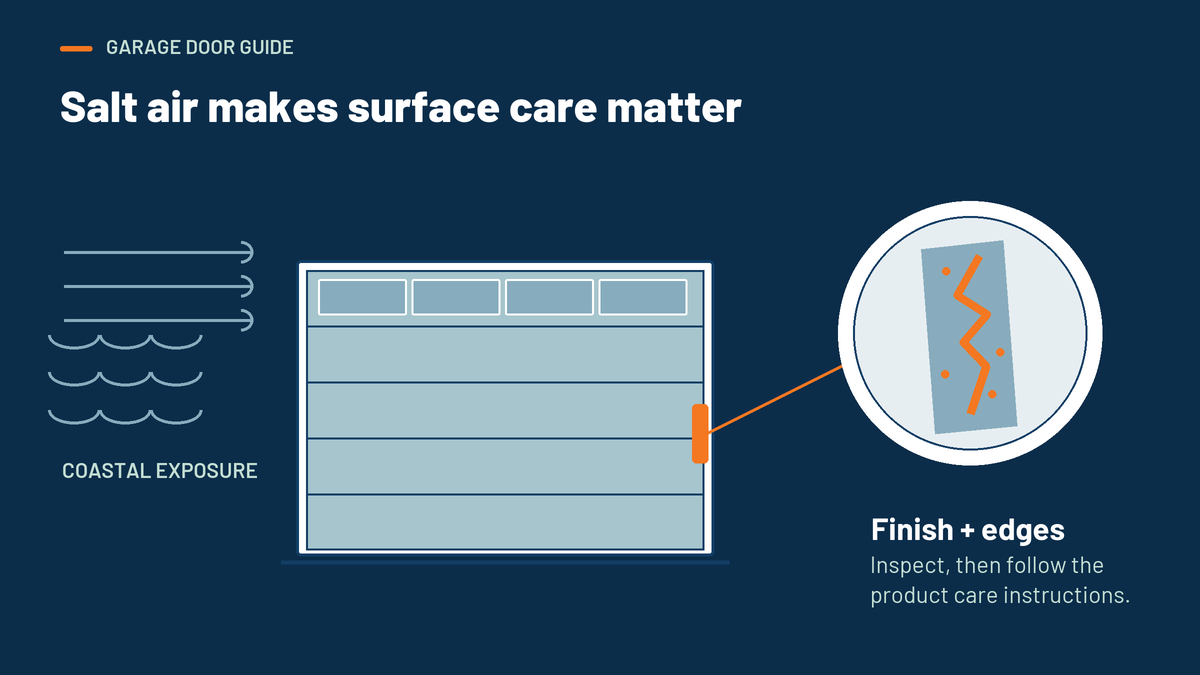
Coastal garage door maintenance starts with the finish
Coastal garage door maintenance should combine the door manufacturer's finish-care instructions with inspection of exposed working parts. Salt residue on a painted panel, a deteriorating wood finish and corrosion around a cable attachment require different responses. Washing the face of the door does not establish that the operating system is sound.
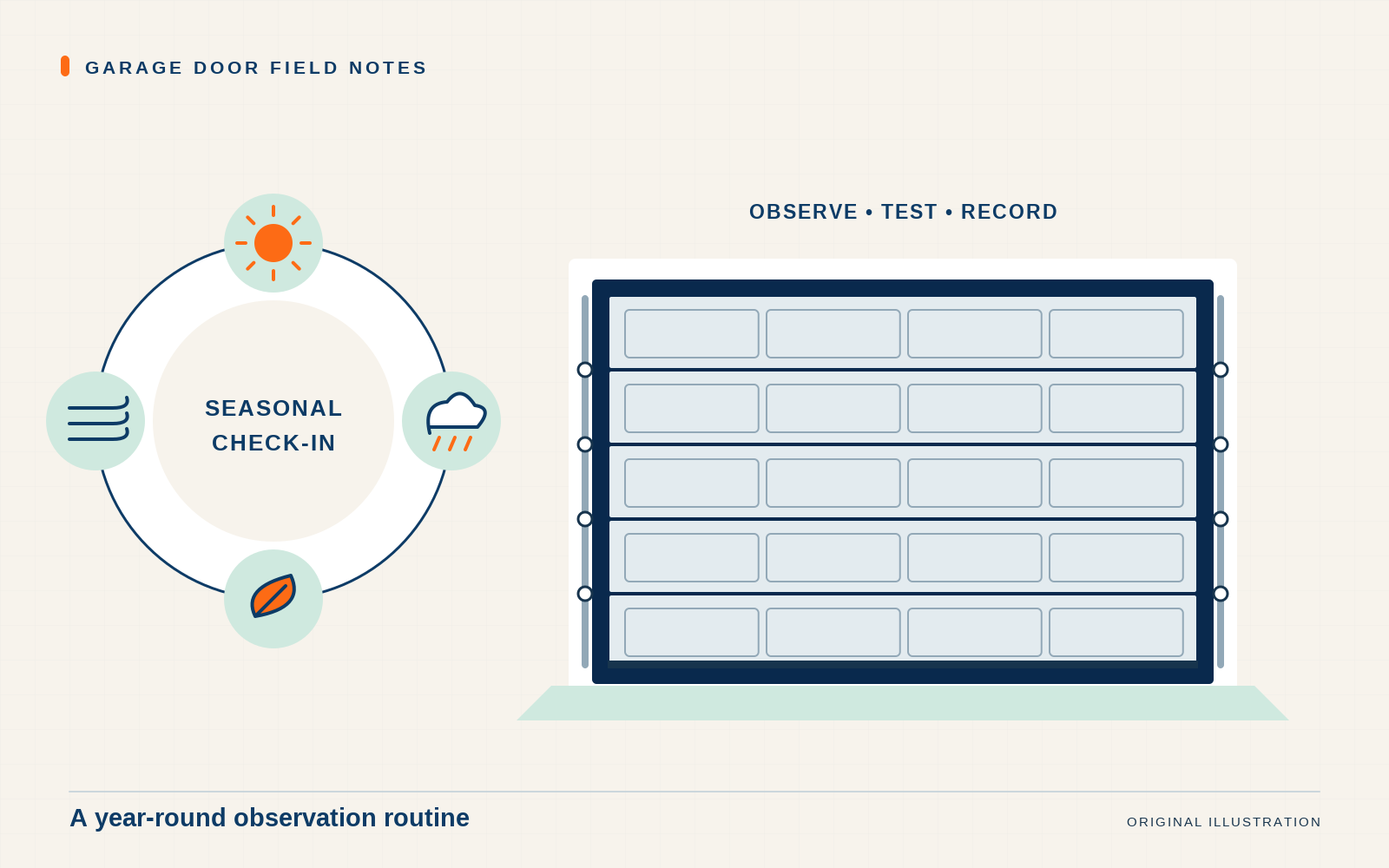
For a home near the Los Angeles coastline, start by identifying the door model, finish and any decorative overlays. Record where residue returns, where water collects and whether movement or sound has changed. This creates a useful care plan for your actual exposure instead of assuming every property within a coastal ZIP code needs the same treatment.
Match cleaning to each surface
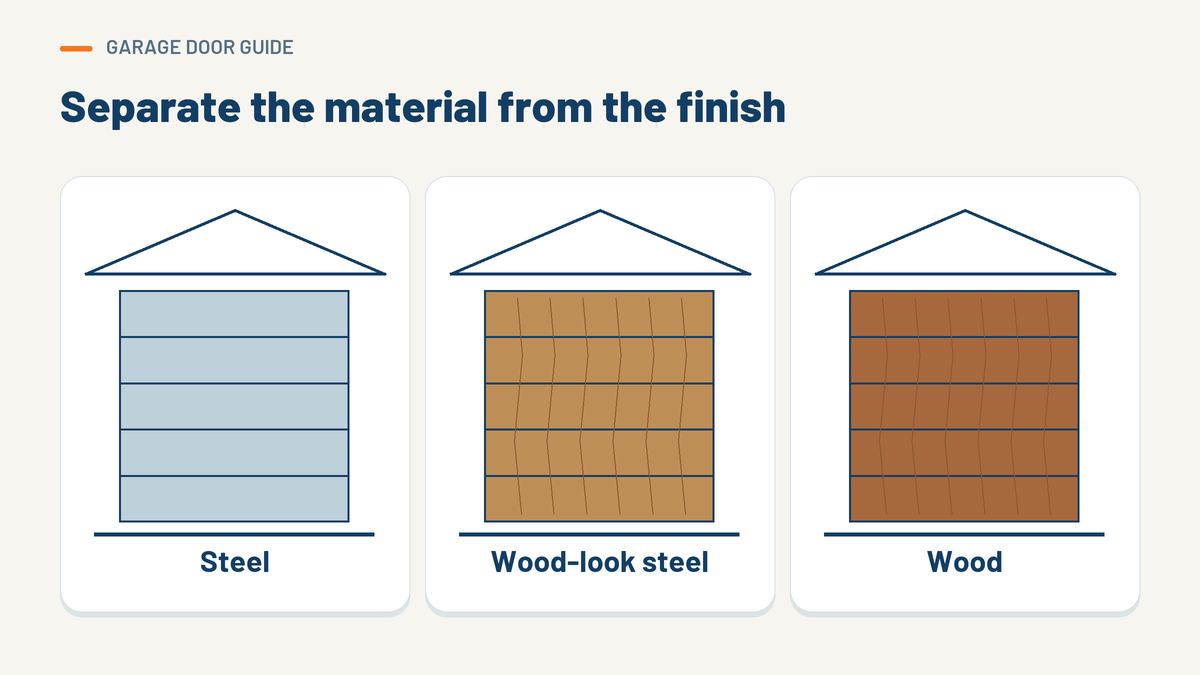
Garage door coastal finish care is product-specific. A painted steel face, wood-grain coating, composite overlay and window may each have different instructions even when they belong to the same door. Find the care manual for the installed collection before choosing a cleaner, wax or touch-up product.
- Use only the cleaning method and products approved for that surface.
- Follow the specified rinsing and drying directions; do not let a generic washing routine replace them.
- Do not assume pressure washing, abrasive pads or strong solvents are acceptable.
- Apply wax or a protective coating only where the manufacturer calls for it.
- Keep cleaning products away from electrical equipment and follow its separate care instructions.
Some manufacturers specify more frequent care in coastal environments. Use your own manual's interval and exposure guidance; a schedule published for another brand or finish is not automatically transferable.
Separate finish damage from hardware concerns
Salt air garage door corrosion deserves a closer look when discoloration returns after approved cleaning or appears around damaged coatings and working components. A photograph can help document change, but color alone cannot show how much strength remains in a metal part.
| What you notice | Useful next step |
|---|---|
| Residue on an otherwise intact panel finish | Check the surface-specific cleaning instructions and document recurrence. |
| Chips, peeling or rust at an edge | Ask about approved coating repair and whether corrosion extends beyond the visible area. |
| Deterioration around a hinge, roller or cable attachment | Arrange an operating-system inspection before treating it as cosmetic. |
| Loose hardware, frayed cable, uneven travel or binding | Stop using the door and keep people away until it is assessed. |
Do not loosen bottom fixtures to clean behind them. Bottom brackets and connected cables can carry substantial spring tension.
Look at the lower section and water exposure
The lower section is worth documenting because it is close to driveway runoff, splash and accumulated debris. Look from a safe position with the door closed. Note damaged coating, visible wood deterioration, seal gaps and evidence that moisture is repeatedly reaching the same area. On a coastal garage door, compare surface discoloration with rust forming around fasteners, the bottom section or hinges. Photograph the affected area after it dries. A worn weather seal and a deteriorating metal section need different repair decisions. Ask the installer which finish or compatible replacement section suits that opening.
A new seal will not repair corroded metal or deteriorated wood. Similarly, adding a threshold without understanding water movement may leave the underlying concern unresolved. Our bottom seal versus threshold guide explains those different functions.
For wood doors, monitor the condition of the protective finish and the material around hardware attachments. Follow the original finish system's maintenance requirements. Do not cover uncertain damage with paint or caulk before a technician can assess whether the section and attachments remain suitable for service.
Choose hardware by specification, not coating claims
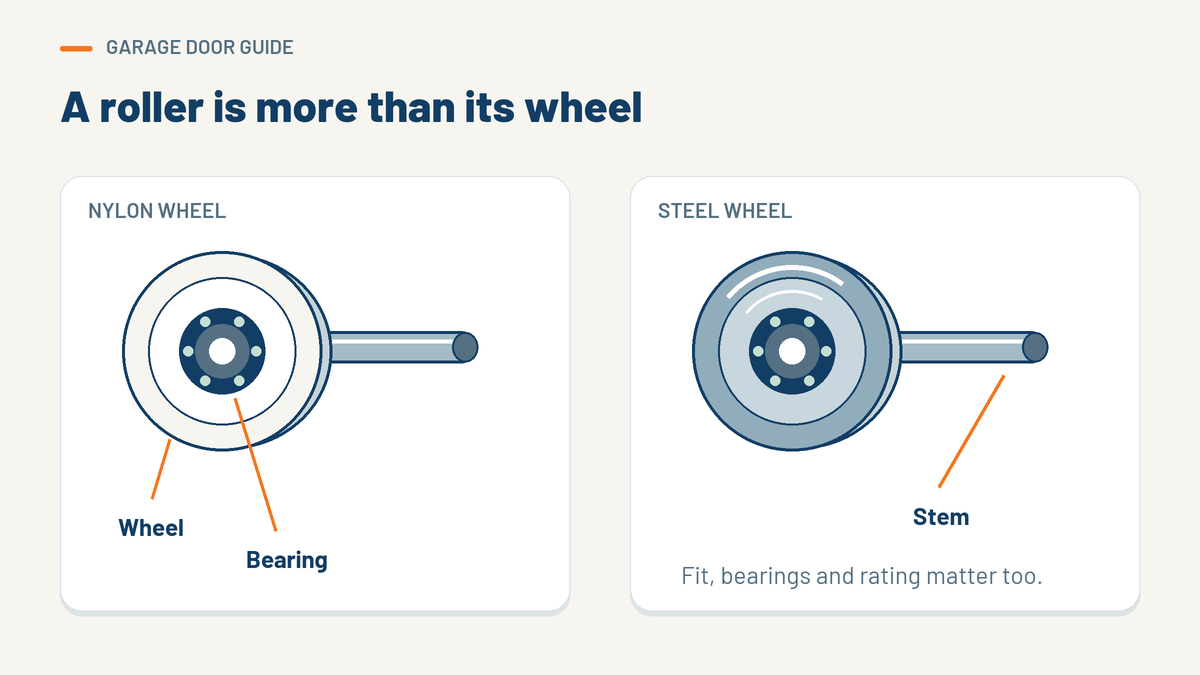
Coastal hardware care starts with knowing what is installed. A nylon roller wheel does not mean its stem or bearing contains no metal. A shiny replacement fastener does not establish that its dimensions, strength or corrosion resistance suit your door.
When parts need replacement, ask the technician to identify the approved specification and account for the site's exposure. The nylon versus steel roller comparison explains why wheel material alone is an incomplete choice. Lubrication also follows the part manufacturer's directions; spraying every surface is not a substitute for corrosion assessment.
Keep a simple record of inspection dates, approved products used and recurring concerns. Add these observations to your regular garage door maintenance checklist without repeating unnecessary operating tests on a door showing damage.
Decide whether care, repair or replacement is appropriate
A sound door with localized finish damage may need approved surface restoration. Widespread deterioration, compromised attachment areas or unavailable compatible sections call for a broader discussion. Ask the technician to distinguish appearance work from parts required for safe operation and to explain which findings support replacement.
If you are comparing new doors, review steel versus wood garage doors in the context of your maintenance budget and coastal exposure. Ask for the specific finish-care document before selecting the color or material, including any location-related limitations.
Our garage door replacement service can help assess the existing system and suitable replacement options. Have the model information and clear photos ready, and explain whether the concern is recurring residue, visible deterioration or a change in operation.