Garage Openers
 Garage Springs
Nylon vs steel garage door rollers: the practical answer
When comparing nylon vs steel garage door rollers, choose a compatible roller assembly first and wheel material second. A suitable nylon wheel can reduce rolling noise, but bearing construction, stem dimensions, load requirements and the condition of the door also matter. Neither material fixes a bent track, loose attachment or poorly balanced system.
The useful question is not simply which roller is quieter. It is which specified roller fits this door, supports its operating requirements and can be maintained correctly. That approach prevents a noise complaint from turning into a parts purchase that leaves the underlying problem unchanged.
Understand the three parts of a roller assembly
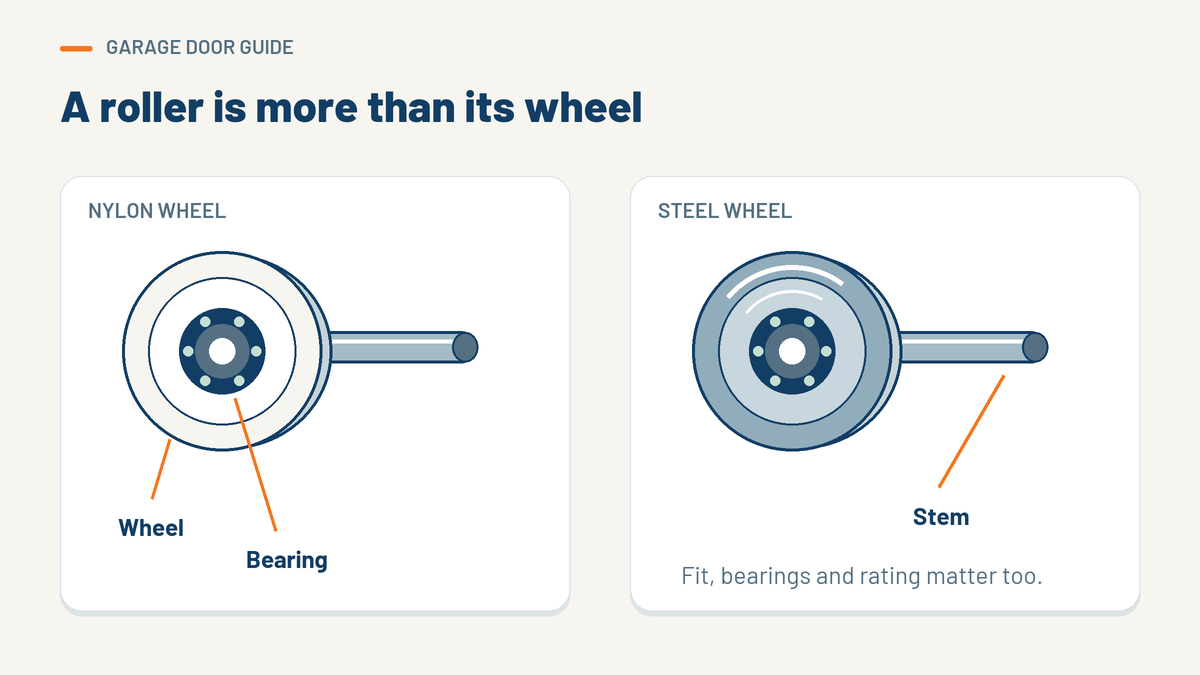
Garage door roller types are often named after the wheel, although the assembly also includes a stem and its bearing or bearingless construction. The wheel follows the track, while the stem fits the appropriate door fixture. A white or black wheel is not enough information to identify the complete part.
- Wheel: material and dimensions influence contact with the track.
- Bearing arrangement: designs differ, including bearingless and ball-bearing rollers.
- Stem: length, diameter and construction must suit the specified installation.
- Published application: load and cycle specifications describe a particular product under stated conditions.
Do not interpret a manufacturer's cycle figure as a guaranteed service life in years. Actual use and conditions differ. A higher-looking number on unrelated packaging also does not establish that the part is approved for your door.
Compare material without overlooking construction
A useful nylon versus steel roller comparison separates common material tendencies from promises about an entire door.
| Question | Nylon wheel | Steel wheel |
|---|---|---|
| What about sound? | Can reduce wheel-to-track rolling noise when correctly specified. | Can produce more noticeable rolling sound; noise still needs diagnosis. |
| Does the material identify the bearing? | No. Nylon-wheel products use different bearing arrangements. | No. Check the particular assembly and its specification. |
| Is it suitable for every door? | No. Required fit and loading still apply. | No. Metal construction alone does not prove suitability. |
| What care is required? | Follow the product instructions, including any bearing-care restrictions. | Follow the product instructions; do not assume any lubricant is acceptable. |
Ask for the proposed part number and the reason it suits your door. Terms such as “premium” or “heavy duty” are less useful than a clear specification and an explanation of compatibility.
Garage door roller replacement compatibility
Garage door roller replacement compatibility includes more than matching the visible wheel size. The technician needs to consider the track, hinge or fixture, required stem engagement and the door manufacturer's component requirements. Parts that look almost identical can have different performance characteristics. For garage door roller replacement, record the approximate door type, where the noise starts and whether one roller looks different from the rest. Shaft length, roller diameter and bearing construction are part of compatibility. A noisy door also warrants checking hinge play and track alignment before ordering parts.
This matters especially when a door has nonstandard tracks, substantial decorative material or a rated assembly that depends on specified hardware. Do not authorize a generic substitution solely because it slides into place. Ask whether the suggested replacement preserves the door's intended construction.
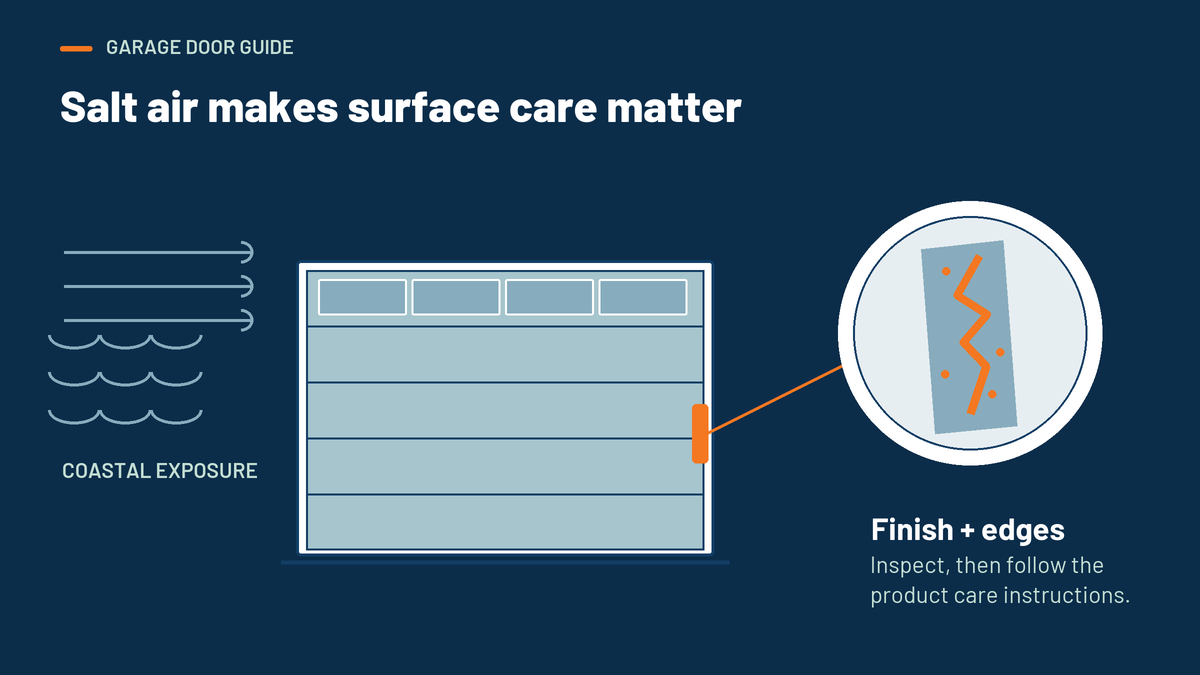
Exposure belongs in the conversation too. Nylon describes the wheel, not corrosion immunity for the stem, bearing or surrounding hardware. If the garage is exposed to coastal moisture, our coastal garage door care guide explains what to document before discussing replacement parts.
Investigate noise before ordering a roller upgrade
A noise diagnosis should identify when the sound occurs: throughout travel, at one point in the track, when the door starts moving or near the opener. Record that pattern from a safe distance during ordinary use only if the door is otherwise operating normally. Do not keep cycling a binding, crooked or visibly damaged door to make a recording.
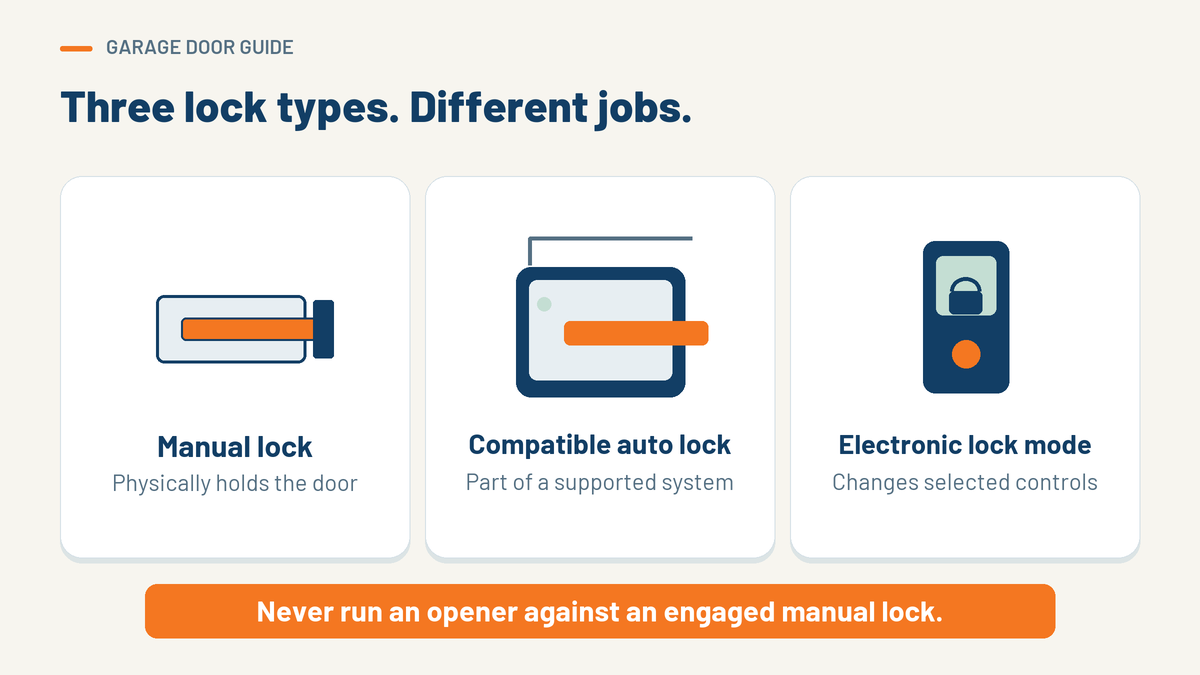
Roller noise may be only one part of the complaint. The technician should check the supporting hardware and door movement before promising that a wheel-material change will solve it. An engaged physical lock is another reason a door may resist the opener; our guide to locks and automatic openers explains that separate conflict.
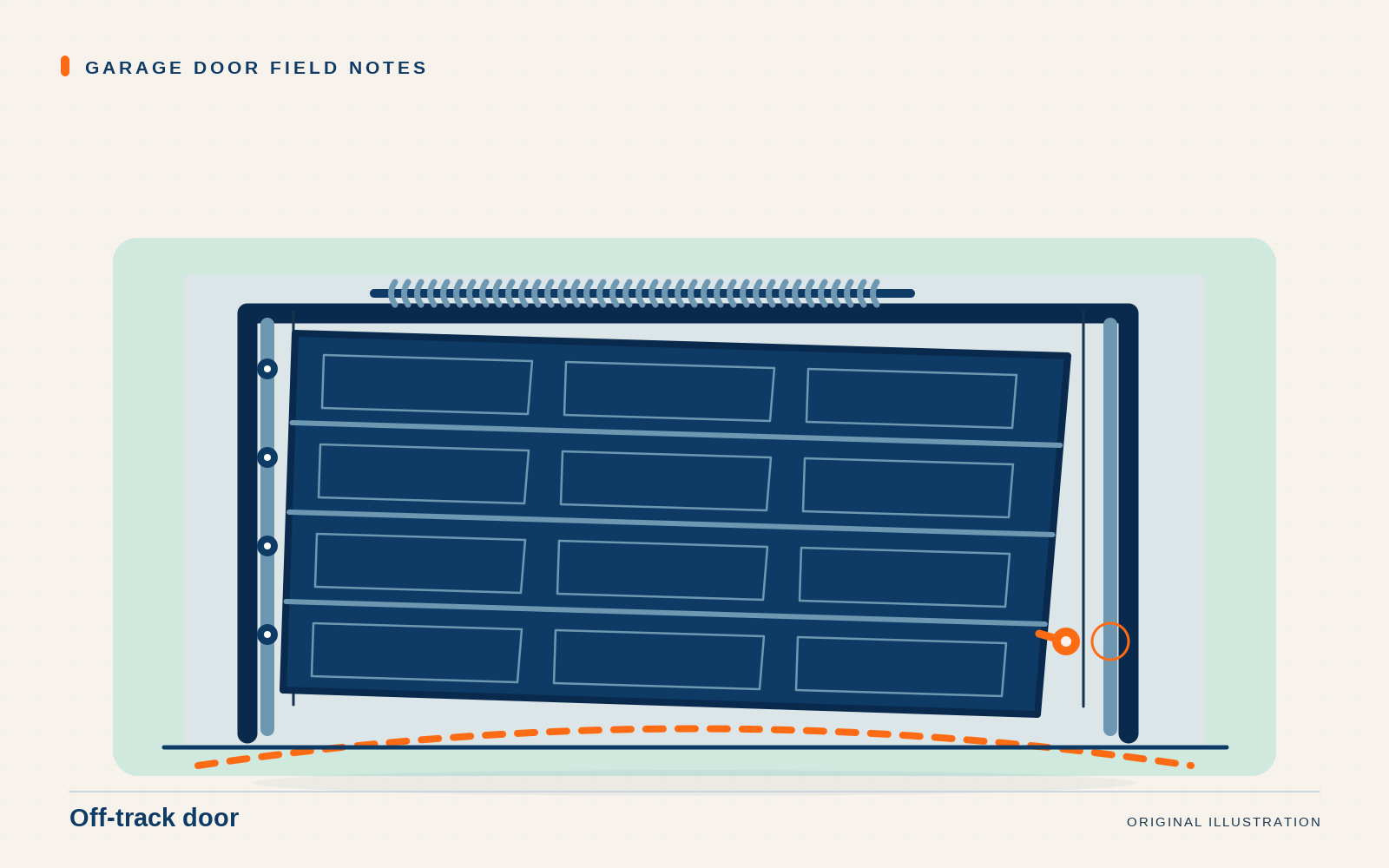
A roller out of its track is a stop-use condition, not an opportunity to push it back in. Follow the off-track garage door guidance and arrange service.
What to expect from a roller service visit
A useful service recommendation identifies failed or unsuitable parts, explains the replacement specification and checks the door's operation after the work. Ask which noise the proposed repair addresses and whether other findings need separate attention. This makes it easier to distinguish necessary repair from an optional change in operating sound.
Roller replacement is not a homeowner track-bending project. Do not remove fixtures to inspect a stem or bearing. Bottom brackets and cable attachments can carry spring tension, even with the door closed.
Our garage door repair service can assess roller wear and the surrounding system. After repair, use the seasonal maintenance checklist together with the exact product instructions. Keep the installed part information so future maintenance and replacement decisions begin with an identified assembly rather than a guess.