Garage Openers
 Garage Springs
Recognize the condition without moving the door
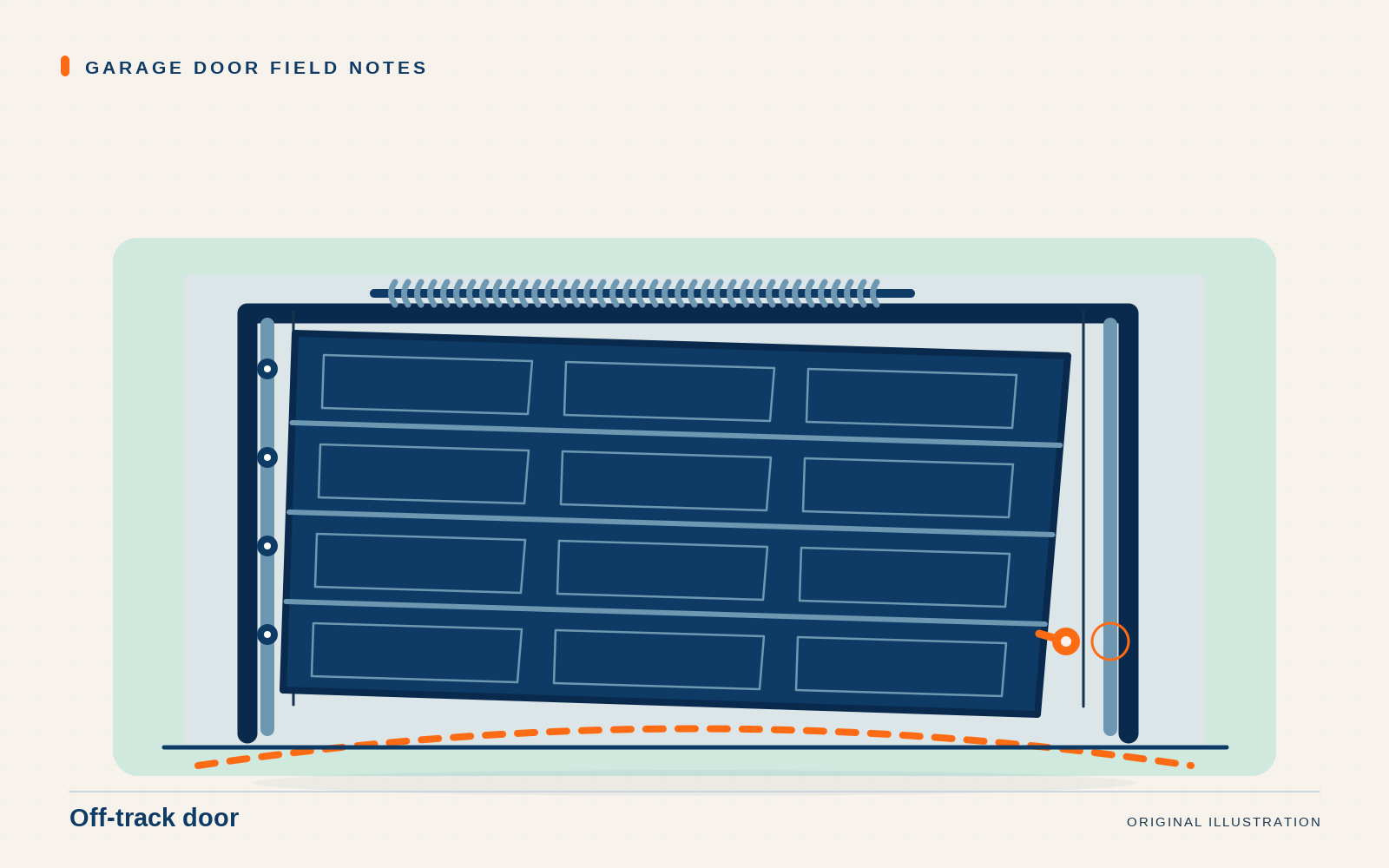
A door sitting diagonally, a roller visibly outside its guide, a bent track or one side hanging lower can indicate a serious mechanical fault. A cable hanging loose is another reason to stop. You do not need to determine the exact failed part before keeping the door out of use.
“Off track” is a useful description of what you can see, not a complete diagnosis. An impact, damaged roller or counterbalance problem can affect several connected parts. Leave the door in its current position. Do not push on a section, tug a cable or make another operating attempt to see whether the problem clears.
Stop operating it and clear the area
Keep people, pets and vehicles away from the opening and the area under the raised sections. Tell everyone with a remote, wall control or app access that the door must not be operated. If you can suspend a scheduled opening from a normal app control without approaching the door, do so.
Use another entrance. Do not drive underneath a partly open door or place a ladder, timber or vehicle under it as an improvised support. Amarr's troubleshooting guidance specifically says not to operate a door when its cable has come off the drum and directs owners to a qualified technician.
Avoid the emergency release on an unstable door
The emergency release is not a way to make a damaged door safe. It separates the opener connection, and a door with failed support or counterbalance components may move unexpectedly. Do not pull it on a crooked, partly open or unsupported door.
Chamberlain's manual-operation precautions require checking the door's position and condition before release. An outage procedure for an intact, closed door does not apply to an off-track door. Keep your hands away from section joints and hardware. If someone is trapped or the condition creates an immediate emergency, contact emergency services instead of attempting a mechanical rescue yourself.
Document only what is visible safely
From a clear location, note the door's approximate position, which side looks lower, and whether a roller or cable is visibly displaced. Mention any vehicle impact, loud bang or recent service. A whole-door image helps show the condition; a zoomed photo can add detail without getting closer. If a garage door came off track, note whether a roller is outside the channel, one side is lower or a cable looks slack. Take photos from a safe spot with the door stopped. Share the observations when arranging garage door track and cable repair.
Do not cross under the door to find its label. Existing paperwork or the opener model already on record may be enough for the first call. Explain whether the garage has another entrance and whether the opening can be isolated from children or visitors. The identification guide is useful later, once safe access is established.
What the repair assessment should cover
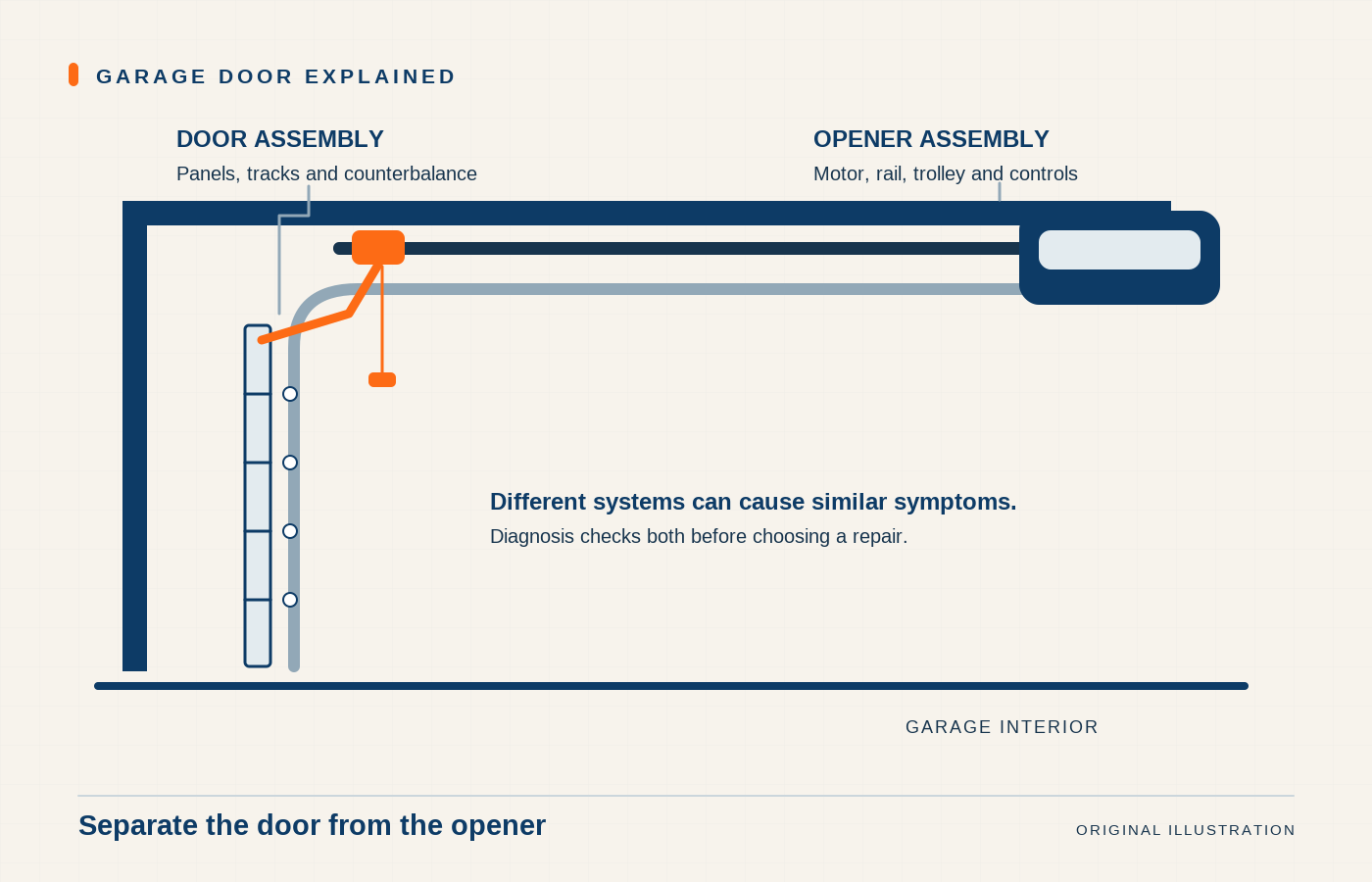
Ask for an assessment of the cause and any resulting damage. Simply putting a roller back in a guide does not answer why it came out. The inspection may need to include tracks and supports, rollers and hinges, sections, cables, spring balance and the opener connection before the system is returned to service.
When arranging garage door service, explain that the door is displaced so the technician can plan safe access and equipment. Ask the written scope to identify damaged components and final operating checks. If sections are bent, the panel-compatibility guide explains what a replacement recommendation should establish.
Frequently asked questions
Can I run the opener once to close the gap?
No. An additional attempt may move an unstable assembly or worsen damage. Keep the area clear and ask the technician how the opening can be made safe.
Should I loosen the track so the roller fits?
No. Do not loosen, bend or remove tracks, cables or bottom brackets. The door must be safely supported and its underlying fault assessed by a trained technician.