Garage Openers
 Garage Springs
What the springs do
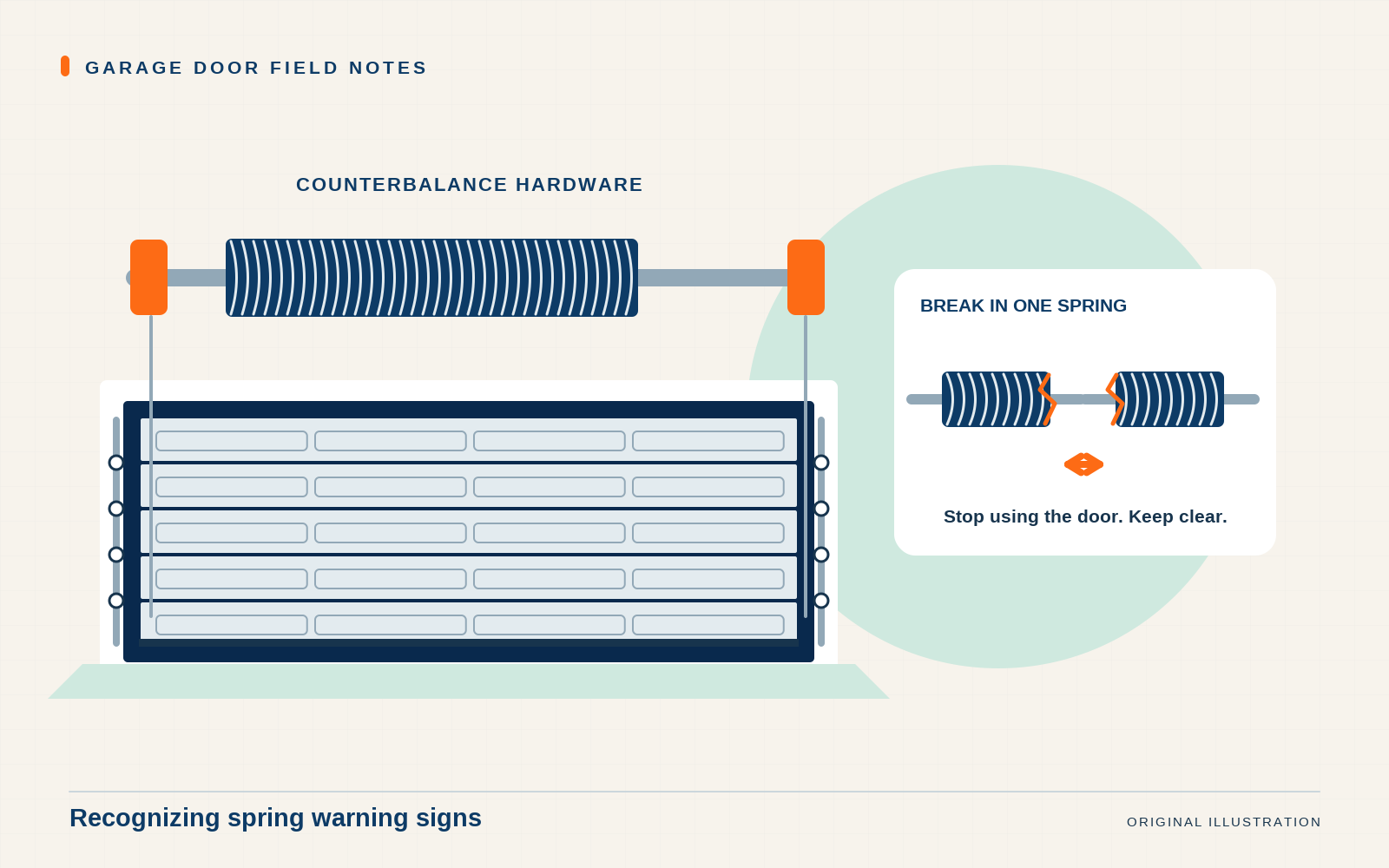
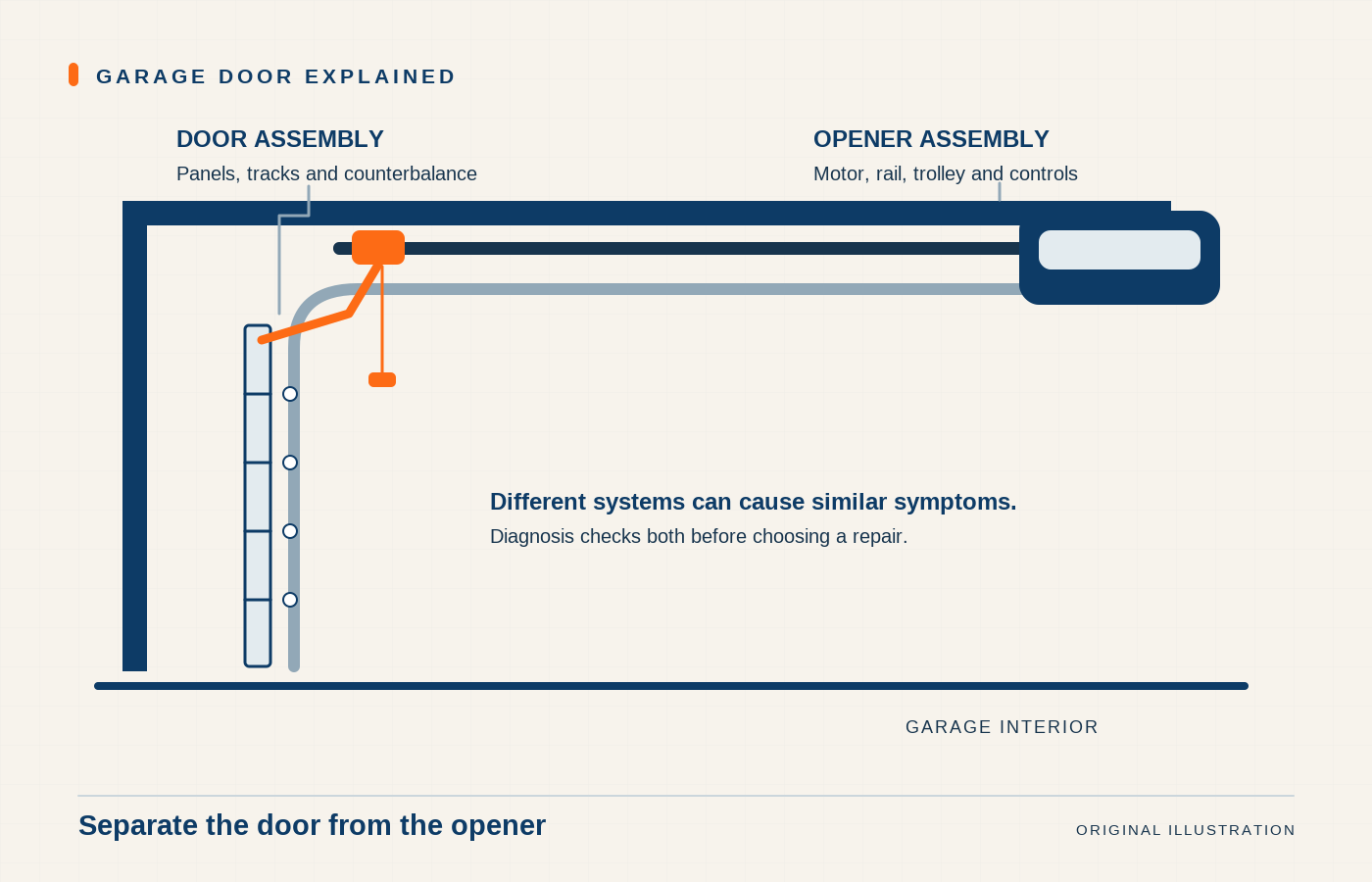
The spring system counterbalances the weight of the garage door. The electric opener operates the door; it is not a substitute for that support. A spring problem can therefore appear as a door problem or an opener that struggles, stops or makes noise.
Different doors use different spring arrangements. Do not identify a replacement by appearance alone, and do not assume that another door of similar width needs the same part. Matching and adjusting the system requires attention to the actual door and hardware.
Conditions that call for stopping operation
- A visible separation in a spring: this may indicate a spring that has already broken, rather than one that is merely “about to” fail.
- A loud snap followed by changed door behavior: describe both observations when arranging service; the sound alone is not a diagnosis.
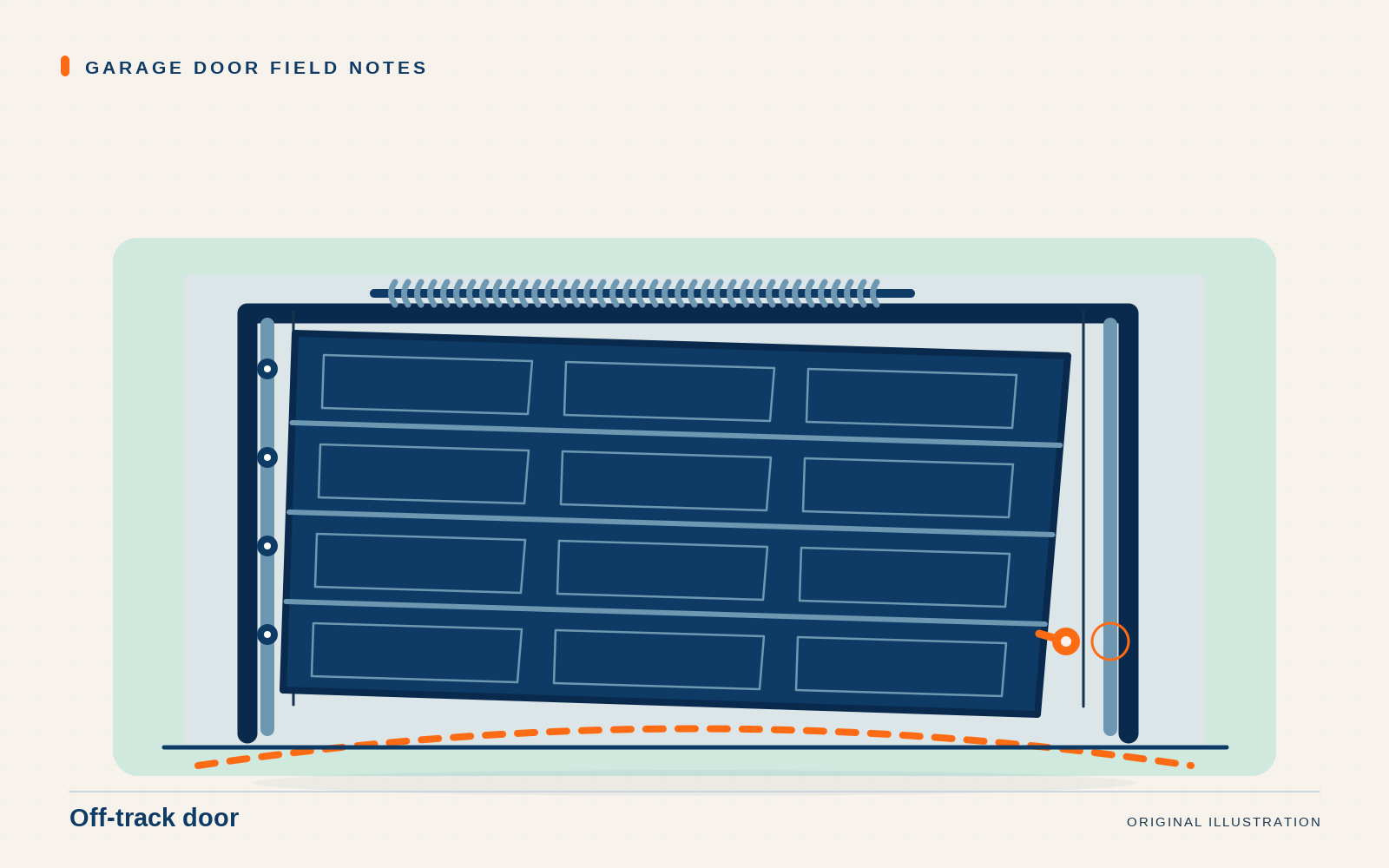
- A crooked door or loose cable: the supporting system may no longer be controlling the door correctly.
- A door that drops, will not stay supported or becomes unexpectedly difficult to move: do not keep testing it to see whether the problem clears.
Keep people, pets and vehicles away from the opening. Do not attempt to help the opener by lifting while it runs, and do not disconnect an open door from the operator. The door may move suddenly if its support is compromised. A visible gap in an exposed torsion spring, a door that suddenly feels heavy or a loose cable may indicate a lift-system problem. Keep the door at rest and record the symptom from a safe position. Request garage door spring diagnostics before operating the door again.
Changes that deserve inspection, without guessing the cause
New scraping, rough movement, corrosion or an opener that increasingly struggles should be investigated. These observations can involve springs, but they can also involve tracks, rollers, hinges, the opener or more than one component.
A photograph from a safe position can help describe visible damage. It cannot establish spring tension, remaining life or whether the whole system is safe. Likewise, a quiet door is not proof that a spring has years of service remaining.
Keep the inspection request factual: when the change started, whether there was an impact, the current door position and whether a cable or spring looks different. Avoid repeatedly cycling the door to produce a better video.
Why a fixed replacement countdown is misleading
Spring selection, operating frequency, installation and the condition of the door all affect the application. A generic number of years does not tell you the remaining life of the particular spring in your garage. A cycle rating is also not a calendar warranty.
Ask a technician to explain the condition found and the proposed replacement specification. If the door uses more than one spring, ask how the recommendation addresses the system as a whole. The decision should be based on the actual configuration, not a universal online rule applied without inspection.
Maintenance can help you notice changes and address related problems; it cannot guarantee that a spring will announce its failure in advance.
What to ask before approving spring work
Request an explanation of which components need replacement, how the selected parts match the door and what functional checks are included afterward. Clarify parts and labor coverage in writing. If cables or other hardware are also proposed, ask what damage or wear was found.
Use the estimate comparison guide to review the scope. For spring replacement service, tell the provider immediately if the door is open, crooked or blocking the only access point. Leave winding, unwinding and loaded-hardware work to a trained technician.
Frequently asked questions
Can I keep using the opener with a broken spring?
Stop using the door and arrange service. The opener is not a replacement for the spring system’s support, and repeated operation can create additional hazards or damage.
Can rust tell me exactly when a spring will break?
No. Visible corrosion deserves assessment, but a photograph or surface appearance cannot provide a reliable remaining-life countdown.