Garage Openers
 Garage Springs
Using a garage door lock with an automatic opener
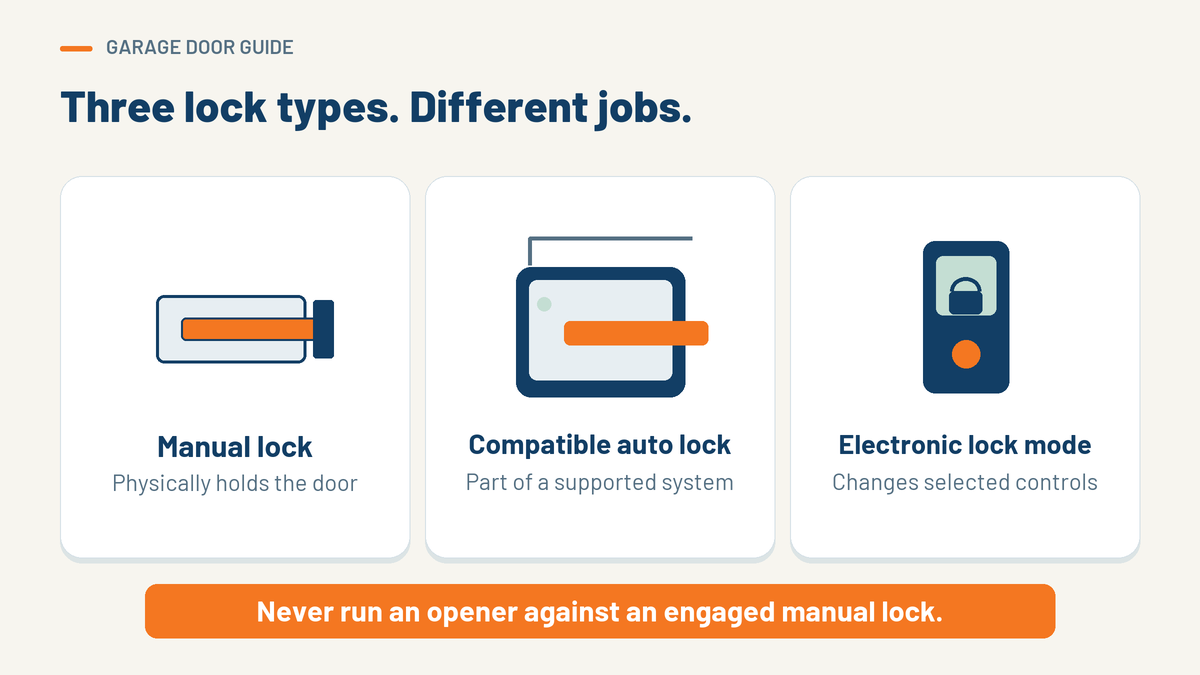
A garage door lock with an automatic opener must be part of a compatible operating arrangement. Never run the opener while a manual slide lock or other physical door lock is engaged. The motor can pull against the locked door and damage the door or opener. Do not increase force settings to overcome that resistance.
The word “lock” can mean a mechanical bolt, a powered accessory or an electronic setting that restricts certain controls. Identify which one you have before changing anything. A button labeled Lock on the wall control does not necessarily mean there is a physical bolt securing the door.
Three lock types that should not be confused
A garage door’s vacation lock and manual lock perform different functions. A garage door slide lock physically stops the door. An opener vacation lock changes how wireless commands are accepted. An automatic door lock relies on hardware made for the installed system. If you use an automatic opener, compare the label and the operating instructions before deciding what the door needs. Get help with opener and control compatibility.
| Type | What it does | What to verify |
|---|---|---|
| Manual slide or keyed door lock | Physically restricts door movement when engaged. | The opener manufacturer's required arrangement for manual locking hardware. |
| Compatible automatic lock | Locks and unlocks as part of a supported opener system. | Exact opener model, lock part number and installation requirements. |
| Electronic Lock or Vacation mode | Restricts specified control commands. | Which remotes, keypads, apps or local controls the mode affects. |
The controls that remain active in an electronic lock mode vary by model. Read that model's manual rather than assuming every possible command is blocked. A compatible powered lock is a separate device even when the opener also has an electronic lock setting.
Manual garage door lock and automatic opener conflicts
A manual garage door lock and automatic opener can conflict when someone engages the bolt and another person later uses a remote, keypad or app. A visitor may not know a lock exists. An automated routine also cannot be assumed to recognize an added manual lock.
Opener installation instructions commonly require existing manual locking devices to be disabled before powered operation. Have the installer explain the required arrangement for your exact equipment. This is not a reason to improvise wiring, bypass a lock interlock or remove hardware you cannot identify.
If the opener already pulled against a lock, stop trying it. Tell the technician what happened and whether the door shifted, bent or made an unusual sound. Our guide to an opener that hums without moving the door covers other possible causes, but repeated activation is not a safe diagnostic shortcut.
Automatic garage door lock compatibility is model-specific
Automatic garage door lock compatibility depends on the opener and accessory specifications, not just the brand name or whether a connector appears to fit. The system must coordinate unlocking with door movement and locking with the appropriate closed position.
For example, Chamberlain Group's 841LM documentation distinguishes its supported 12-volt systems from older 24-volt lock systems. That distinction is a reason to verify the exact part, not a shopping recommendation for every LiftMaster or Chamberlain opener. Replacement and retrofit possibilities must be checked against current documentation for the installed model.
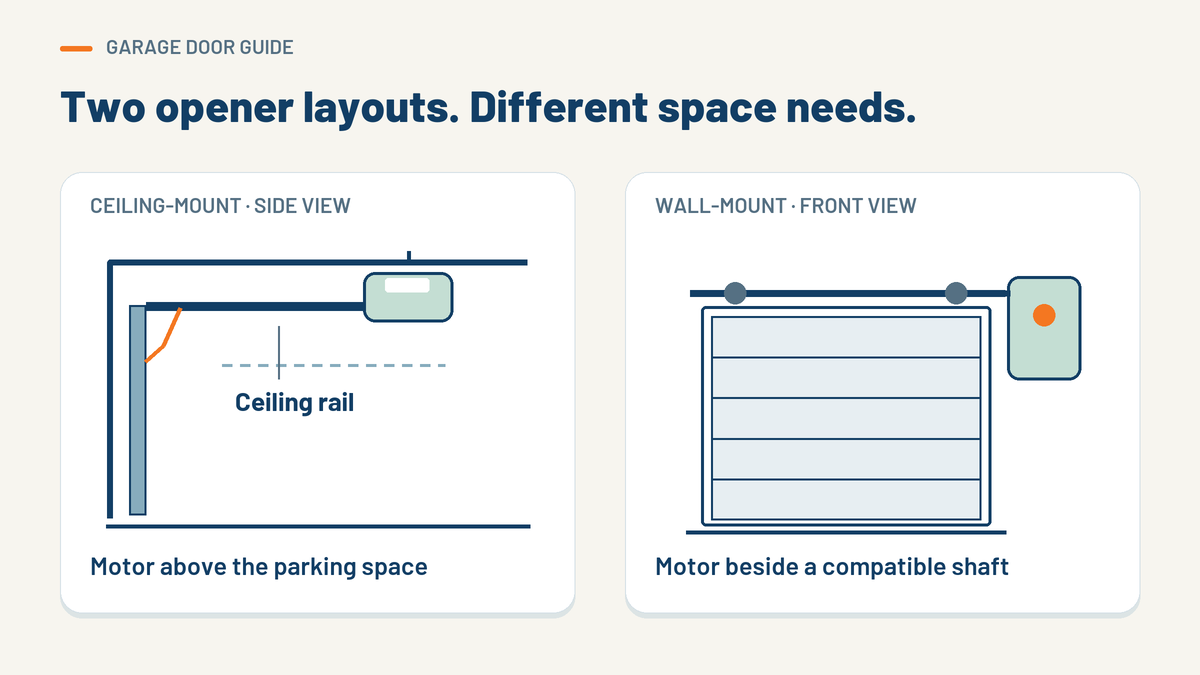
Ask the installer to identify the accessory and demonstrate the documented operating behavior after installation. If you are considering a different opener layout, the wall-mount versus ceiling opener comparison explains the broader compatibility questions. Adding a lock does not establish that an otherwise unsuitable opener will fit.
Understand electronic lock mode before resetting controls
Electronic lock mode can explain why a previously working remote stops operating the door. It does not automatically mean the remote has failed or needs to be erased. Check the manual's description and indicators before replacing controls or resetting memory.
Our guide to a remote that fails while the wall button works separates that symptom from other radio-control problems. Keep the diagnosis specific: whether a wall button responds, whether a remote responds and whether a physical bolt is present are three different observations.
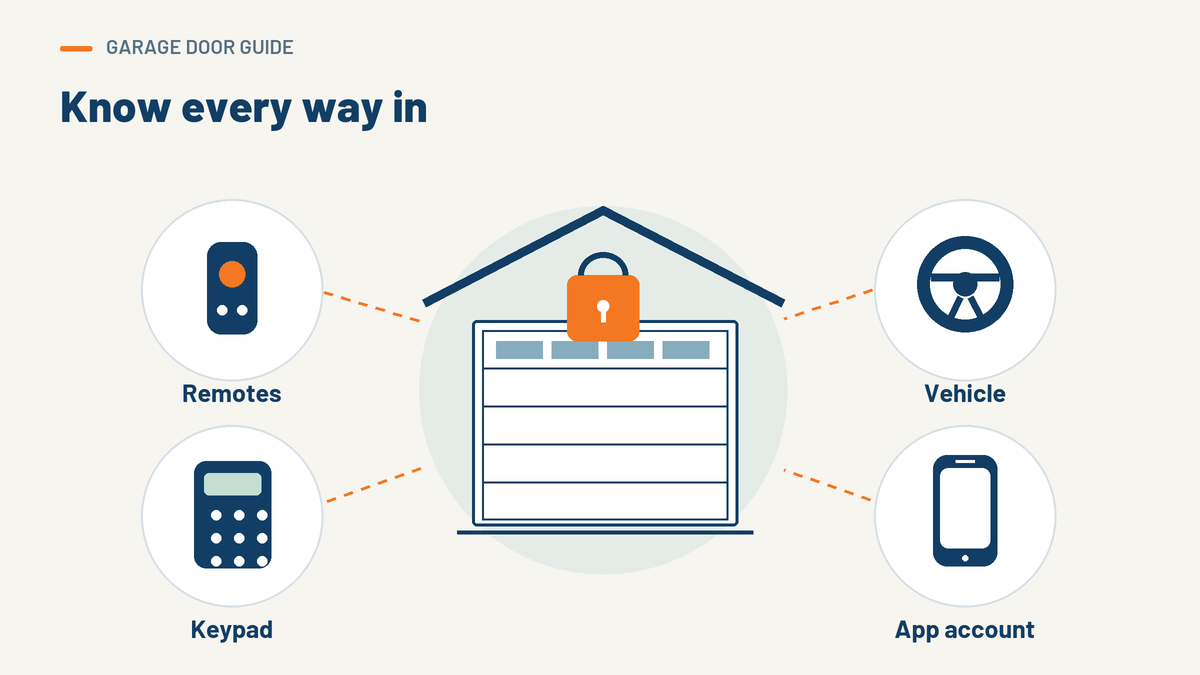
For a new home or tenant handover, changing a mechanical lock is also separate from revoking remotes and app access. Use the new-home garage access checklist to account for those credentials. Do not assume changing a keypad PIN removes every other way the opener can receive a command.
Plan for outages and confirm the final setup
Before relying on the system, ask how the installed automatic lock behaves during a power outage and how the manufacturer describes manual operation. Battery operation and lock behavior can differ between models. Keep another authorized entrance available while any access changes are being made.
Never release or force a visibly damaged or unstable door. If a door is heavy, crooked or binding, leave it for a trained technician. The emergency release is not a repair for a lock conflict or a counterbalance problem.
For a compatibility concern or an opener that has pulled against a locked door, our garage door opener repair service can assess the arrangement. Share the opener model, photos of the lock and the sequence of events. The aim is a documented setup in which every intended control and locking device works together.