Garage Openers
 Garage Springs
Wall-mount vs ceiling garage door opener: start with fit
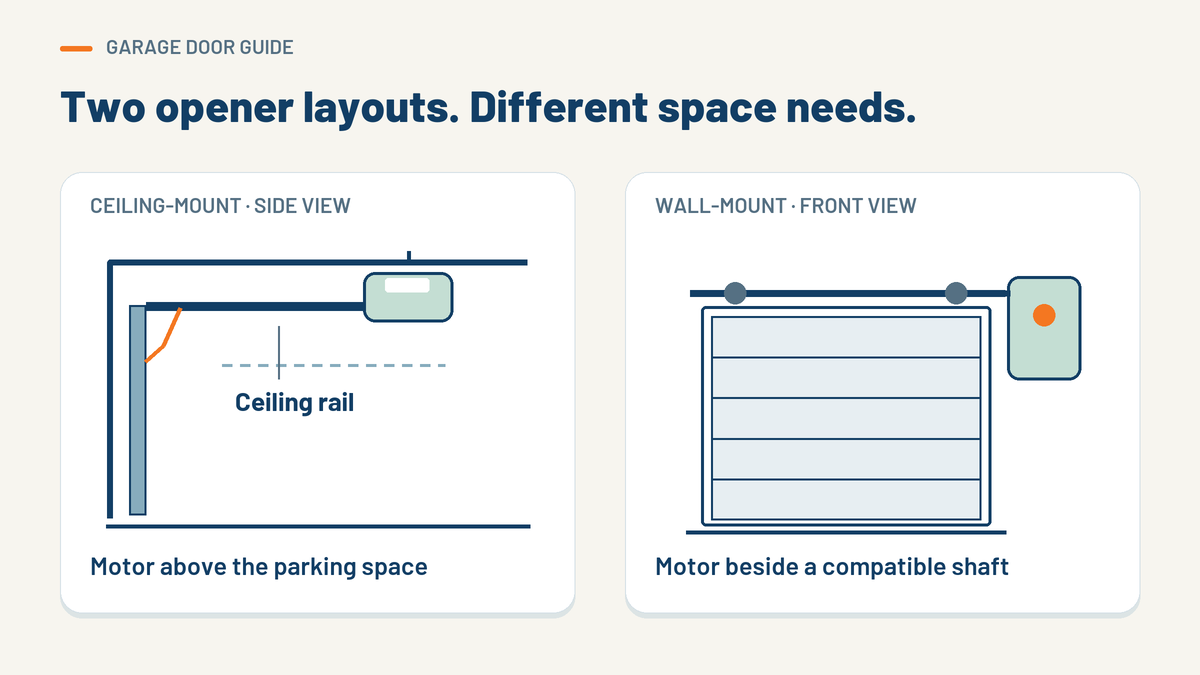
The wall-mount vs ceiling garage door opener decision starts with your door and available space. A wall-mount, or residential jackshaft, opener drives a compatible torsion shaft beside the door. A ceiling-mounted trolley opener moves the door through an overhead rail and door arm. Neither layout is automatically the right upgrade for every garage.
Choose a wall-mount model when its installation requirements match the door and clearing the central ceiling has a real benefit. Choose a ceiling layout when its rail fits comfortably and it provides the features you need. An opener should operate a correctly balanced door; changing the motor layout does not repair worn springs, damaged tracks or a sticking door.
How the two layouts use garage space
The important difference is where the operating equipment sits, not whether the packaging says premium or smart. Compare both the stationary equipment and the space the moving door occupies.
| Planning issue | Wall-mount layout | Ceiling trolley layout |
|---|---|---|
| Main equipment | Beside the door, coupled to a compatible shaft. | Motor and rail above the parking area. |
| Central ceiling | Removes the opener rail from this area; door tracks remain. | Needs a clear route for the rail and trolley. |
| Side clearance | Must accommodate the specified operator and its connections. | Still needs clearance for door tracks and hardware. |
| Lighting | May use separate fixtures or manufacturer-specified remote lights. | Check the actual model’s built-in lighting and coverage. |
| Compatibility | Door, shaft, drums and lift arrangement all matter. | Door type, height, rail and approved attachment all matter. |
Wall mounting does not make an overhead sectional door disappear. Storage racks and tall vehicles must still clear the door through its entire travel.
Wall-mount garage door opener requirements
Wall-mount garage door opener requirements extend beyond finding an empty patch of wall. The installer needs the exact door configuration and the selected opener manual. A visible torsion shaft alone is not proof that a model is compatible. A jackshaft or wall-mount opener can free ceiling space when the door shaft and side clearance suit the model. For garage door opener installation, share photos of the spring shaft, end bearing and the nearest wall. Confirm safe access to the controls and release hardware after installation.
- Confirm the approved sectional door type, size and weight range.
- Check the shaft, drum arrangement and lift configuration against the manual.
- Allow the specified side and overhead space, secure mounting and service access.
- Plan electrical supply, safety devices, controls and any required automatic lock.
- Have door balance and mechanical condition evaluated before installation.
Low-headroom hardware and other special configurations need particular attention; approvals vary by model. Do not convert spring or track equipment to make a purchased opener fit. If the labels are unclear, our guide to finding the garage door manufacturer and model number explains which identification details help.
Measure useful ceiling space, not just ceiling height
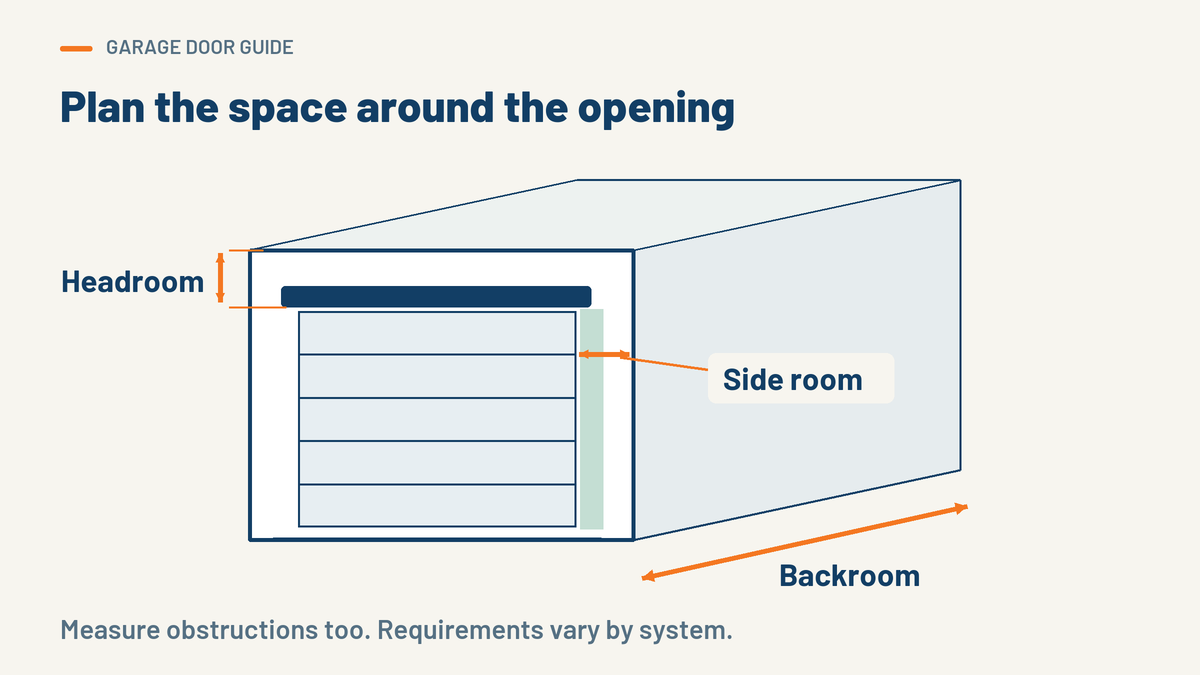
A tall ceiling can still have an inconvenient beam, light, duct or storage platform in the proposed rail path. Equally, a wall-mount installation can be limited by a side wall, pipe or cabinet that looks harmless from the driveway.
Sketch the garage from inside and mark fixed obstacles before buying equipment. Keep storage plans separate from the door’s movement area. Ask the installer to show where the open door, rail, motor, light and release will sit, and what must remain accessible later. Our garage door headroom, backroom and side-room guide explains the measurements used in that discussion.
Compare features and noise separately from mounting
Mounting position is only one purchasing decision. Compare the exact models for battery backup, remote and keypad compatibility, lighting, controls and connected features. Some functions need additional accessories; check what the written quote actually includes.
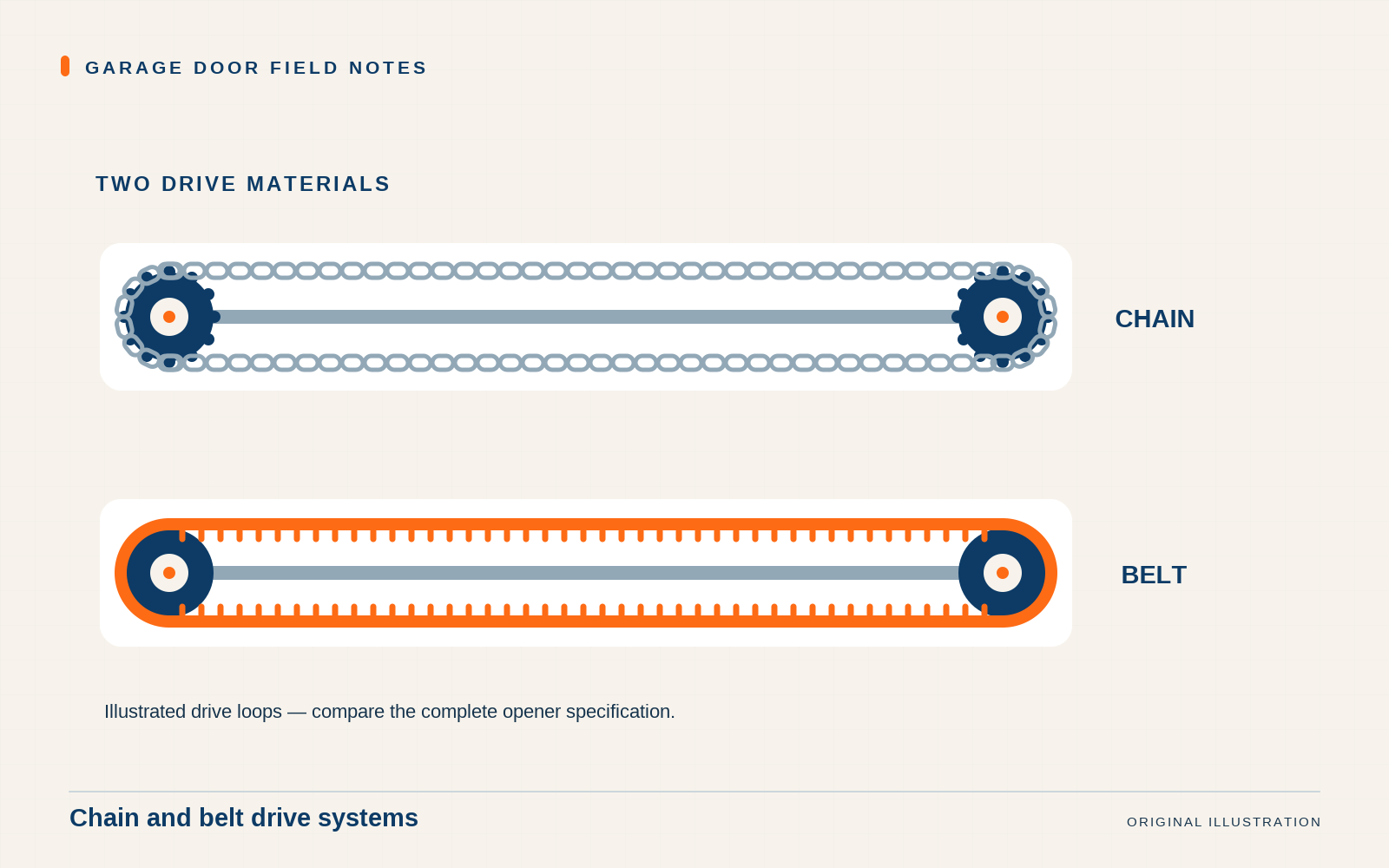
If both candidates are ceiling trolley openers, the chain-drive vs belt-drive comparison answers a different question: how power moves along the rail. Avoid assuming that a new mounting layout will eliminate all operating noise. Ask the technician to identify whether the current sound comes from the opener, door hardware or vibration through the building.
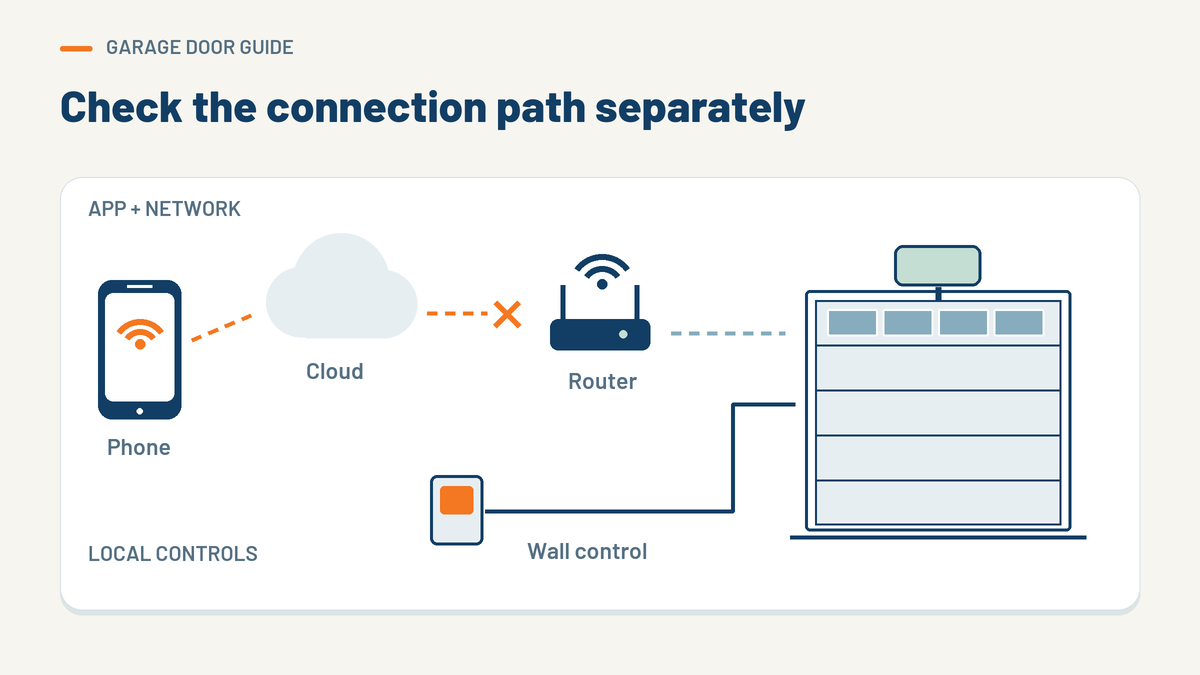
Connected operation also deserves its own check. A phone app needs a working communication path as well as a working door. Our smart garage door opener offline guide separates those issues without confusing them with mechanical fit.
What a useful installation quote should explain
A useful quote names the opener model and documents why it fits. Request an itemized description of included controls, lighting, safety equipment and any necessary electrical or door-system work. Clarify which existing accessories can remain and which need replacement.
Tell the installer what problem you are solving: blocked storage, poor lighting, inconvenient controls or an unreliable operator. That prevents buying a layout change that leaves the original frustration intact. If a proposed installation needs major door-system changes, compare that complete scope with a suitable trolley opener before deciding.
Our garage door opener installation service can assess the door and available space, explain compatible options, and check operation after installation. The best result is an opener that fits the whole garage and works reliably with the door you actually have.