Garage Openers
 Garage Springs
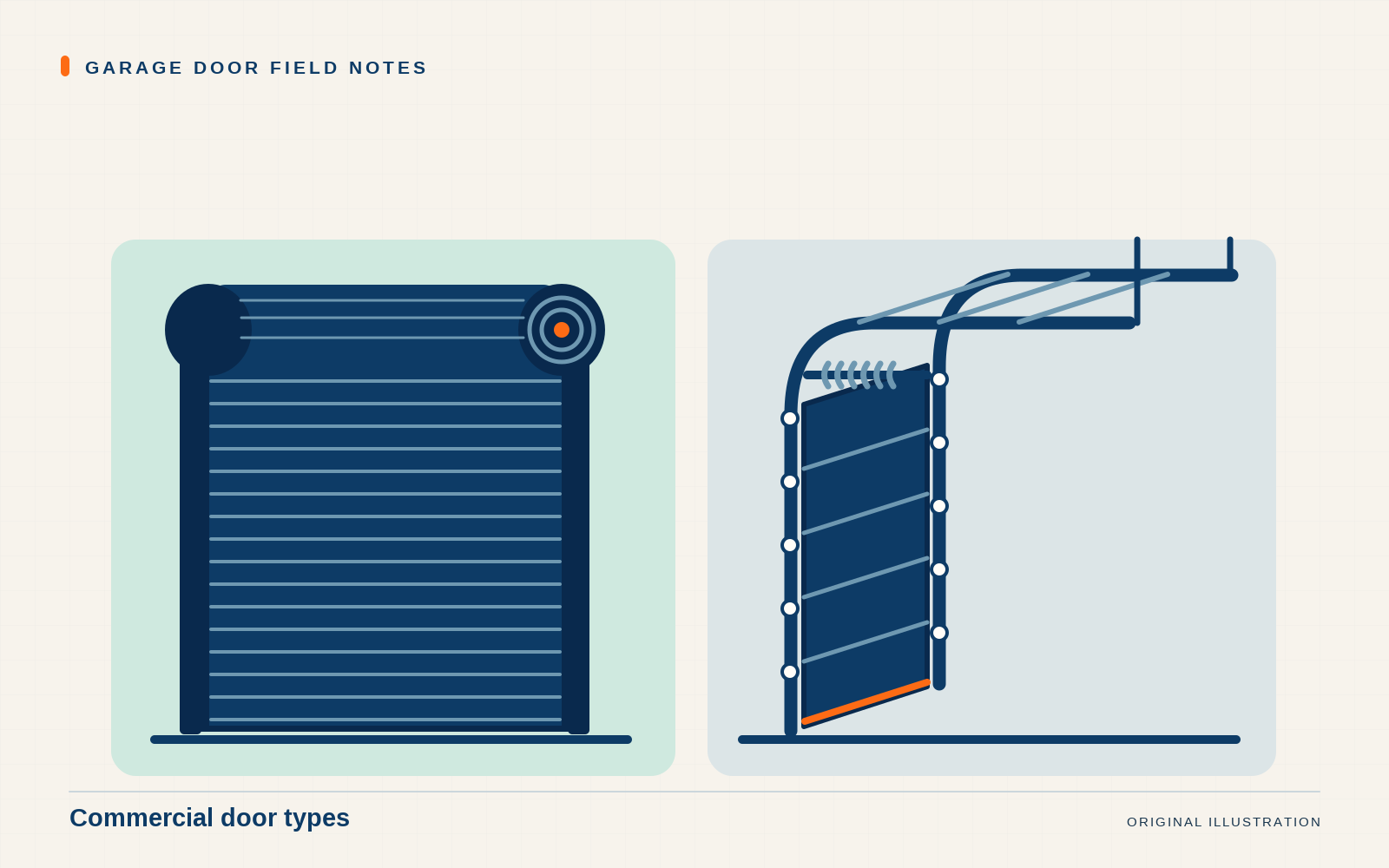
Understand the two travel paths
A rolling door gathers its curtain into a coil above the opening, with guides at the sides. A sectional door has hinged panels that travel on tracks; common arrangements turn overhead, while other lift configurations use more of the wall height. Neither travel path makes every model suitable for every commercial opening.
Cornell's commercial-door comparison explains the different mounting arrangements. Start with the physical path rather than the casual term “overhead door.” Describe whether the existing system has a coiling curtain or broad hinged sections, and identify the operator separately when requesting advice.
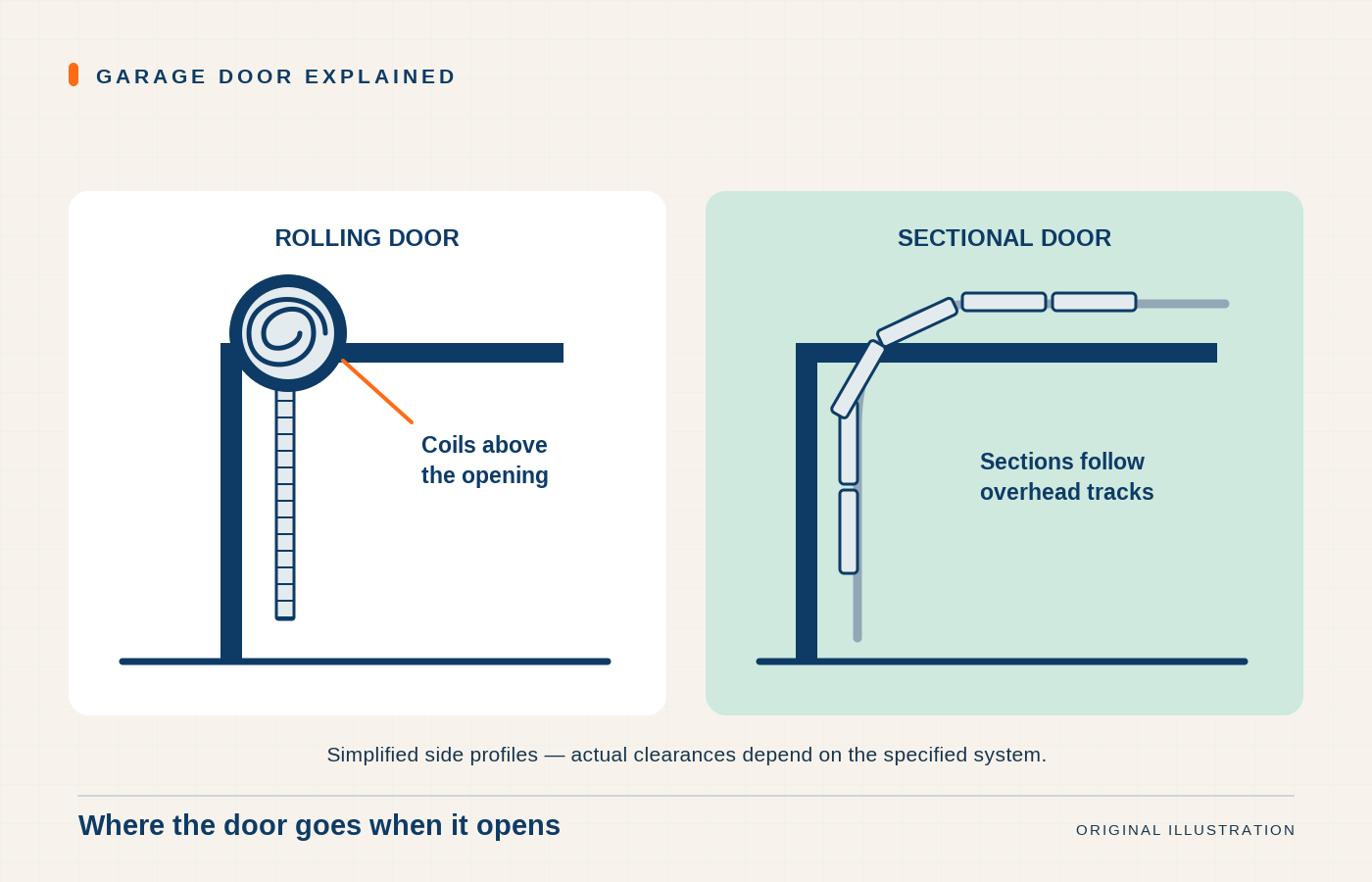
Measure headroom, backroom and side room
Document the clear opening, the space above it, the depth inside the building and the space beside both jambs. Include obstructions such as beams, lights, sprinklers, ducts, racks and other equipment. A clear rectangle at floor level is only one part of the available installation space.
Ask for a dimensioned layout of the proposed model and mounting style. It should show the coil or track path, operator position and access needed for service. Have the supplier confirm structural mounting requirements. Do not move services or assume a low-headroom arrangement will fit based on a general product photo.
Match the system to the actual duty
Count normal and peak movements separately. A door used a few times during deliveries has a different operating pattern from one cycling repeatedly during a shift change. Give the supplier those patterns rather than asking for a vaguely “heavy-duty” door. The operator and protective devices must suit the application as well as the curtain or panels.
Ratings are model-specific. For example, Cornell's service-door specification distinguishes standard usage from higher-duty options. Request documented suitability for your traffic, environmental exposure and required wind or thermal performance. Do not transfer one product's cycle rating, insulation value or wind rating to a whole door category.
Compare service and interruption planning
Both types need maintenance, but the accessible components and service clearances differ. Ask which inspections the owner is expected to perform, which tasks require a trained technician and where the model-specific maintenance schedule is recorded. Keep the door and operator manuals together with service history. Schedule around the actual opening. A roll-up door's curtain, guides and barrel can limit access in a different way from a sectional commercial door with tracks, hinges and overhead travel. Use commercial roll-up door repair for a curtain system and commercial garage door repair for sectional doors and shared facility equipment.
Plan how the opening will be isolated during work and whether deliveries can use another entrance. Ask about parts availability and how an unexpected failure would affect business access. For an existing rolling door fault, describe damaged guides, curtain behavior and operator symptoms to the technician; do not try to adjust the barrel or counterbalance assembly.
Build a useful specification brief
A useful brief includes photographs, opening dimensions, obstruction locations, operating frequency, controls, access restrictions and the required performance documentation. Separate essential requirements from preferences such as finish or vision panels. Ask each supplier to state exclusions and explain assumptions so proposals can be compared on the same basis.
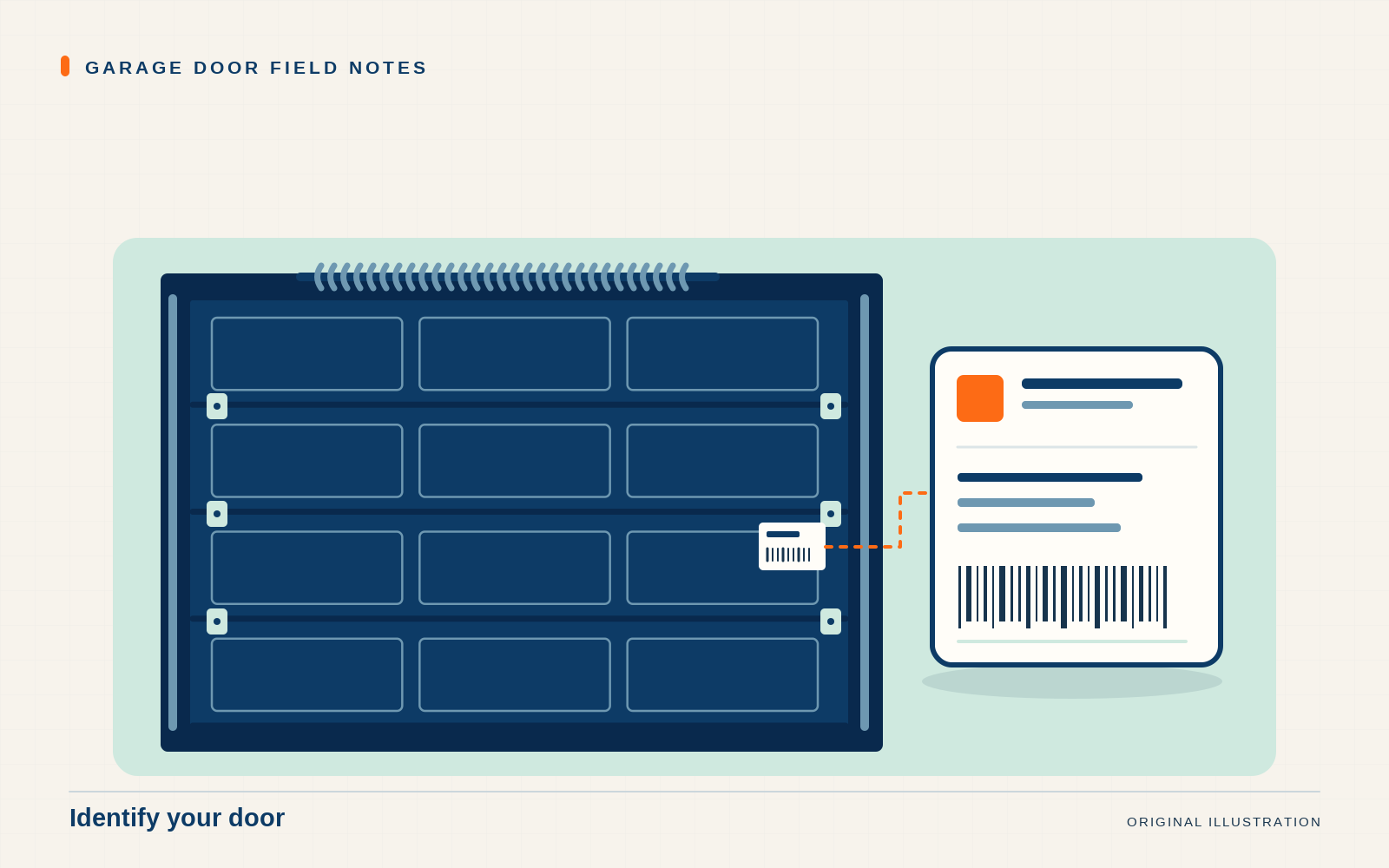
For an existing coiling system, request roll up door repair with its model and symptoms rather than a generic garage-door description. The identification guide helps organize labels, while the repair-quote checklist provides questions about scope and warranty. Commercial proposals still need their own site-specific assessment.
Frequently asked questions
Does a rolling door need no overhead space?
No. The coil, hood where fitted and supporting assembly need space above the opening, and the operator needs room too. Obtain dimensions for the actual model and mounting arrangement.
Is every rolling door suitable for high traffic?
No. Usage ratings differ by model and operator. Provide peak operating patterns and request confirmation rather than relying on the words rolling or commercial.