Garage Openers
 Garage Springs
Identify the three common weather barriers
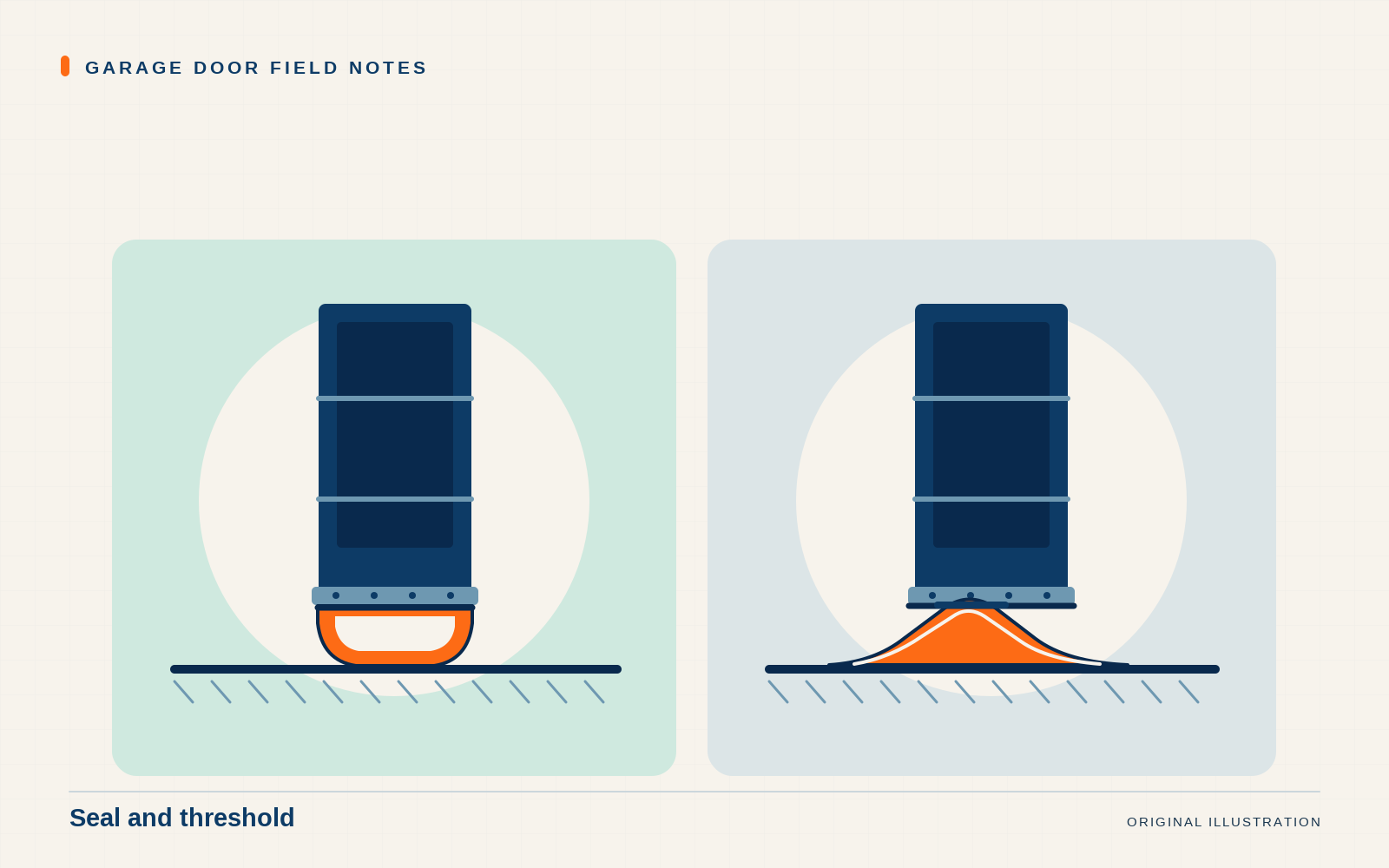
A bottom seal attaches along the door's lower edge and meets the floor when the door closes. A threshold is a raised strip fixed to the floor at the opening. Perimeter weatherstripping runs along the sides and top of the frame. The products can meet at the same opening, but their attachment points and jobs differ.
Clopay's seal guide describes these categories. Start by identifying which contact line is failing. A new floor strip will not renew a torn side seal, and a wider bottom gasket does not establish that the door is closing squarely.
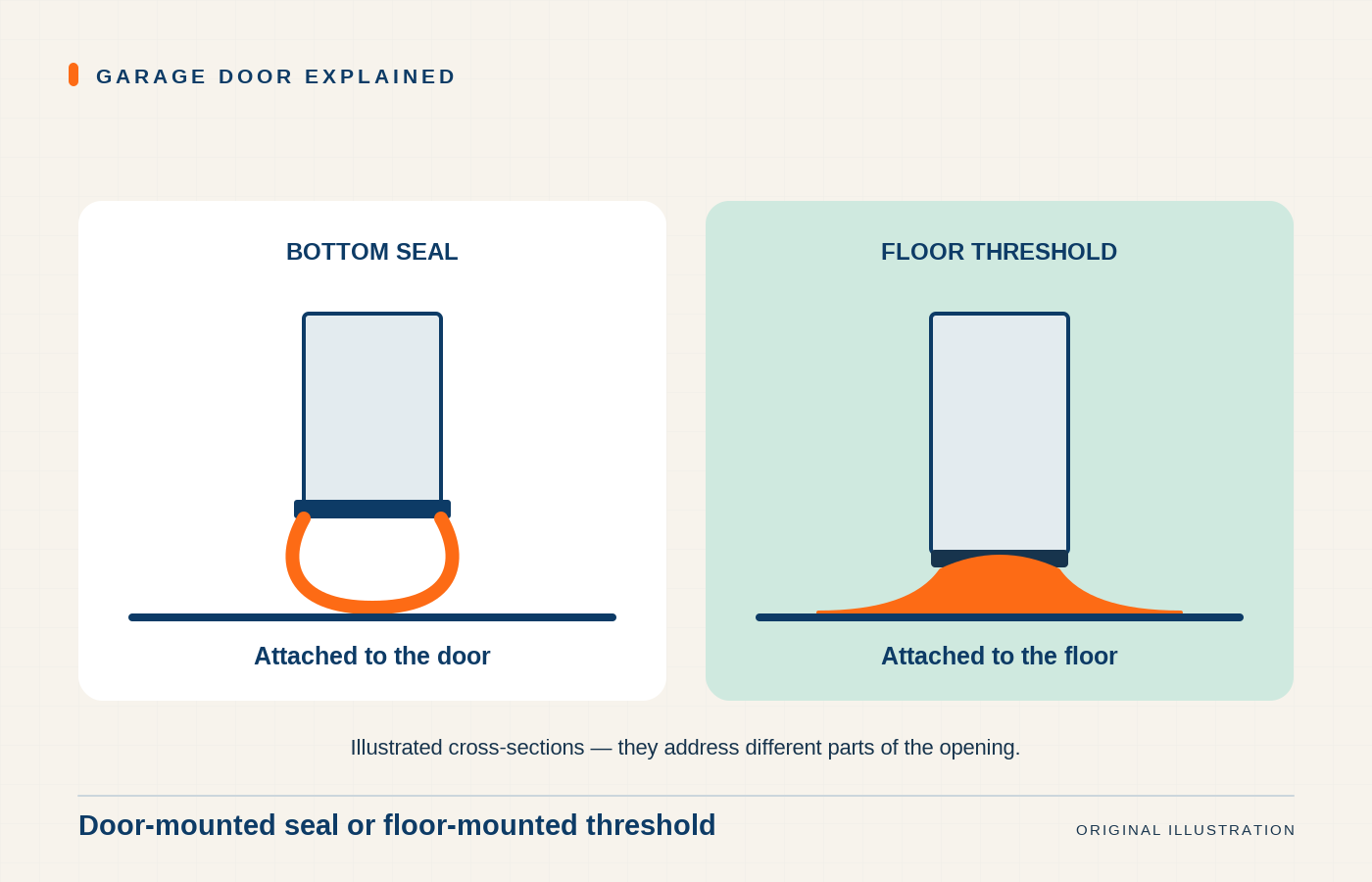
Read the gap before choosing a product
Observe an intact, fully closed and stationary door from a safe position. Is the gap a small local opening beneath worn material, a continuous space along the width, or a wedge that increases toward one side? Photograph the pattern without placing fingers or tools beneath the door. A garage door bottom seal follows the door. A threshold sits at the floor. Note whether the gap is even or wider at only one corner and whether water collects outside it. A twisted section or off-level opening can need repair before a replacement weather seal will make consistent contact.
Also note when the problem appears: wind-driven rain, ordinary rain, leaf buildup or a dry-weather draft. Those observations help separate the seal's condition from floor slope, drainage and movement issues. If the door is visibly crooked, binds, stops early or has a loose cable, stop operation and seek mechanical diagnosis before selecting a sealing product.
Match the bottom seal to its retainer
Replacement bottom seals need the correct attachment profile as well as enough length. Ask the supplier to confirm the retainer style, channel dimensions and suitable material for the door model. A photograph of an already-visible end may help; do not detach bottom hardware to obtain a sample.
Products are not interchangeable merely because their packaging says garage door. For example, Frost King's EPDM bottom kit is specified for wood doors. Your metal door may use a different retainer. Gather the door's model information and have the replacement confirmed instead of adapting a near match.
Consider drainage and closing clearance
Before adding a raised threshold, ask where water is coming from and where it must drain. Discuss floor slope, existing drainage routes, surface condition and the proposed threshold profile with the installer. A perimeter of sealant is not a substitute for investigating recurrent water entry or a damaged slab.
The closed door must still meet its intended position without binding against the new material. Follow the specific product's fit and adhesive requirements, including whether the floor coating is suitable. Ask how closing operation and required reversal checks will be verified afterward. Do not compensate for an oversized seal by increasing opener force or defeating a safety device.
Know when the problem needs a repair
A torn gasket on a sound door is a different scope from a bent retainer, damaged lower section or alignment problem. Ask the assessment to identify the cause of the gap and explain why the proposed product addresses it. Keep sealing work separate from any necessary repair in the estimate so both can be evaluated.
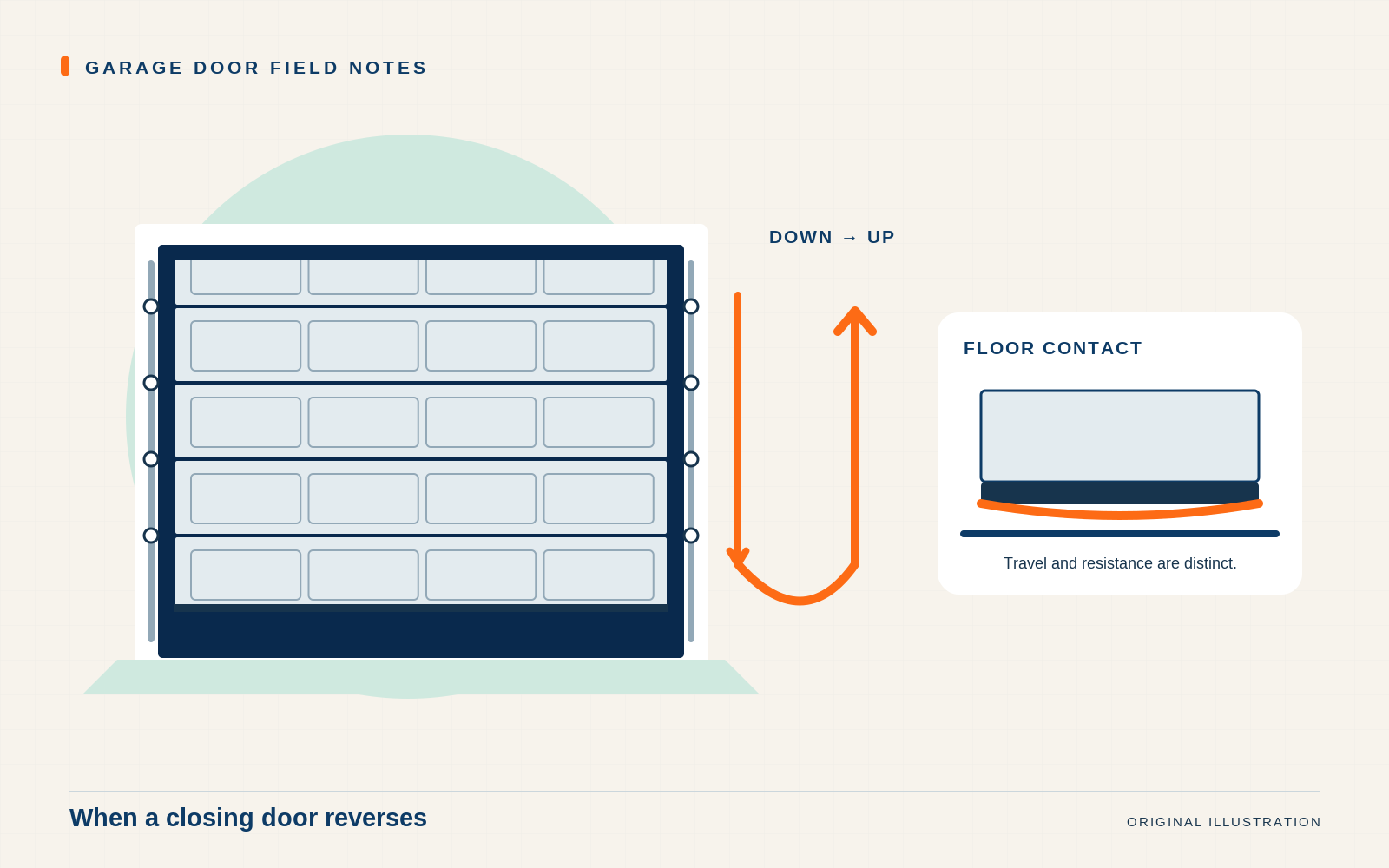
If the door reverses after contacting the floor, mention that before installing a threshold. For an unresolved or uneven gap, request garage door service before buying more material. Add visible seal condition to your maintenance checklist so changes can be compared over time.
Frequently asked questions
Can I use a bottom seal and threshold together?
They can be part of a compatible setup, but fit must be checked with the door and floor. More material is not automatically better, particularly if it changes closing clearance.
Will either product fix every leak?
No. Water can enter at the sides, through building defects or because of drainage conditions. Identify the entry route first rather than assuming all water is passing under the door.