Garage Openers
 Garage Springs
The exact moment of reversal matters
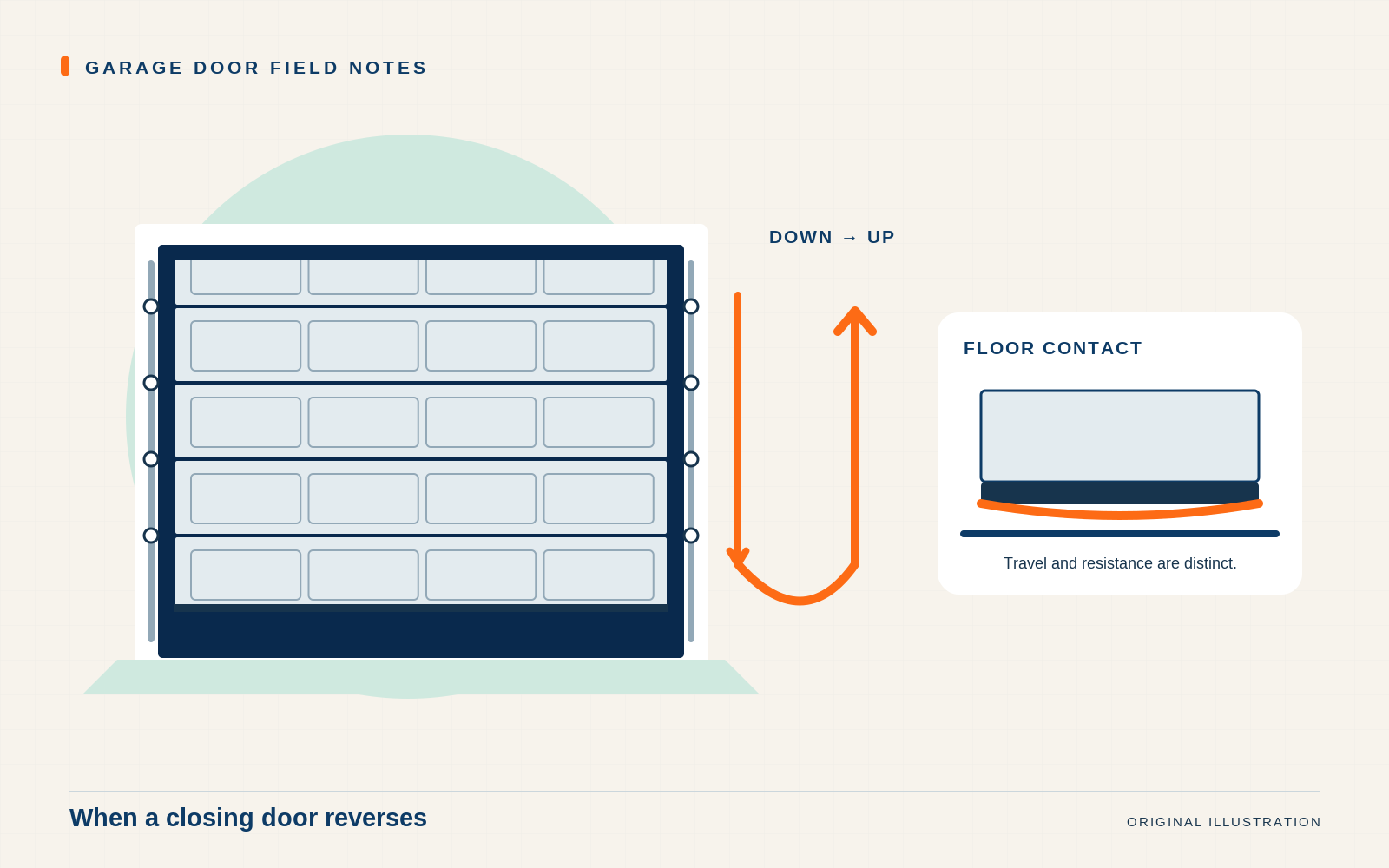
Watch from a clear position beside the opening and describe what you have already seen. Does the door reverse several inches above the floor, at the first contact with the floor, or after pressing downward? Does it happen every time or only under certain conditions? Those details are more useful than calling every reversal a sensor problem. A garage door that reverses right after hitting the floor gives a different clue from a door that reverses a foot above it. Record what happens just before reversal and how often it repeats. Avoid increasing force to mask the fault. Share the timing with garage door opener and closing diagnostics.
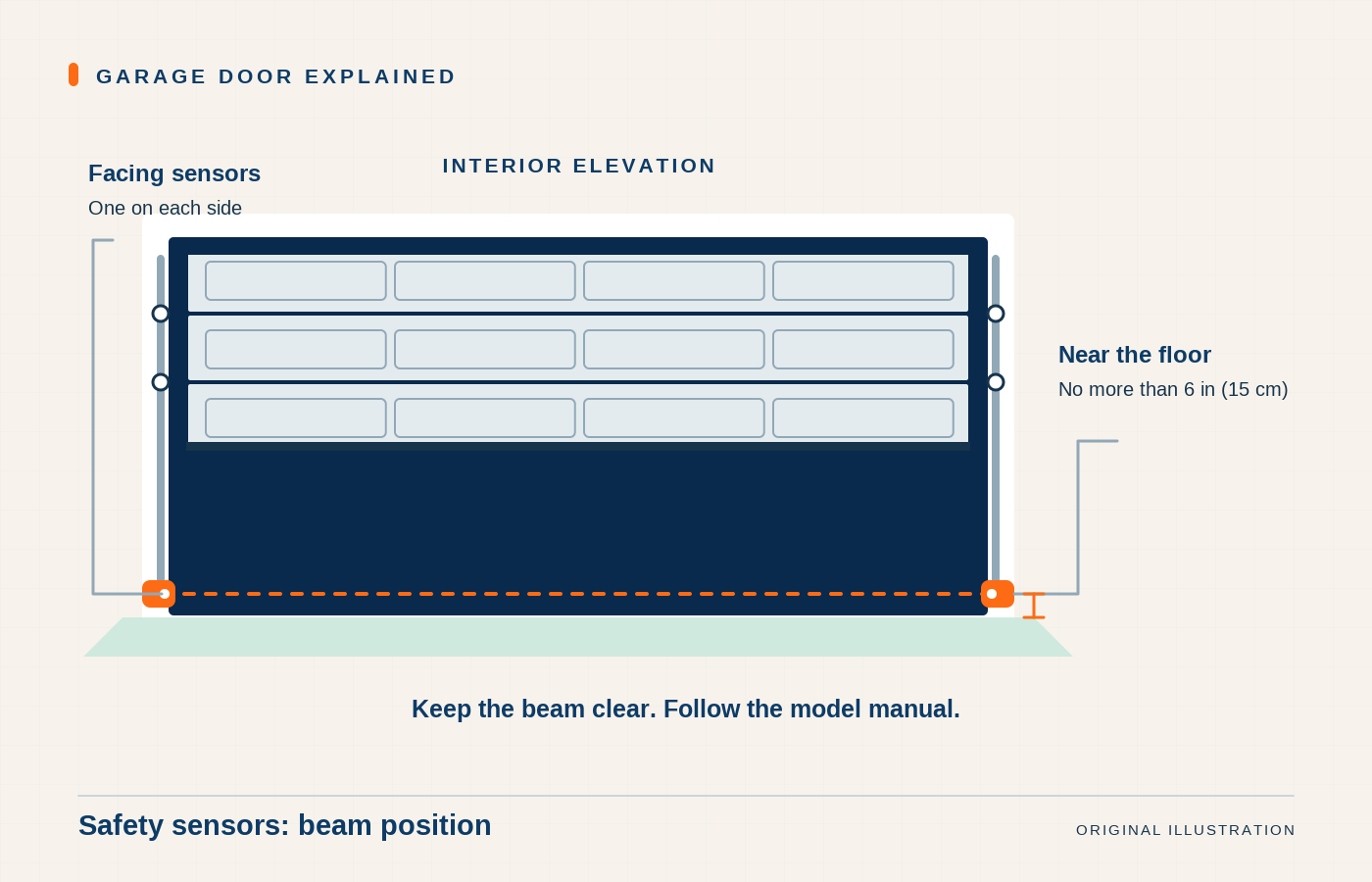
A closing door must respond to an obstruction. Reversal can therefore be the safety system responding to unexpected resistance, even though the underlying cause still needs attention. Do not defeat that response by holding a control, bypassing the photo-eyes or repeatedly trying to make the door stay down.
Separate three possible explanations
| Observation | What needs checking |
|---|---|
| Door touches down and appears to push farther | Closing travel setup, door position and the floor contact point. |
| Door reverses before reaching the floor | An obstruction, interrupted safety beam, wiring or mechanical resistance. |
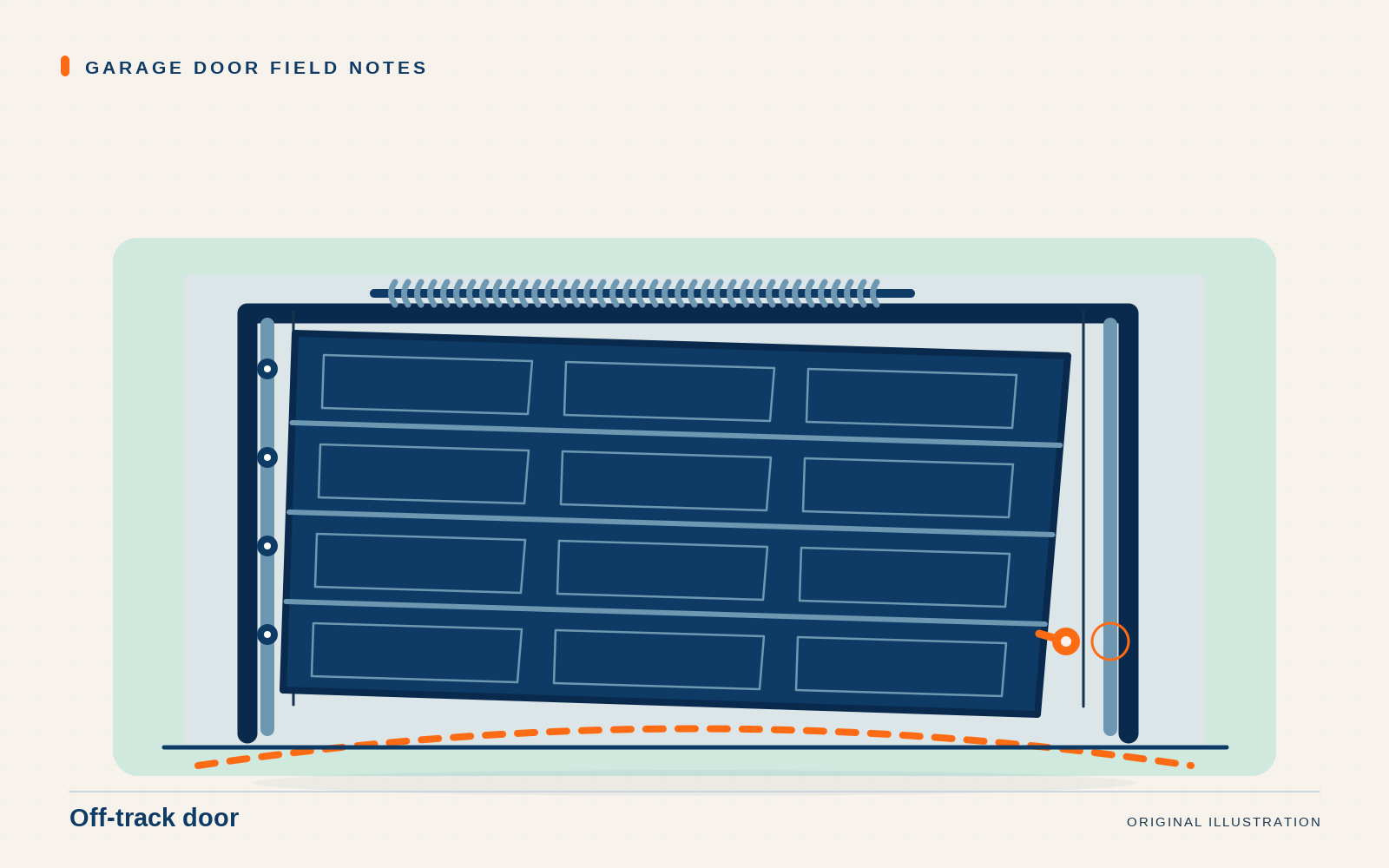
| One side reaches the floor first | Door alignment, cables, rollers, tracks and the supporting system. |
| Problem began after a new seal or door work | The changed contact or movement conditions and the correct model setup. |
These are diagnostic directions, not a remote diagnosis. Several conditions can coexist. A damaged door can also cause an otherwise working opener to reverse.
Make observations without changing force
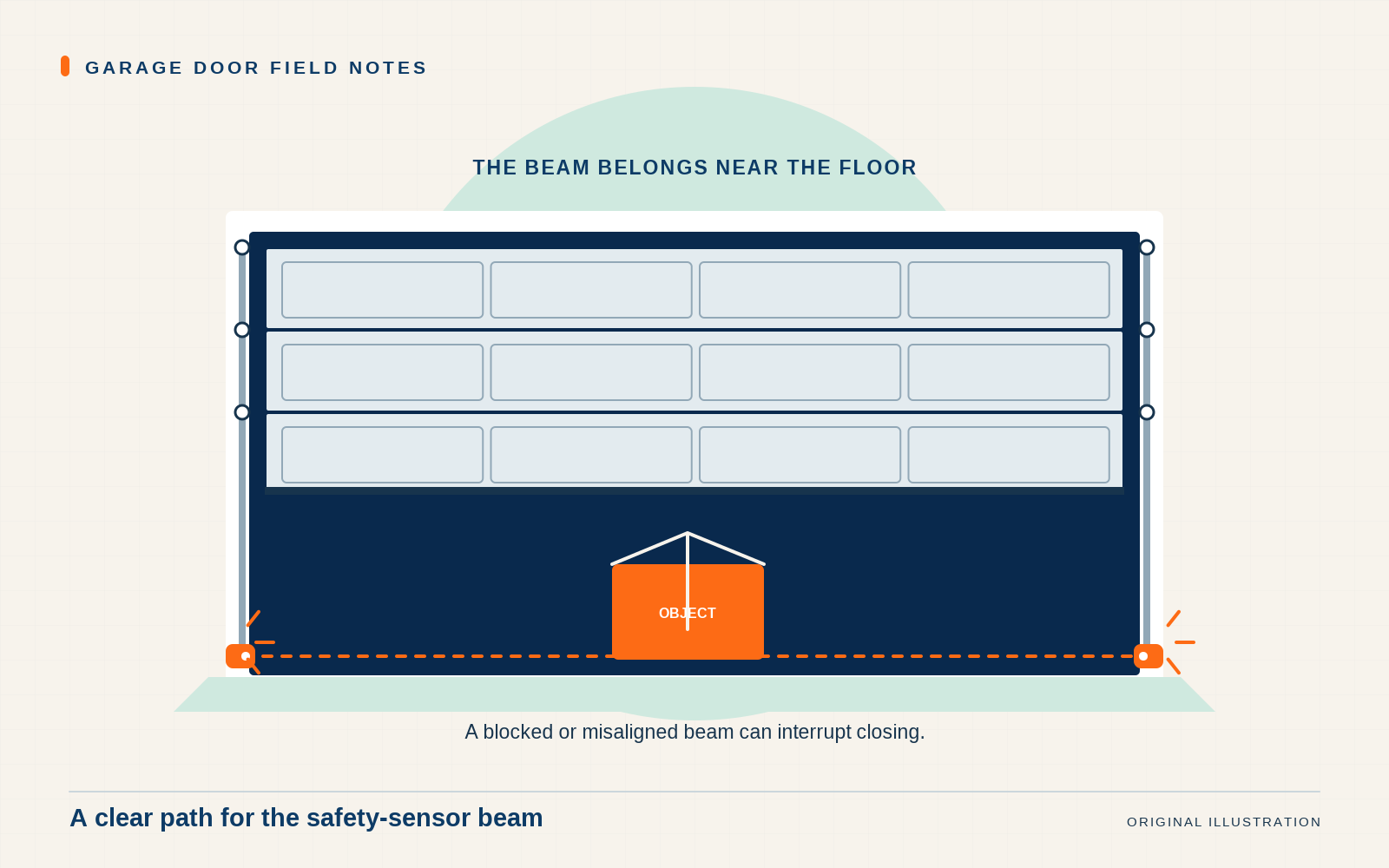
With the door stationary, check from a safe position for a loose object at the opening, debris on the floor or an item blocking the line between the two photo-eyes. Keep hands away from rollers, hinges and section joints. If the door is unstable or stopped above the floor, leave the area beneath it clear.
Record the opener make, model and any displayed code. Note whether the sensor indicator lights remain steady; their colors and meanings depend on the system. The sensor-light guide explains why a color alone is not a diagnosis.
Do not use a higher closing-force setting to overcome binding. Do not disconnect a door that is open or unsupported. Springs, cables and brackets are not adjustment points for homeowner troubleshooting.
Why a universal limit-adjustment recipe is unreliable
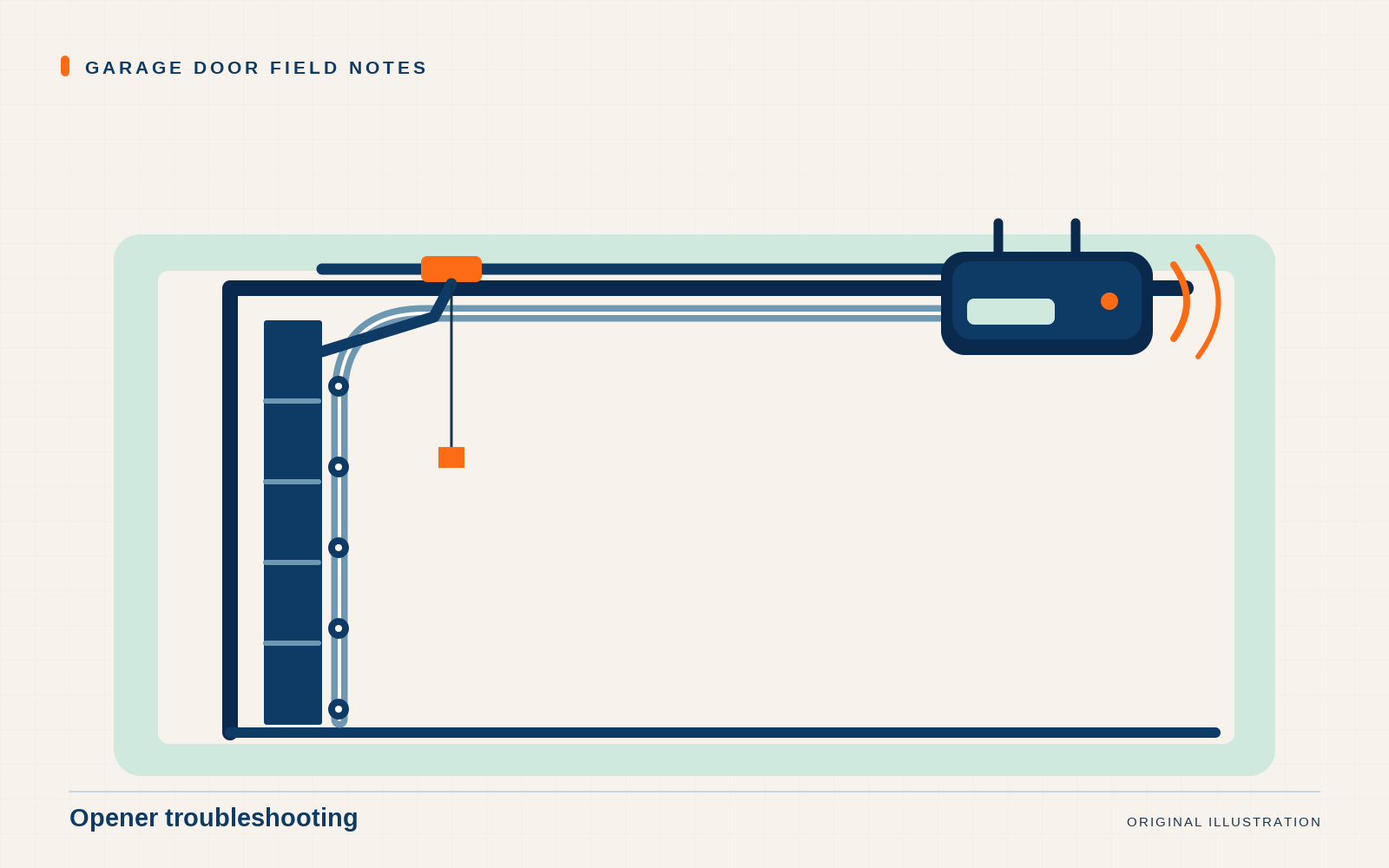
Openers use different controls and setup sequences. Some have adjustment screws; others use buttons and a programmed travel sequence. The correct procedure depends on the model and must include the required safety checks afterward. Turning an unidentified screw or repeatedly resetting the unit can make the original symptom harder to diagnose.
Chamberlain’s guidance distinguishes travel setup from mechanical obstruction and requires the relevant reversal checks after adjustment. It is a reason to consult the exact manual, not permission to increase force until the door stays closed. Unplugging an opener is also not a universal way to erase its travel settings.
What a useful service assessment should resolve
The assessment should establish whether the door moves correctly as a mechanical system, whether the closing position is appropriate and whether the opener’s safety devices respond as intended. If a part or adjustment is recommended, ask how it explains the observed reversal.
For garage door opener repair, share the timing, model and any recent work when you book. If the door has shifted sideways, a cable is hanging loose or a panel is buckled, describe that first so the visit addresses the door as well as the opener.
Frequently asked questions
Why did this start after replacing the bottom seal?
The contact conditions may have changed, but timing alone does not identify the fault. Have the seal fit, door movement and model-specific travel setup checked together.
Will unplugging the opener fix the closing limit?
Not reliably. Settings and reset behavior vary by model. Consult the correct manual and do not use a reset as a substitute for investigating resistance or damage.