Garage Openers
 Garage Springs
Know which lights you are looking at
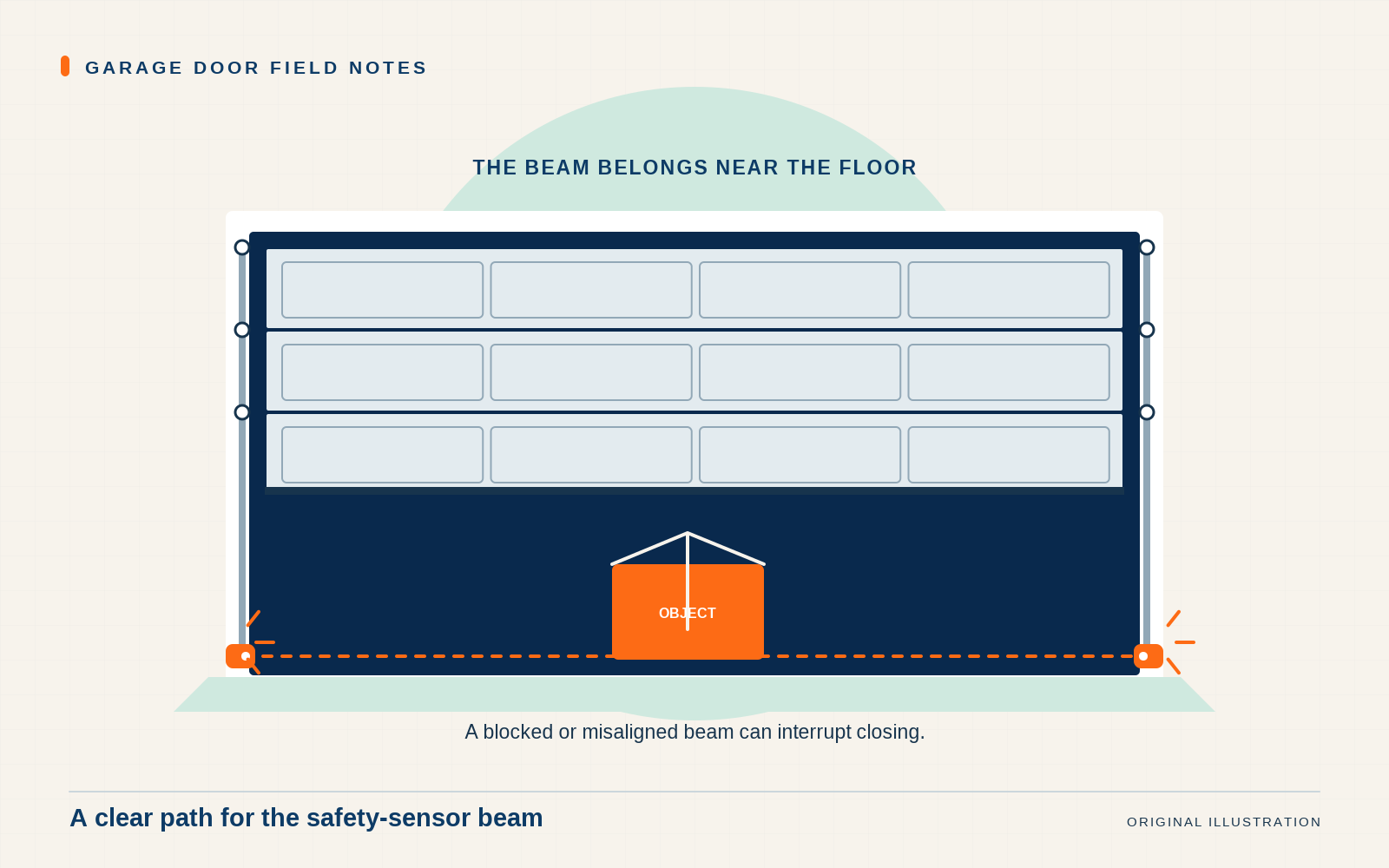
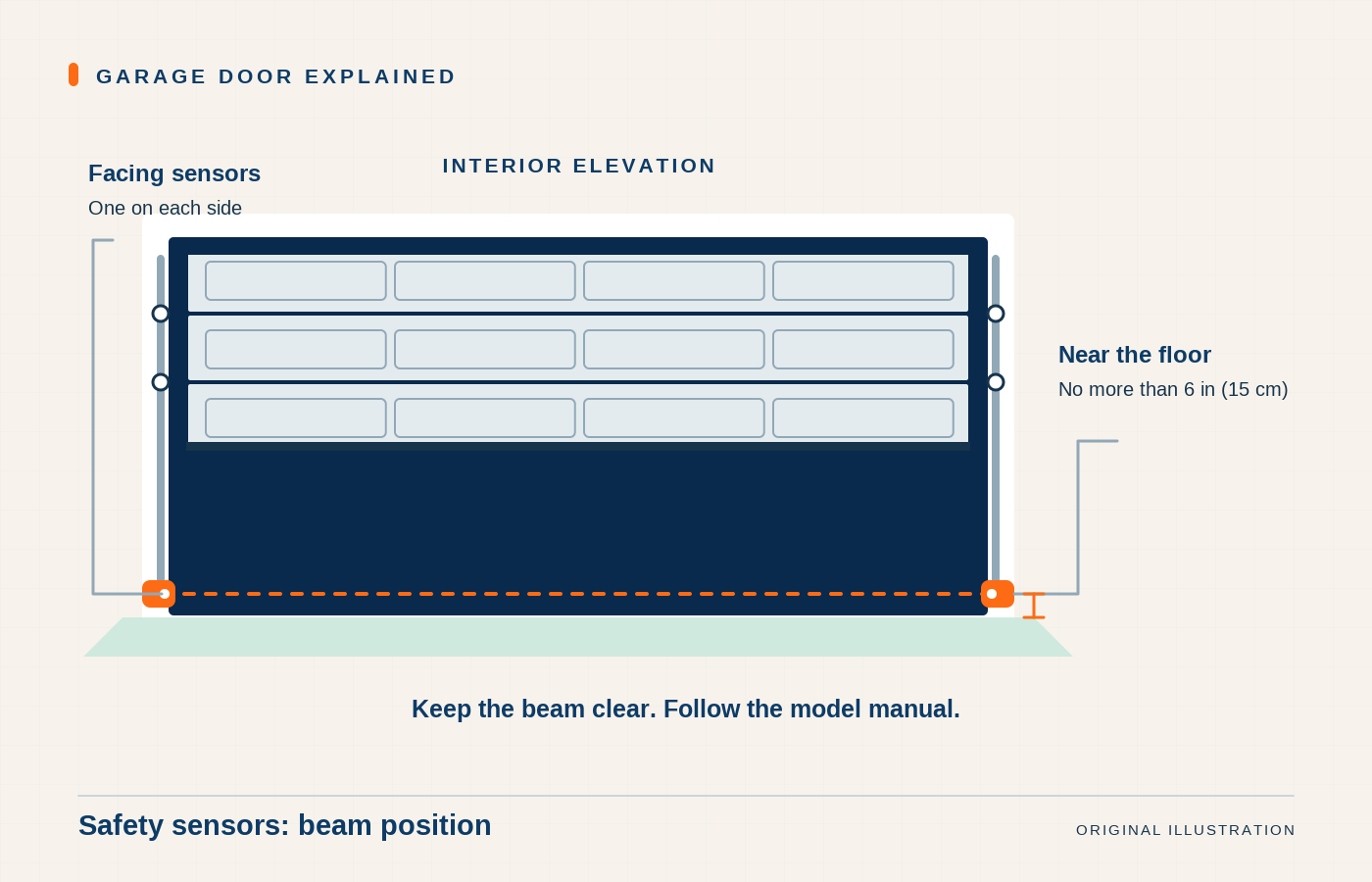
Safety photo-eyes are mounted near the bottom of the opening and send a beam across it. Their indicators are different from the main opener lamp, a wall-control light or an UP/DOWN diagnostic display. Record the location of the light before searching for its meaning.
On the Chamberlain and LiftMaster systems covered by the manufacturer’s alignment guidance, the sending sensor uses an amber indicator and the receiving sensor uses green. That is a model-family example, not a chart for every Genie, Marantec or other opener. Use the label and manual for your system.
A light that is on can show that part of a circuit has power; it does not by itself prove that every safety function works.
Collect a small set of useful observations
| Observation | Why it helps |
|---|---|
| Which sensor light is off or blinking? | Distinguishes the sending and receiving sides for the relevant manual. |
| Does the change happen while the door moves? | Suggests checking movement, vibration or an intermittent obstruction. |
| Is the problem tied to a particular time of day? | Helps evaluate direct sunlight or a changing object in the beam path. |
| Is there an opener diagnostic code? | Connects the symptom to the exact model’s troubleshooting guidance. |
| Did something strike a bracket or wire? | Provides a specific inspection starting point. |
Do not repeatedly run a struggling door merely to fill in the table. Existing observations and a clear photograph are often enough to explain the complaint. For garage door sensor lights that blink, record which photo eye changes, whether the lamp overhead also flashes and where the door reverses. Identify the exact opener model before interpreting any color pattern. The garage door opener repair service can check the sensors, wiring and close travel together.
Safe checks around the beam path
With the door stationary and the area clear, look for a box, broom, plant or other loose object between the sensors. Check for dirt on the lens and follow the manufacturer’s cleaning instructions. Observe whether a bracket is visibly displaced or a wire is damaged; leave electrical repairs and mechanical adjustment to a competent service provider.
Chamberlain and Genie guidance places the safety beam no more than six inches above the floor. Raising the sensors to avoid an obstruction changes the protection they provide. Do not bypass, cover or relocate them as a workaround.
If a cable is loose, the door is crooked or a panel is damaged, stop troubleshooting the sensors and have the door assessed.
When sunlight seems to be involved
A problem that appears when low sunlight shines into the opening is worth recording. Note the time, which side receives direct light and whether the symptom occurs at other times. That pattern helps a technician investigate the receiver, alignment and the mounting arrangement.
Do not conclude that sunlight is the cause simply because the day is bright. A loose connection or moving bracket can also create intermittent symptoms. Any manufacturer-approved shield or mounting solution must preserve the beam and its required position; improvised covers that block detection are not a fix.
When the sensor lights do not explain the reversal
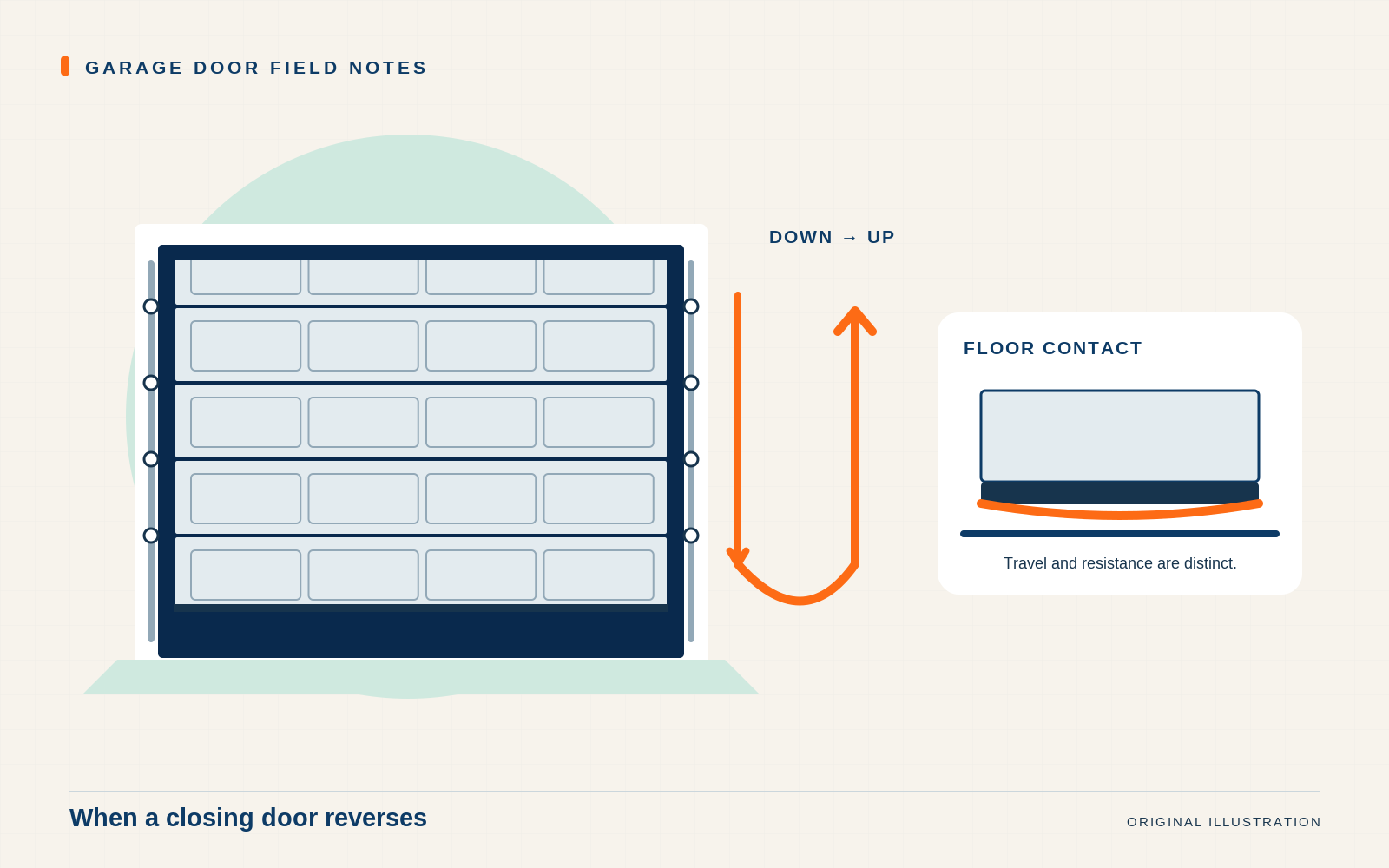
If the door reaches the floor before reversing, closing travel or mechanical resistance may need investigation. Read the floor-contact reversal guide rather than assuming that every closing problem starts at the photo-eyes.
For opener and safety-sensor service, provide the model, indicator observations and any diagnostic code. The goal is to restore correct operation and verify the safety functions, not merely make an indicator stop blinking.
Frequently asked questions
Is a yellow sensor light always a fault?
No. On some Chamberlain and LiftMaster systems the sending sensor normally has an amber indicator. Interpret the lights using the exact system manual.
Why does the door reverse with both sensor lights on?
The cause may involve travel, resistance or another fault. Steady indicators do not establish that every part of the door and opener is functioning correctly.