Garage Openers
 Garage Springs
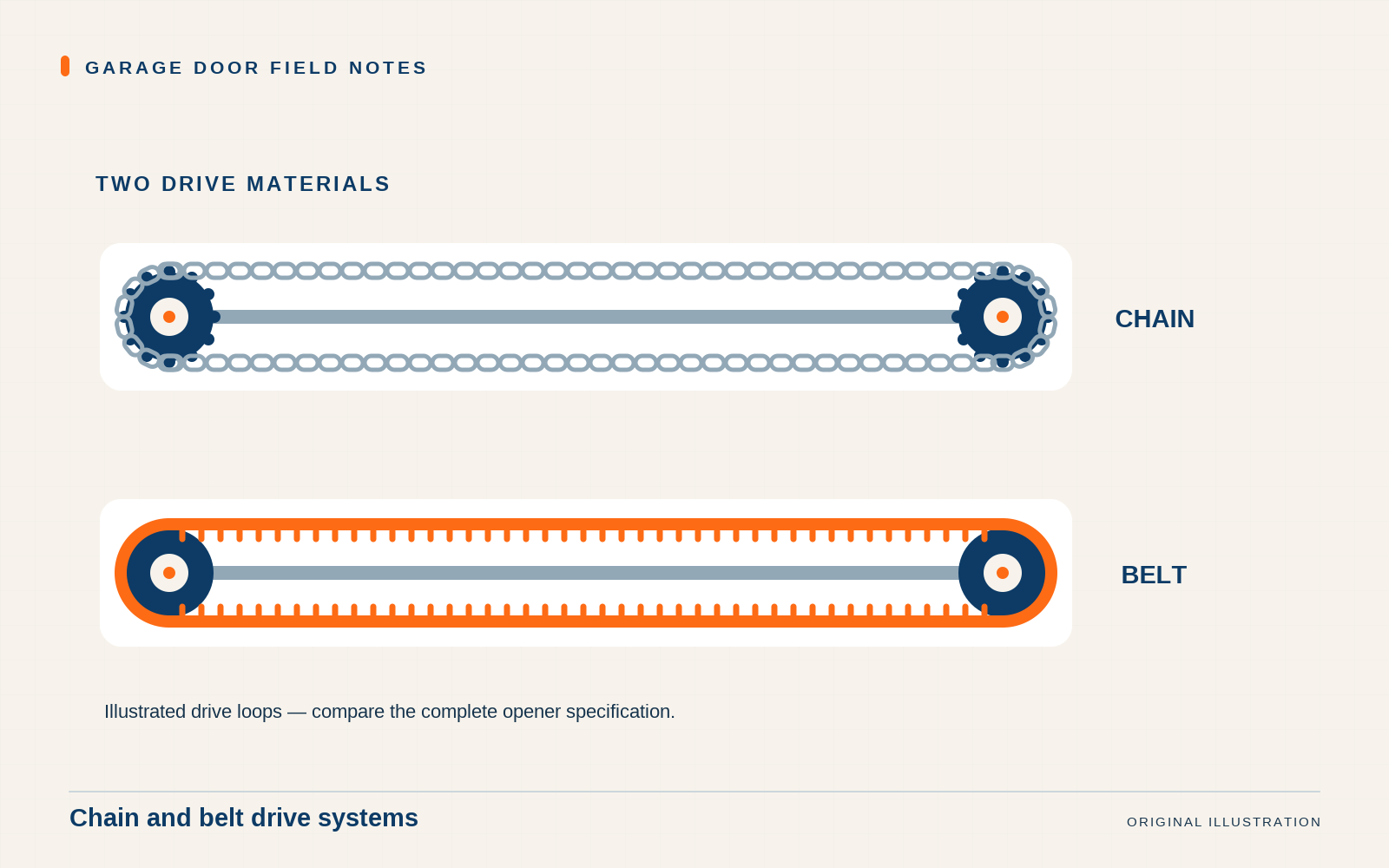
What changes between chain and belt drive
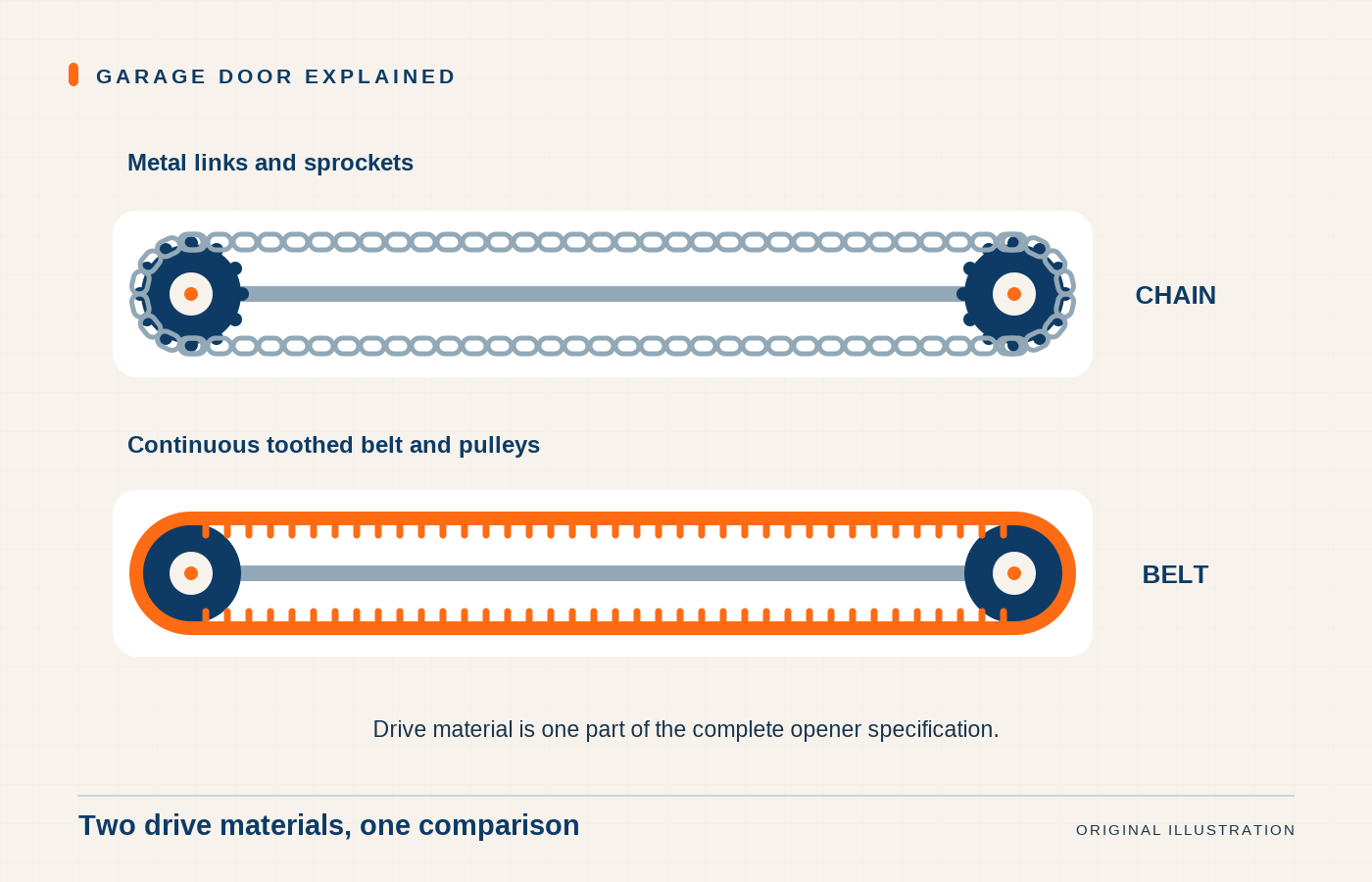
In a typical ceiling-mounted trolley opener, the motor moves a chain or a reinforced belt along a rail. The trolley and door arm transfer that movement to the door. The door’s springs provide counterbalance; choosing a stronger motor is not a substitute for correcting a spring or balance problem.
Genie describes belt drives as reducing metal-to-metal contact compared with chain systems. That can make a belt model an attractive choice near a bedroom or living space. It does not mean that every belt opener is silent or that every chain model is unsuitable for an attached garage.
Compare the whole system
| Factor | What to compare |
|---|---|
| Noise and vibration | Drive, motor, mounting, rollers and the condition of the door. |
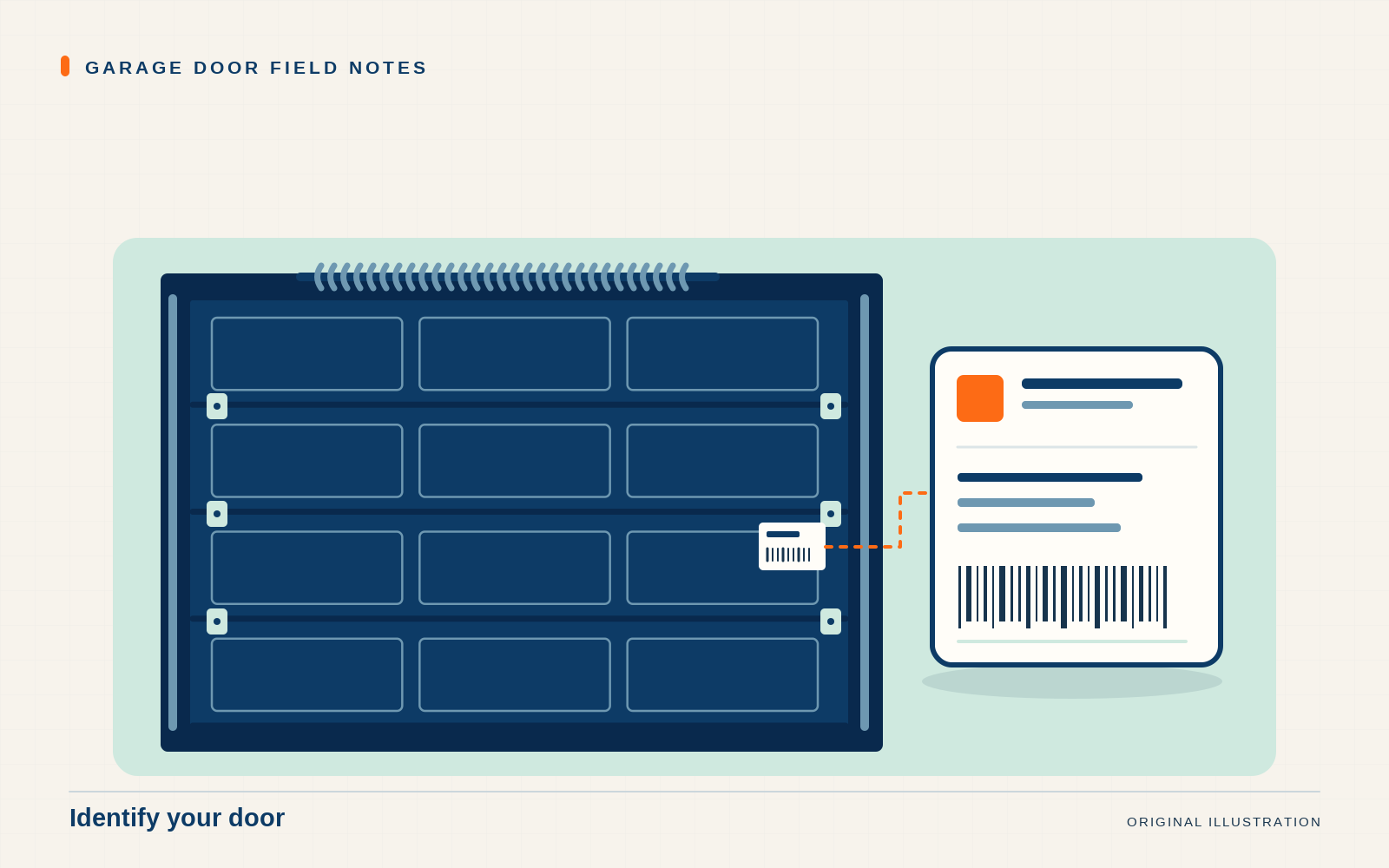
| Door compatibility | Door type, dimensions, weight, balance and the manufacturer’s approved application. |
| Available space | Rail length, mounting points, ceiling obstacles and required clearances. |
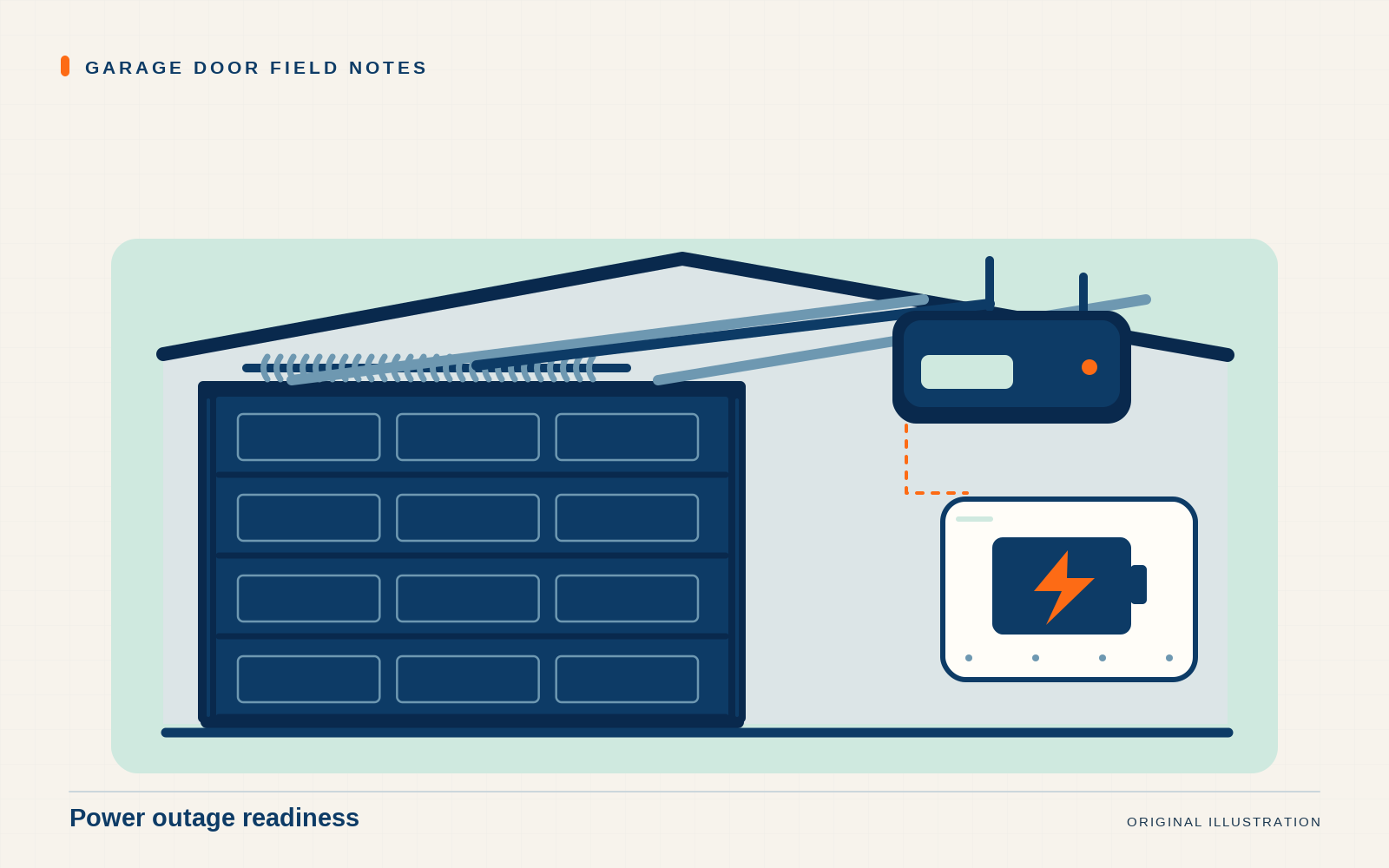
| Power outage access | Whether the exact model has compatible battery backup and what its manual specifies. |
| Controls | Included remotes, keypad, wall control and any compatibility requirements. |
| Ownership cost | Installed scope, maintenance instructions, replacement parts and written warranty. |
Motor design and features vary within both categories. Do not assume that “belt” guarantees a particular motor, camera, app feature or backup battery. Compare model numbers and the written package.
When noise is the deciding factor
If a bedroom is above the garage, describe the noise you want to reduce. A drive rattle, a roller rumble and vibration transmitted through framing are different problems. Replacing the opener can leave door-generated noise unchanged. Compare chain-drive vs belt-drive noise from the room where it matters most. Worn rollers, door vibration and the mounting structure can be louder than the motor. Discuss what the current door sounds like when choosing a replacement garage door opener.
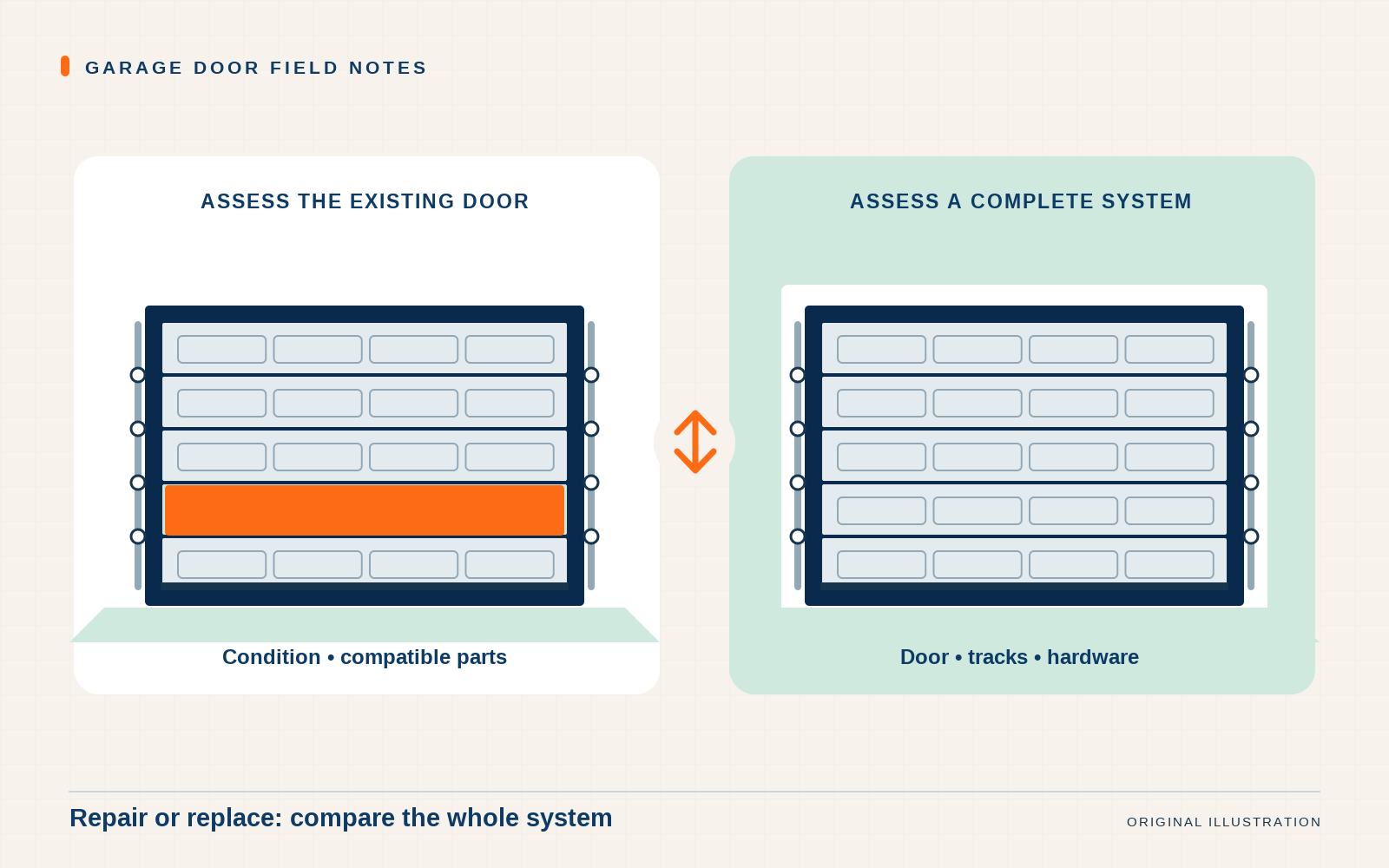
Have the door condition assessed before selecting an upgrade. Ask whether the proposed work includes correcting worn or binding door hardware, or only replacing the operator. A quiet demonstration in a showroom is not a measurement of sound in your garage; mounting and the surrounding structure also matter.
Check features and ongoing requirements
List the features you actually use: a keypad, vehicle control, backup operation, remote access or a second handheld transmitter. Then verify them against the exact opener and accessories. Similar-looking remotes are not automatically compatible, and an existing rail or wall control should not be assumed reusable with a replacement opener.
For connected features, check current account, network and subscription requirements before purchase. For backup power, check the battery maintenance instructions and how the unit signals low charge. Our power-outage guide explains the access questions to plan ahead.
For a Los Angeles installation, have the proposed residential system checked against California’s applicable battery-backup requirements. Drive type does not establish compliance.
A practical way to choose
Start with two or three compatible models, then compare the installed total and the features that solve your needs. A belt model may be preferable when reducing drive noise is a priority. A chain model may be a sensible choice when its complete specification and installed price fit the application. Neither choice should be based on an unsupported promise of a universal service life.
Ask the installer to explain why the selected model suits the door and what acceptance checks will be performed. For opener installation, provide the door and existing opener model information plus photographs of the mounting area.
Frequently asked questions
Can I replace just the chain with a belt?
Do not assume that conversion is supported. Use only a configuration and replacement parts approved for the exact opener; ask whether a complete compatible system is needed.
Will a belt drive make a noisy door quiet?
It may reduce drive-generated noise, but worn rollers, binding hardware and structural vibration can remain. Diagnose the noise before choosing an upgrade.