Garage Openers
 Garage Springs
Garage door maintenance records: start with four essentials
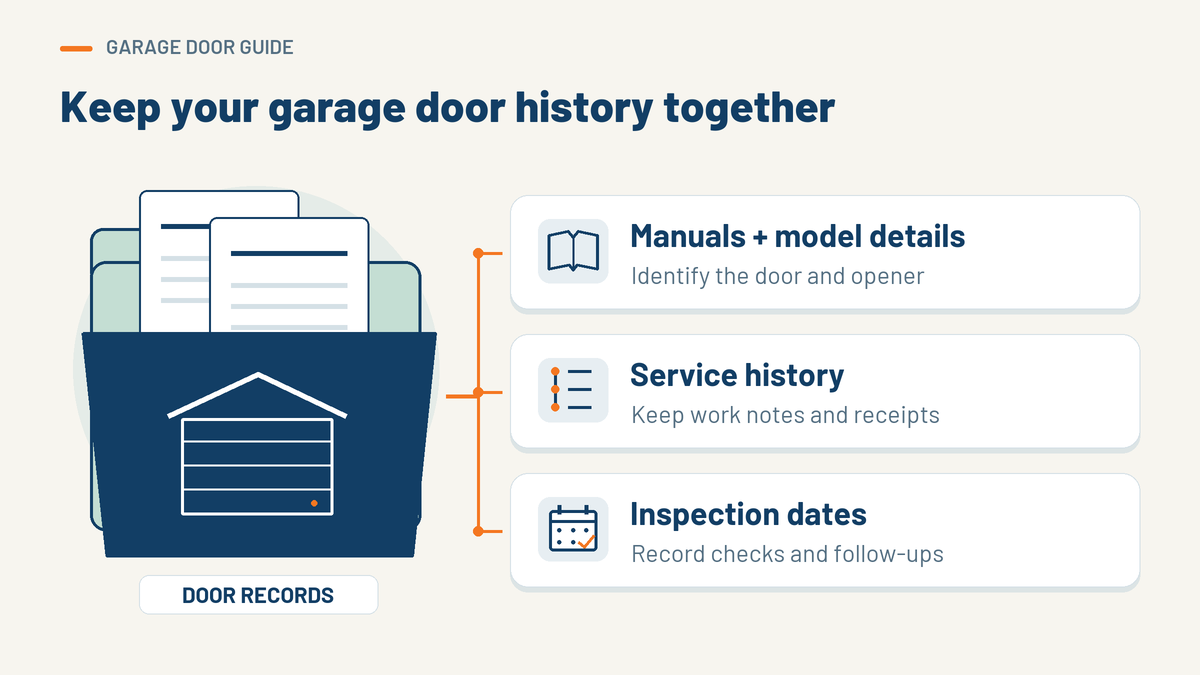
Useful garage door maintenance records contain four things: the correct product information, purchase and service documents, a dated maintenance log, and photos that explain changes. Keep them together in a paper folder or a backed-up digital folder. You do not need a complicated app or a technical report after every observation.
The goal is to answer practical questions. Which opener is installed? Was that roller replaced or only inspected? When did the noise begin? Is the mark on the lower section new? A clear record can help you explain a problem and compare today's condition with earlier observations. It does not establish that the door is safe to operate.
Build a garage door equipment file
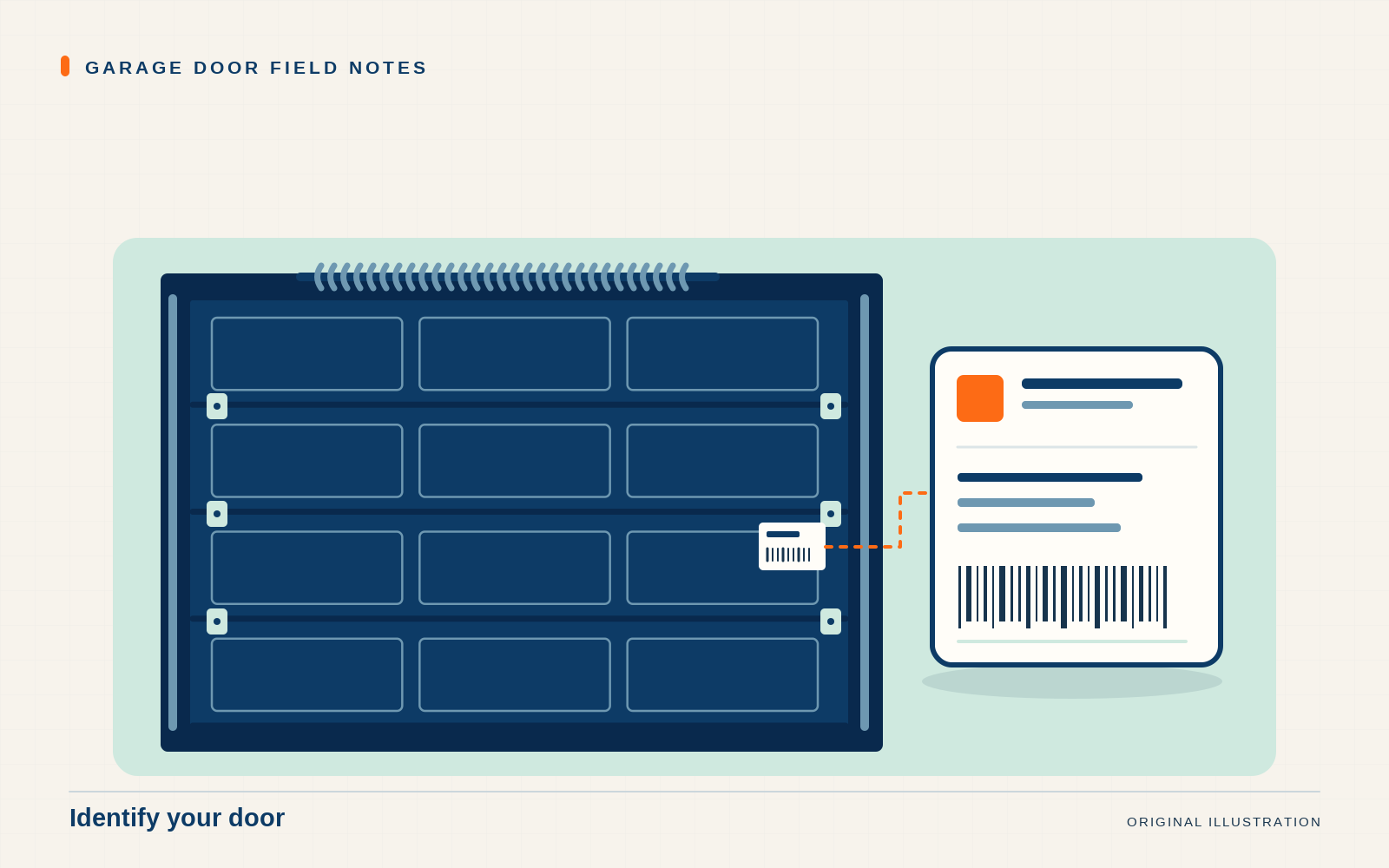
A garage door equipment file should distinguish the moving door from the electric opener and its accessories. These may have different manufacturers, manuals and purchase dates. If identification is missing, use our guide to finding the garage door manufacturer and model number before guessing at a replacement part.
| Record | What to include | Why keep it |
|---|---|---|
| Equipment summary | Door, opener and accessory models; installation dates if known | Separates the instructions for each product |
| Manuals and care sheets | Relevant model, finish and glazing instructions | Keeps the applicable procedure easy to find |
| Purchase documents | Dated receipt, installation invoice and supplied warranty terms | Preserves the original order and product details |
| Service documents | Date, reported symptom, work completed and parts listed | Shows what actually changed |
| Reference photos | Overall views and safely accessible detail photos | Provides a visual comparison over time |
Mark uncertain information as unknown. An estimated installation year should not quietly become a confirmed date in later paperwork.
Use a simple garage door maintenance log
A garage door maintenance log works best when each entry records the date, observation, action, result and next step. Add who performed the work, whether that was you or a service company. Keep observations separate from diagnoses: writing that the door scraped near the left track is more useful than deciding that a spring caused it. For each garage door maintenance log entry, keep the date, opening or bay number, what changed, and the action taken. A note such as “south bay, closer to the floor than last visit, motor still responds” is more useful than “door checked.” Add the repaired part number and test result after service.
For a cleaning entry, record the surface cleaned, the product used and any finish change noticed afterward. For a professional visit, reference the invoice and the technician's findings. If the issue remains unresolved, say so rather than closing the entry because someone visited.
Use our garage door maintenance checklist to organize the routine itself. The log documents completed care; it should not replace the procedures and intervals in the equipment manuals.
Keep manuals and practical references together
Keep manuals and practical references together, with the exact product instructions easy to distinguish from general reading. Save the relevant manual file and note its model coverage. When equipment is replaced, move the old manual into a dated archive rather than leaving two conflicting sets of instructions side by side.
For explanations of common care and troubleshooting topics, the practical garage door guides at HowTo Garage Doors can be a useful reference. Its guide library includes cleaning, remote controls, weatherproofing and repair planning. Use that background to understand the task and prepare questions, then check the instructions for your actual door, finish and opener before doing the work.
Document a garage door problem before the service visit
To document a garage door problem, note when you first noticed it, whether it happens every time, and what was happening immediately beforehand. Record the exact display message or indicator pattern if one is visible. A recent impact, power outage or accessory change can be useful context, but it is not proof of the cause.
- Take photos only from a safe position without removing hardware.
- Keep the original image so small details remain readable.
- Do not run an abnormal door repeatedly to capture a better video.
- Separate what you observed from what another person suggested.
When you need help naming the issue, use HowTo Garage Doors as a maintenance and troubleshooting reference. Describe the symptom in your own record rather than copying a possible diagnosis from a guide.
Update the garage door service history after each visit
Update the garage door service history while the work is fresh. Keep the itemized invoice and ask which components were repaired, replaced or left for later attention. Record any new part identification provided, the follow-up instructions and whether the original symptom was resolved during the visit.
Save the warranty information supplied with the equipment or work, alongside the dated receipt. Requirements differ, so read the applicable terms and ask the provider about unclear details. Keeping documents organized makes a later inquiry easier; it does not by itself establish coverage.
If the door still moves unevenly, has a damaged cable or shows another unresolved fault, report that condition. Do not treat a completed invoice as permission to ignore a continuing problem.