Garage Openers
 Garage Springs
Stop repeated attempts
Release the control and stop trying to make the door move. A louder or longer attempt is not a useful home diagnostic test, and forcing the system can add damage. Keep other household members from using remotes or an app while the fault is unresolved.
If the door is partly open, leave the space beneath and around it clear. Do not pull the emergency release, push the door upward or pull it downward to help the motor. An opener that sounds strained may be connected to a door whose counterbalance or support has failed. Its position matters more than whether the motor still makes a noise.
Observe what moves and what does not
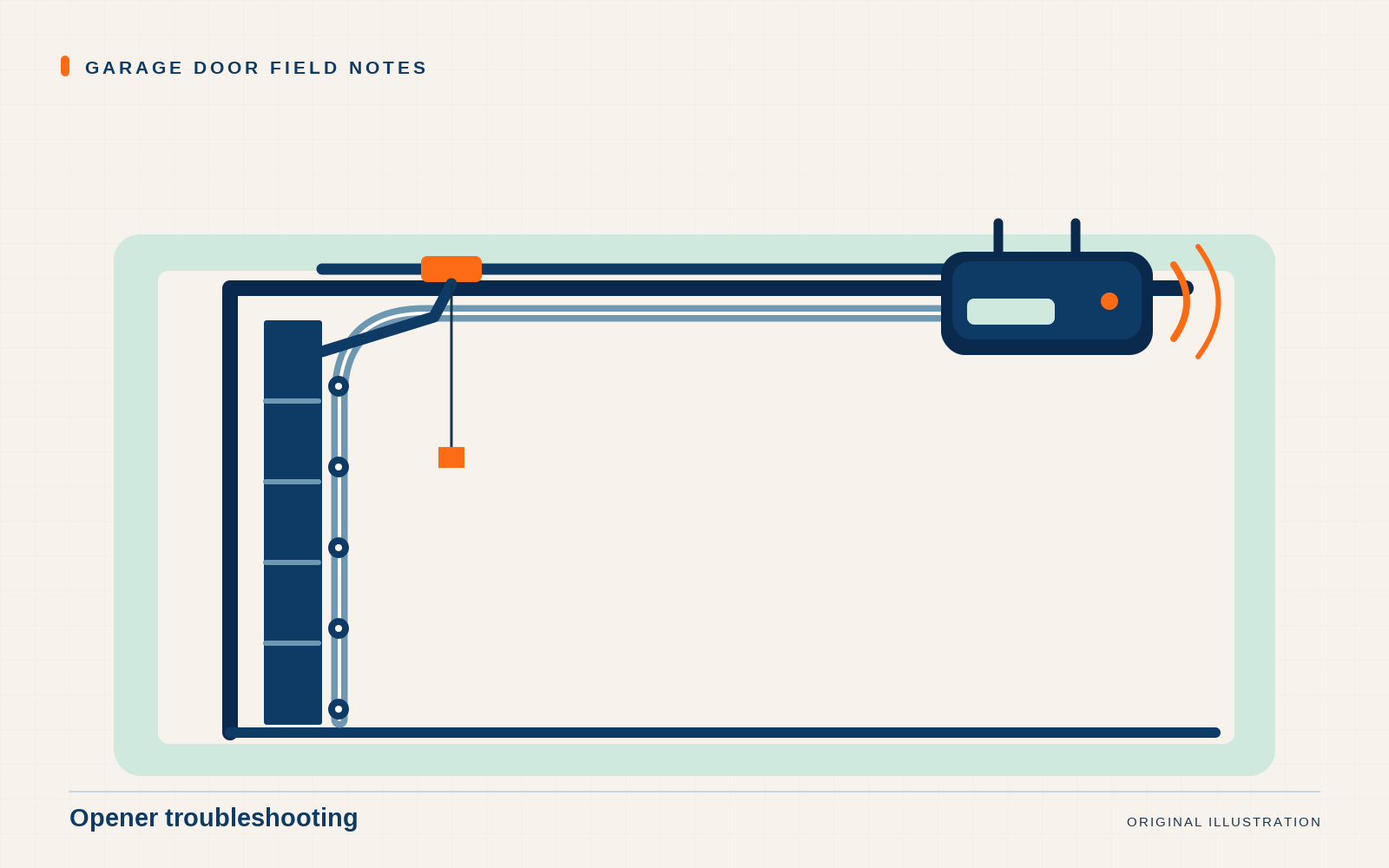
Write down what you already observed: a brief hum or continued running sound, no movement at all or a small movement, and any visible movement along the opener rail. Note whether the door was fully closed or partway open at the time. You do not need another operating attempt to complete the description. If the garage door opener hums and the door does not move, watch from a clear position after a single normal command. Record whether the chain, belt or trolley moved and whether the door moved with it. Report this to garage door opener repair along with any display or sensor signal.
Chamberlain's humming-opener guidance separates chain/belt, screw-drive and wall-mounted systems because their possible causes differ. In some cases the trolley moves while the door does not; in others the drive cannot start. Those observations help route diagnosis, but they do not establish that the motor needs replacement.
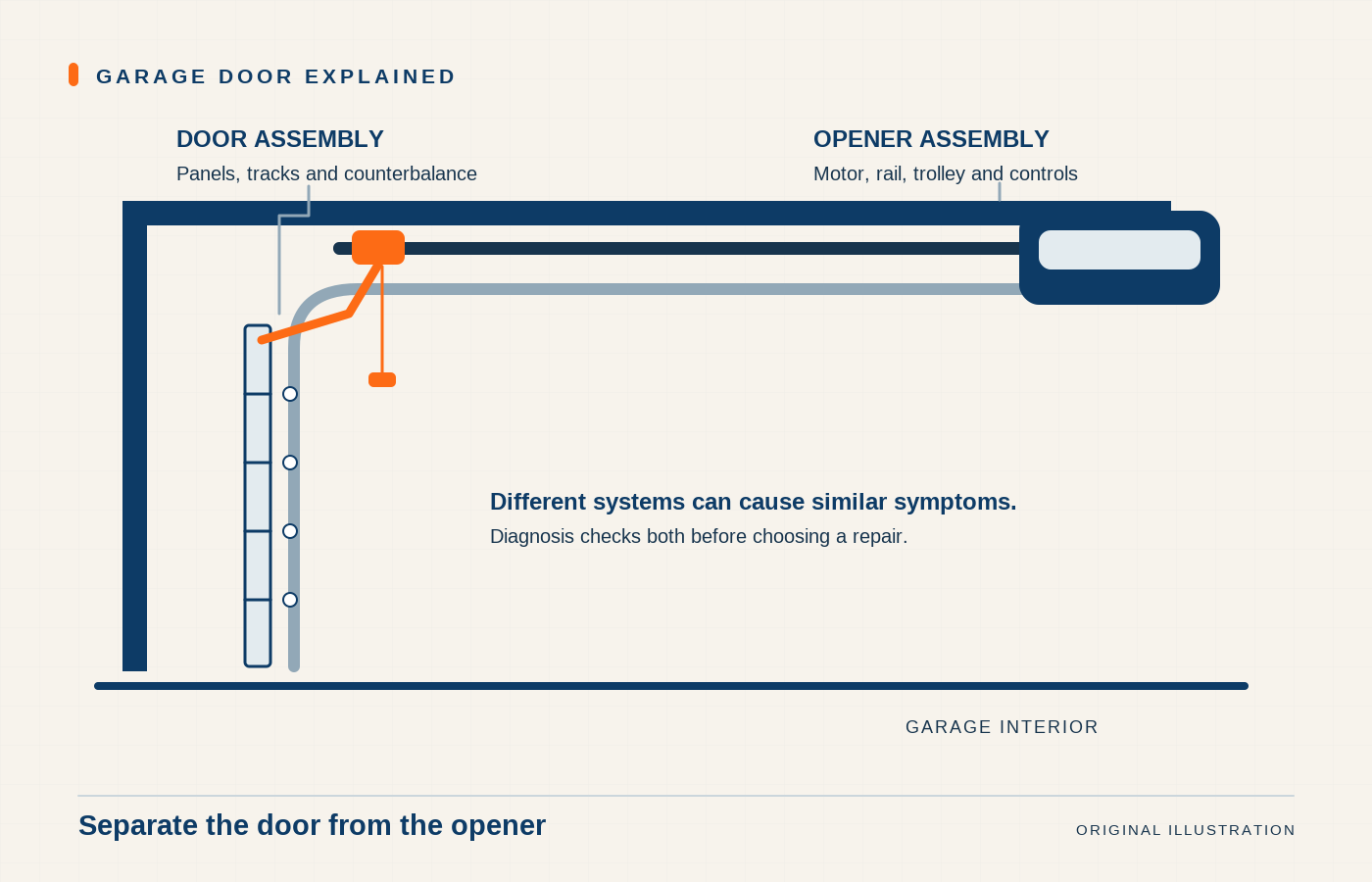
Door faults can imitate opener faults
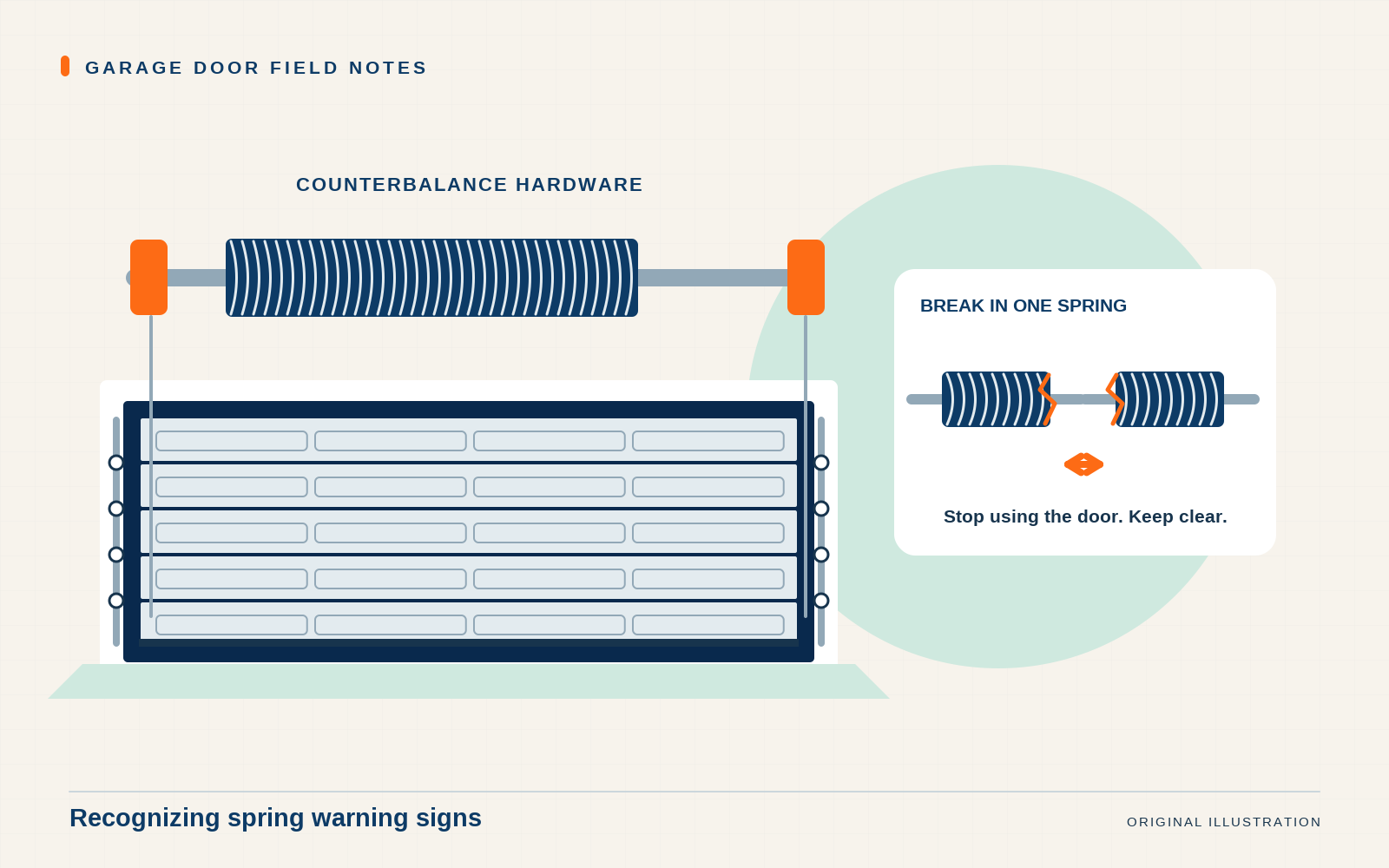
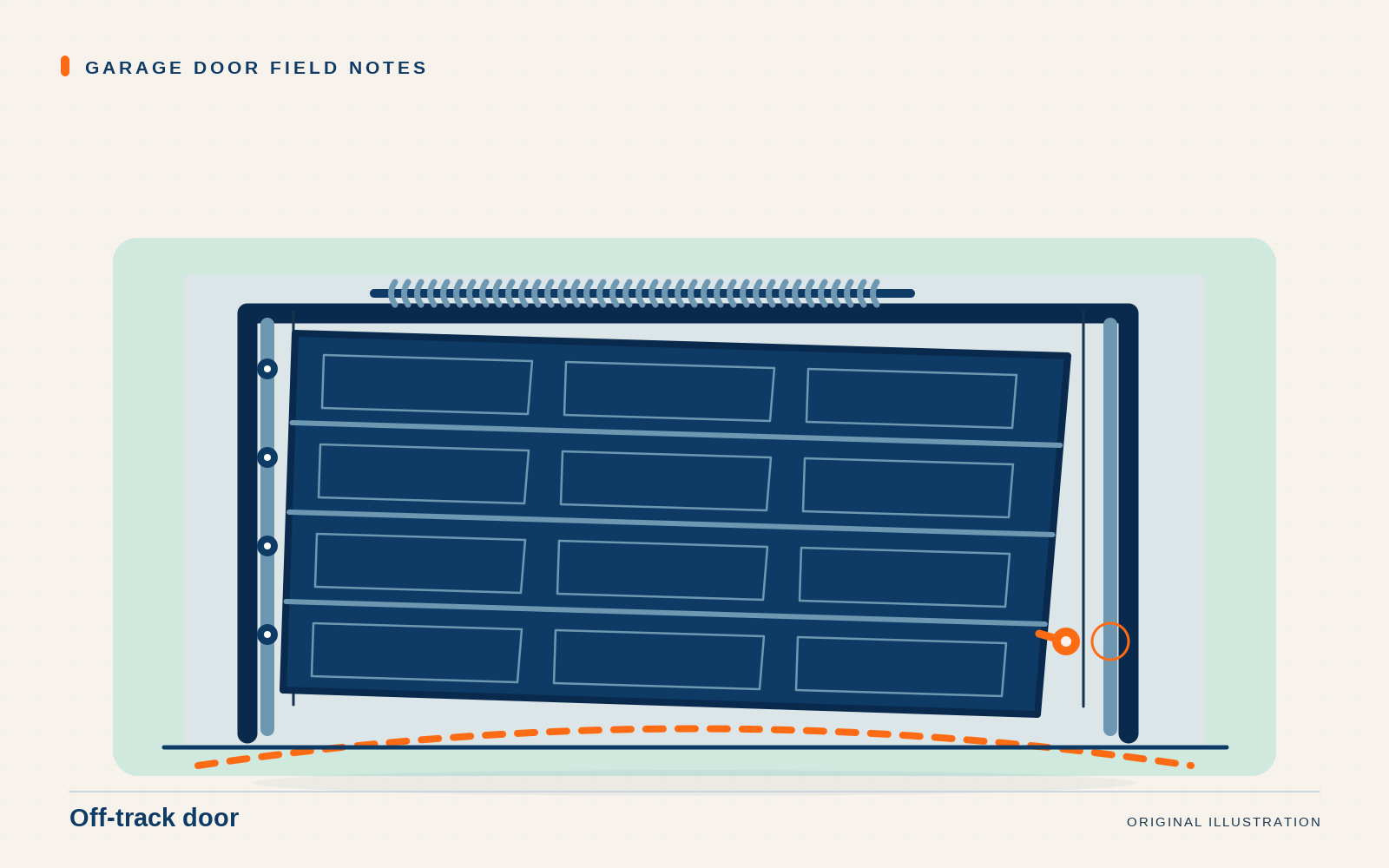
The opener moves the door, while the spring system counterbalances its weight. A broken spring, a door lock or a mechanical obstruction can therefore look like an opener failure. A crooked door, slack cable or visibly damaged track changes the priority to securing and assessing the door system.
Read the spring warning-sign guide for observations that warrant stopping use. Do not conduct a manual balance test when damage is suspected. If the door is displaced or uneven, follow the off-track door precautions and let a trained technician determine how it can be supported safely.
What model-specific diagnosis involves
A technician first needs the model, drive type and condition of the door. The assessment can then distinguish a door-load problem from a drive connection, internal gear, motor, control-board or electrical issue. The right sequence avoids replacing an opener component while leaving the original mechanical fault in place.
Photograph an already-visible diagnostic display from a safe position. Chamberlain's diagnostic reference explains that an RPM-not-detected indication does not automatically mean the motor has failed. Code definitions depend on the product. Leave motor-cover removal, capacitor inspection, wiring and live testing to qualified service personnel, including isolation of any backup battery.
Prepare a useful service description
Give the technician the opener model, door position, last normal operation and the sound pattern. Mention an impact, outage or recent repair if one preceded the problem. Describe visible damage without reaching near the tracks, springs or cables. A photo taken from the side of the opening can be more useful than a close-up made underneath an unstable door.
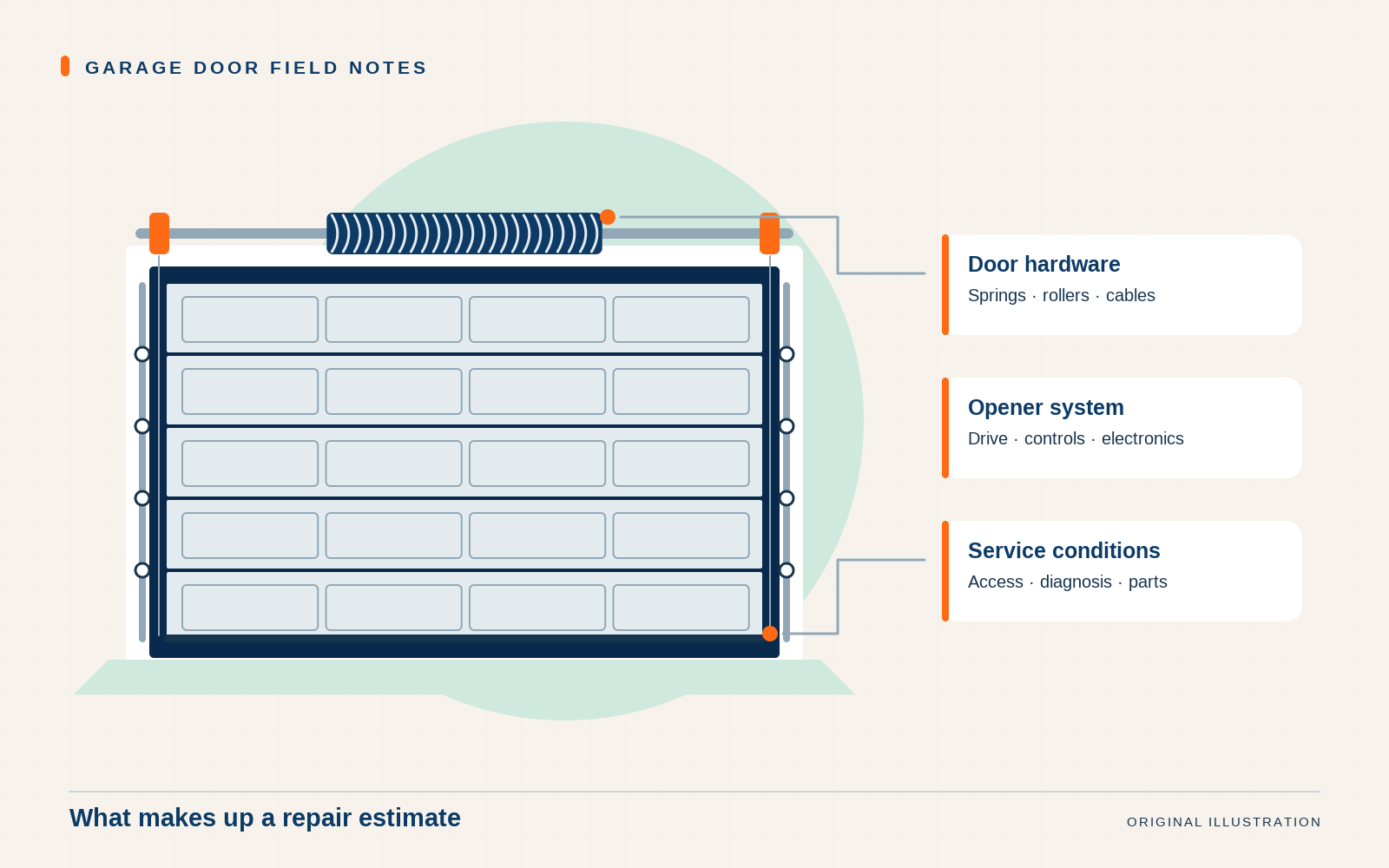
For garage door opener repair, ask the estimate to identify the diagnosed cause, any door work needed first and the post-repair safety checks. An explanation of why the part failed is more informative than a parts list alone.
Frequently asked questions
Can I increase force to get the door moving?
No. More force is not a remedy for an unexplained stall or damaged door. The mechanical cause and the correct model settings must be assessed before operation resumes.
Will a new opener solve a heavy door?
A new opener does not repair a failed counterbalance or binding door. Have the door's condition assessed before choosing an operator replacement.