Garage Openers
 Garage Springs
Build a simple maintenance record
Record the door manufacturer, opener model and the location of both manuals. Keep service invoices and note any changed parts. This avoids treating the electric opener’s instructions as a maintenance guide for every part of the door. Use the garage door maintenance checklist to record changes over time, especially slower travel, new vibration, a gap at the floor or a switch that needs several presses. Tell a technician which change appeared first. The garage door maintenance log guide shows what to keep for the next visit.
Use a short log: date, observation, action and whether the problem was resolved. A note such as “scraping began near the right track after an impact” is more useful than “door noisy.” Photograph labels from a safe, accessible position; do not climb on the door or reach into moving hardware.
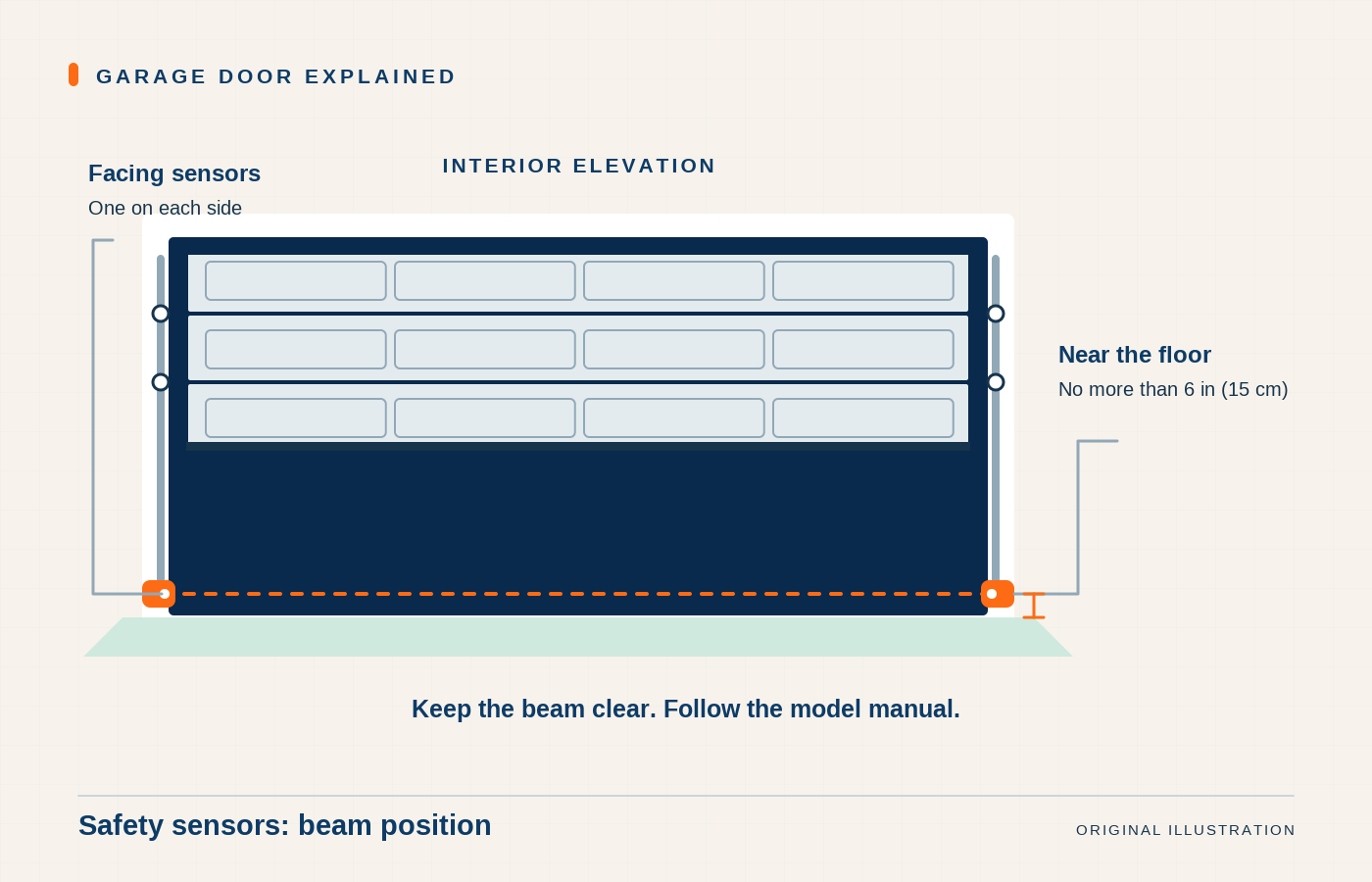
Monthly: observe and check the safety systems
Genie’s safety guidance calls for regular monthly safety-reversal checks. Use the procedure in your exact opener manual, including the specified test object and setup. Contact reversal and the photo-eye system are separate functions; passing one does not establish that the other works.
Before a normal cycle, keep the opening clear. From a safe position, observe whether movement is smooth and the door remains aligned. Look for loose or damaged visible components, frayed cables and changes in the bottom seal. If the door is crooked, a cable is slack or a spring is broken, stop here and arrange service instead of performing an operating test.
If a safety test fails, stop automatic operation and have the problem corrected. Do not compensate by increasing force, raising the sensors or bypassing a device.
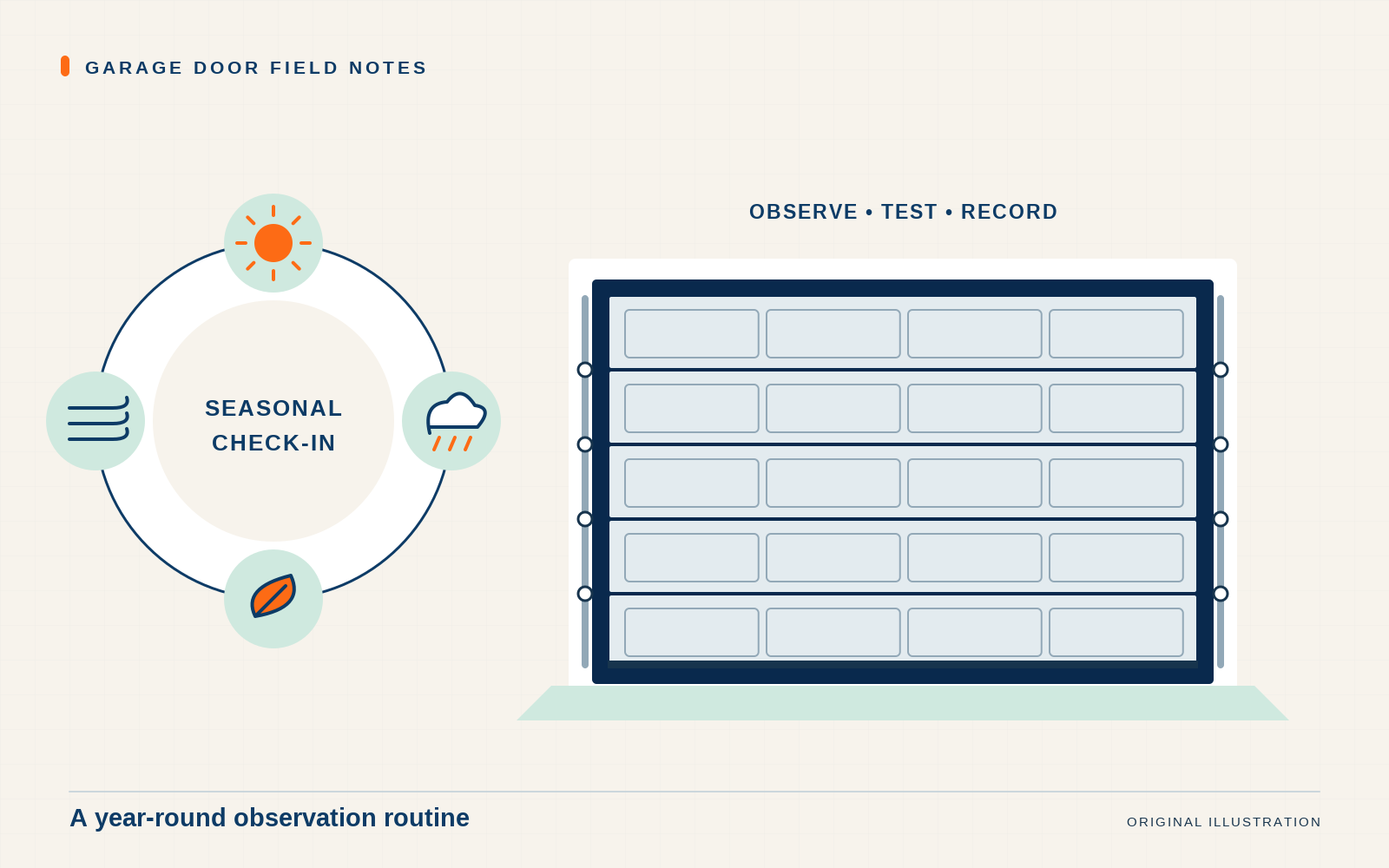
Seasonal: inspect the areas exposed to weather
| Area | What to look for | Next step |
|---|---|---|
| Door surface | Damaged finish, corrosion, cracking or impact marks. | Follow the door maker’s cleaning and finish-care instructions. |
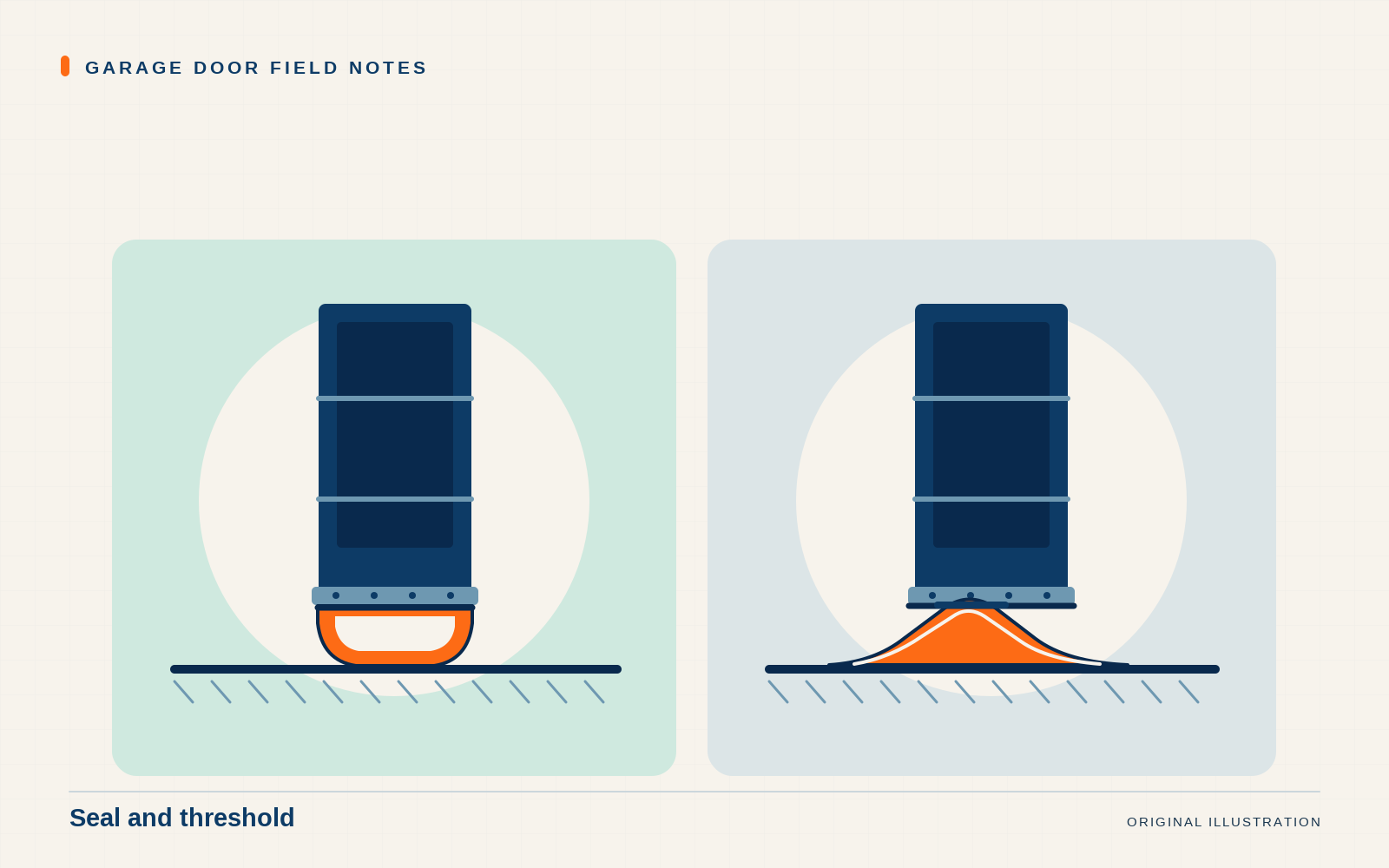
| Bottom and perimeter seals | Tears, hardening, gaps or displaced material. | Identify the seal profile and why the gap exists. |
| Opening and floor | Debris, standing water or a new contact point. | Clear loose objects safely and investigate recurring water entry. |
| Visible hardware | Changed alignment, loose cables or damaged rollers. | Have mechanical damage assessed before further use. |
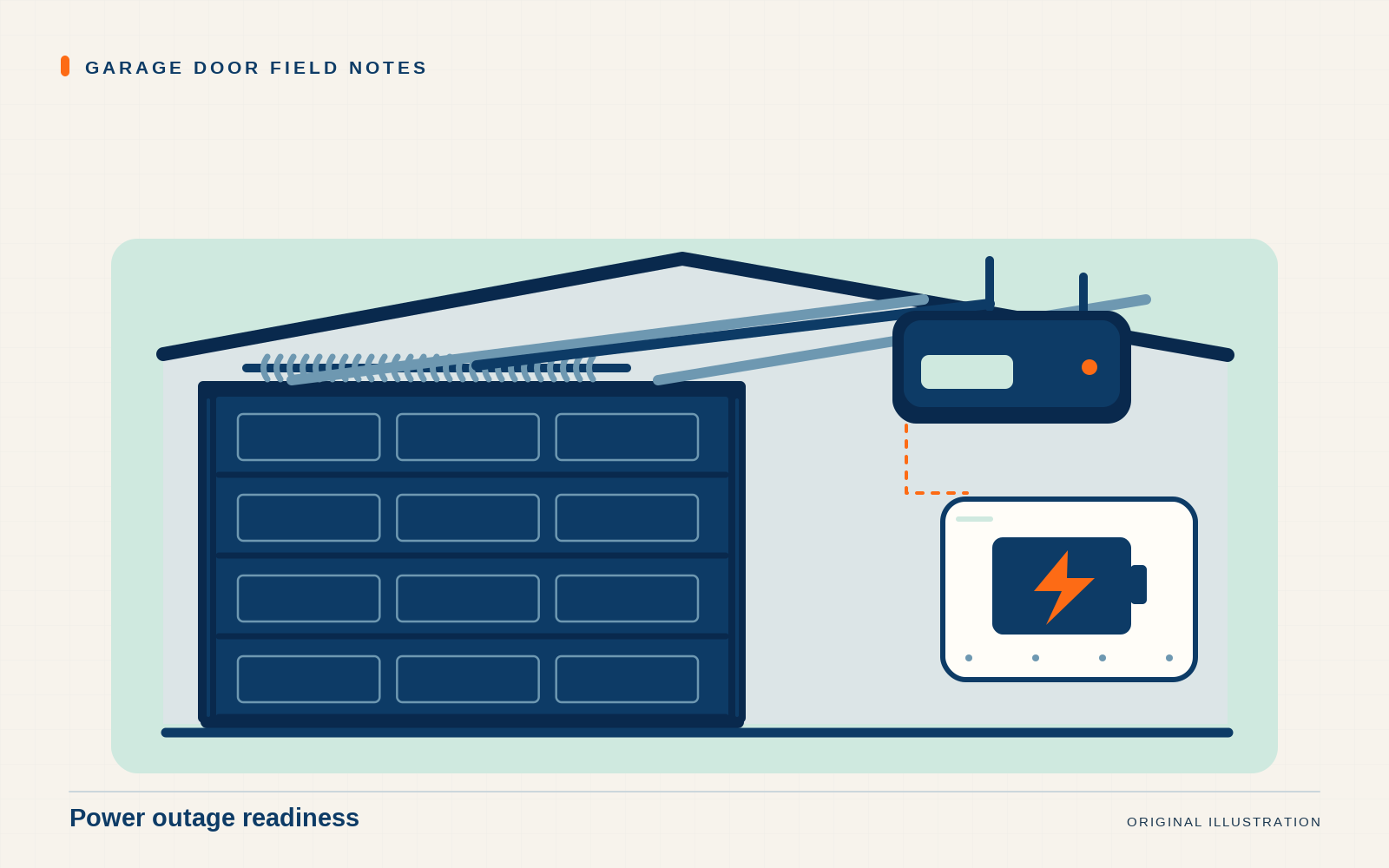
| Controls and backup | Battery warnings or unreliable response. | Use the model-specific battery and testing instructions. |
In Los Angeles, base the extra attention on the actual exposure of your garage: dust accumulation, direct sun, moisture or coastal air. These conditions vary by property. A neighborhood name alone does not diagnose a failed part.
Use the right care for the actual component
Lubrication is not a cure for a bent track, a failing bearing or a door that is out of balance. Identify the component and consult its instructions before applying a product. Some parts have different requirements, and blanket advice to grease every moving surface can create new problems.
Do not loosen a bottom bracket, spring anchor or cable attachment while cleaning. Keep fingers away from panel joints and use designated handles when the manufacturer’s procedure calls for manual handling. A balance or manual-operation check belongs only in the conditions described by the manual; never disconnect an open, crooked or suspect door as a casual test.
Know when maintenance becomes repair
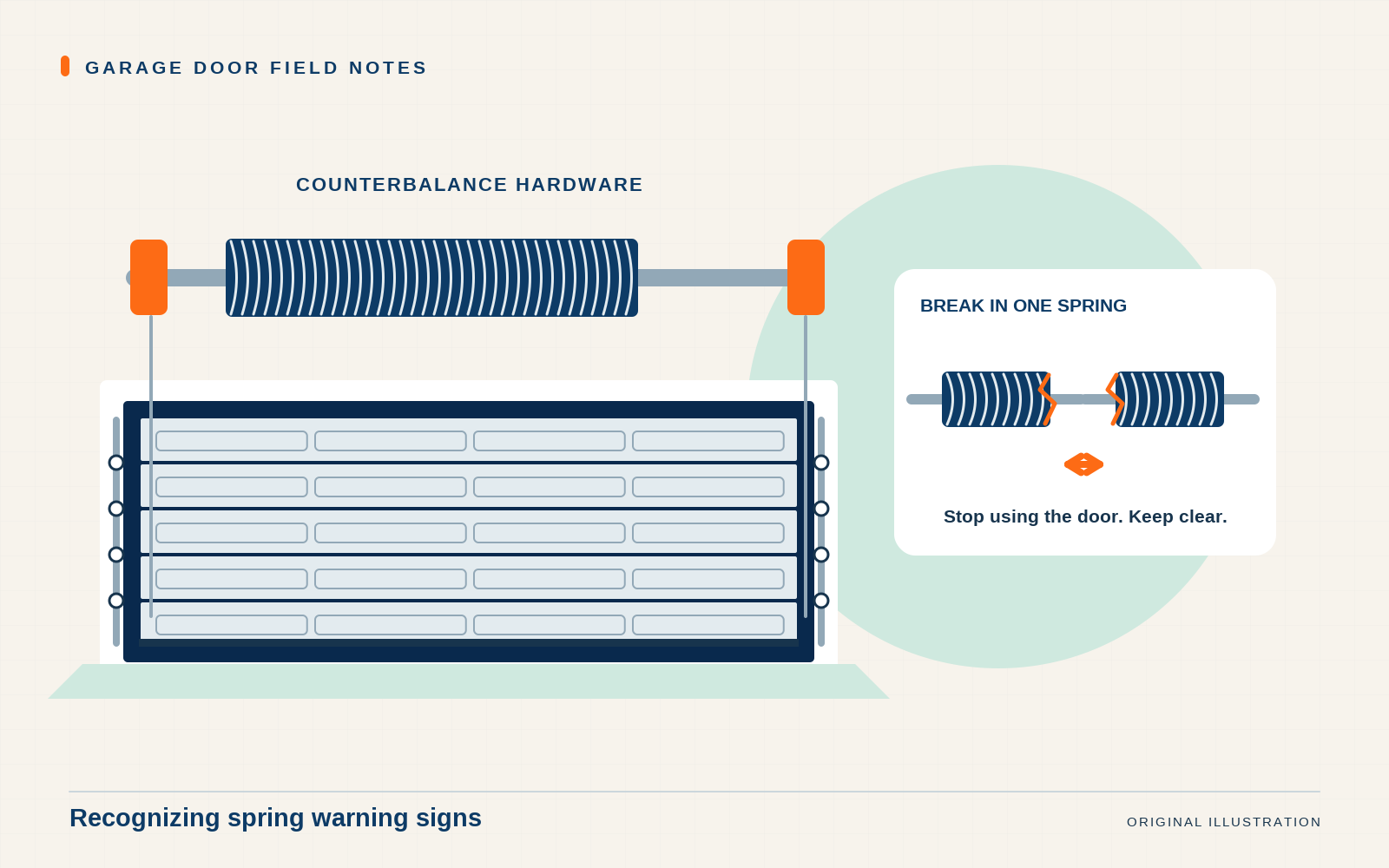
Schedule an assessment if a new sound persists, the door hesitates or rubs, one side moves differently, or a safety check fails. A sudden loud snap, hanging cable or visibly separated spring is a stop-use condition, not a reminder to add lubricant.
For garage door service in Los Angeles, share your log and the door’s current position. If the concern is a gap at the floor, our bottom-seal and threshold guide helps distinguish the seal from an alignment or floor problem.
Frequently asked questions
Is more lubricant the answer to a noisy door?
Not necessarily. Noise can come from wear, damage or alignment. Follow the component manufacturer’s instructions and investigate a new or persistent sound.
Should I test an already damaged door?
No. If the door is crooked, unsupported or has a loose cable or broken spring, stop operating it and arrange assessment before routine testing.